


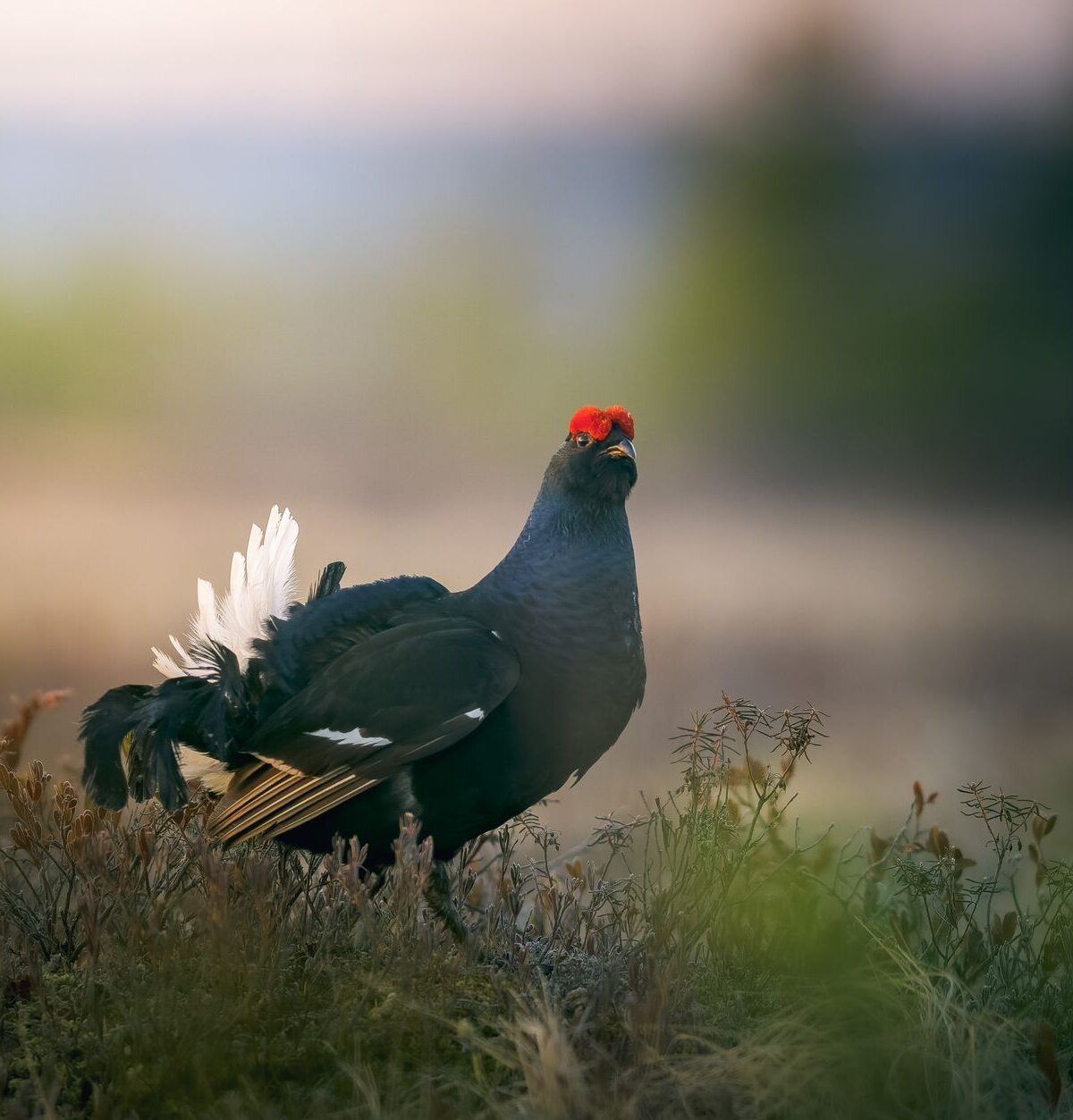
BLACK GROUSE
Tetrao tetrix
DESCRIPTION
Black Grouse (Tetrao tetrix) is a large game bird known for its striking sexual dimorphism, with males displaying a glossy black plumage and a distinctive lyre-shaped tail, while females are mottled brown for camouflage. Males are famous for their elaborate courtship displays during the breeding season, where they perform a series of vocalizations and physical displays to attract females. This species inhabits open woodlands and heathlands, where it plays a crucial role in the ecosystem as both a seed disperser and prey for various predators.
FUN FACTS
- Black Grouse are known for their unique courtship displays, where males puff up their chests, fan their tails, and produce a series of booming calls to attract females
- These displays can be quite a spectacle, drawing in both females and human observers alike
- | The Black Grouse is an important cultural symbol in many regions of Europe, often featured in folklore and traditional hunting practices
- Their presence in the wild is considered an indicator of healthy ecosystems, making their conservation vital
QUICK INFO
Lifespan5-10 years in the wild
Average Weight0.8-1.5 kg
Average Length40-50 cm
Diet TypeOmnivore
Social Structuregroup — males gather in leks during the breeding season, while females are more solitary.
Activity PatternCrepuscular
Breeding SeasonSpring (April-June)
- Habitat
- Black Grouse prefers open woodlands, heathlands, and moorlands, often found in areas with a mix of trees and open ground. They require specific vegetation types for feeding and nesting.
- Biomes
- Temperate Forest, Boreal Forest, Grassland
- Native Range
- Black Grouse is native to Europe and parts of Asia, particularly in the northern regions.
- Continent
- Europe, Asia
- Countries
- United Kingdom, Sweden, Finland, Norway, Poland, Russia
- Diet
- Black Grouse primarily feeds on a variety of plant materials, including leaves, buds, and seeds, as well as insects during the breeding season.
- Diet Type
- Omnivore
- Favorite Food
- leaves, buds, seeds, insects
- Social Structure
- group — males gather in leks during the breeding season, while females are more solitary.
- Activity Pattern
- Crepuscular
- Group Size
- 5-30
- Territorial
- 1

 VU
VU
0.8-1.5 kg
Weight
40-50 cm
Length
- Coloration
- males are glossy black with white wing patches, females are brown and mottled
- Sexual Dimorphism
- males are larger and more colorful than females
- Lifespan
- 5-10 years in the wild
- Offspring per Birth
- 6-12 eggs
- Sexual Maturity
- 1 year
- Breeding Season
- Spring (April-June)
VU
Vulnerable
IUCN Red List Status
- Population Status
- The population of Black Grouse has been declining in many areas due to habitat loss and changes in land use.
- Wild Population Estimate
- 100,000-200,000
- Population Trend
- Decreasing
- Endangered
- 1
- Threats
- Main threats include habitat destruction due to agricultural expansion, forestry practices, and urban development. Climate change also poses a risk to their habitat.
- Conservation Program
- Various conservation programs are in place across Europe to protect and restore Black Grouse habitats.
- Predators
- Foxes, birds of prey, and domestic cats are known predators of Black Grouse, particularly affecting their nests and young.
- Defense Mechanisms
- Black Grouse rely on their camouflage and the dense vegetation of their habitats to avoid predators.
- Found in Zoos
- Uncommon