


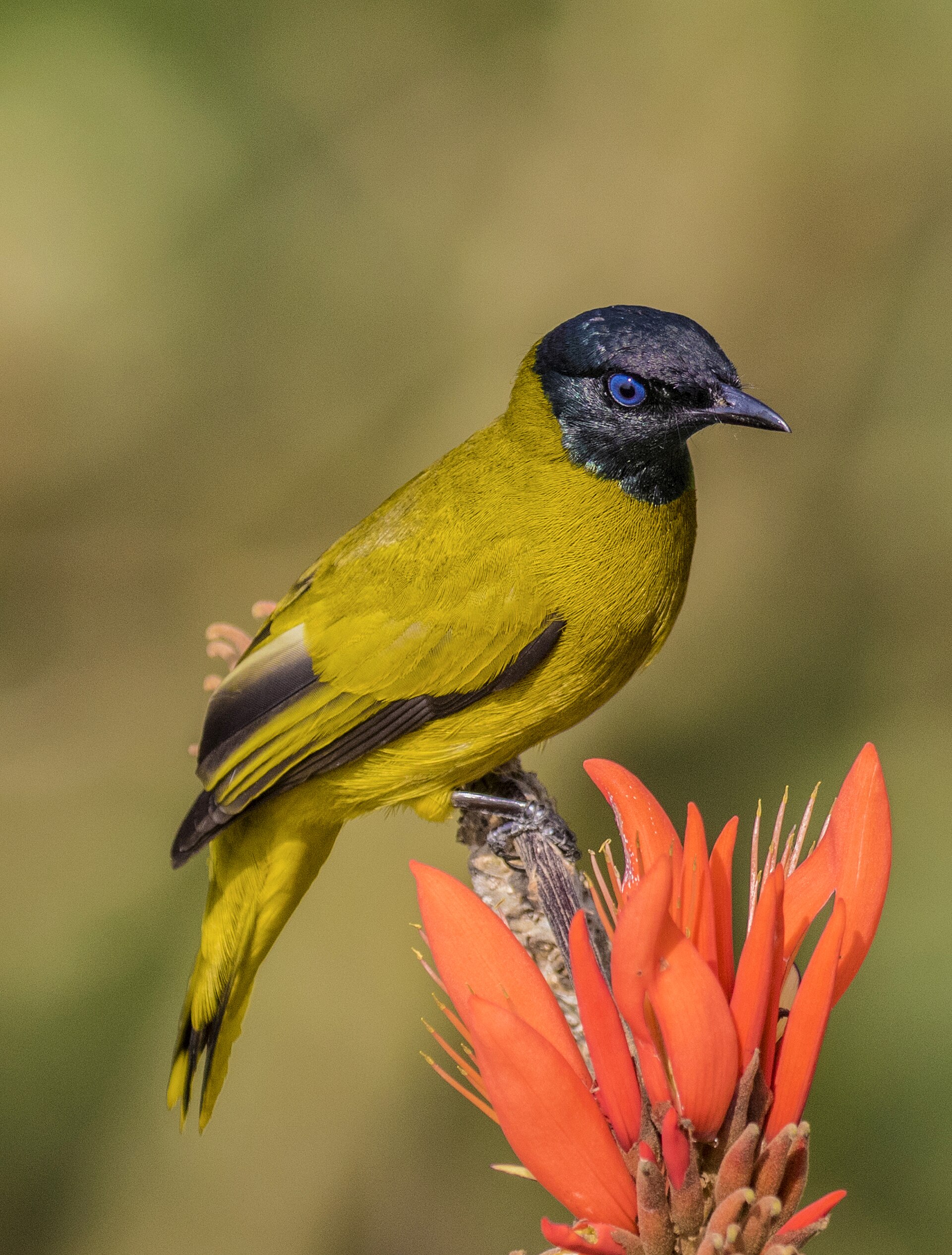
BLACK-HEADED BULBUL
Pycnonotus atriceps
DESCRIPTION
Black-headed bulbul (Pycnonotus atriceps) is a small to medium-sized songbird known for its distinctive black head and bright yellow underparts. This species exhibits a lively behavior, often seen foraging in pairs or small groups, and is known for its melodious calls that resonate through its habitat. It primarily inhabits forest edges and shrubby areas, where it plays a crucial role in seed dispersal and maintaining the ecological balance.
FUN FACTS
- Black-headed bulbuls are known for their vibrant songs, which can vary significantly between individuals, making them a favorite among birdwatchers
- Additionally, they play an important role in their ecosystem by helping to disperse seeds through their fruit-based diet, contributing to forest regeneration.| These birds are often seen foraging in mixed-species flocks, which helps them to avoid predators and increases their foraging efficiency
- Their adaptability to different habitats also allows them to thrive in areas altered by human activity
QUICK INFO
Lifespan5-10 years in the wild
Average Weight20-30 g
Average Length20-25 cm
Diet TypeOmnivore
Social StructureThey are often found in pairs or small groups, displaying a social structure that allows for cooperative foraging.
Activity PatternDiurnal
Breeding SeasonSpring to early summer
- Habitat
- This species prefers subtropical or tropical moist lowland forests and can also be found in secondary growth and scrub areas. It thrives in environments with dense vegetation that provide ample food and nesting opportunities.
- Biomes
- Tropical Rainforest, Subtropical Forest
- Native Range
- The Black-headed bulbul is native to parts of Southeast Asia, particularly found in countries like Thailand, Malaysia, and Indonesia.
- Continent
- Asia
- Countries
- Thailand, Malaysia, Indonesia
- Diet
- The Black-headed bulbul primarily feeds on fruits, berries, and insects. Its diet varies seasonally, reflecting the availability of food sources in its habitat.
- Diet Type
- Omnivore
- Favorite Food
- fruits and insects
- Social Structure
- They are often found in pairs or small groups, displaying a social structure that allows for cooperative foraging.
- Activity Pattern
- Diurnal
- Group Size
- 2-10
- Territorial
- 0
 LC
LC
 VU
VU
20-30 g
Weight
20-25 cm
Length
- Coloration
- The species has a striking black head, yellow underparts, and olive-green wings and back.
- Lifespan
- 5-10 years in the wild
- Offspring per Birth
- 2-4
- Sexual Maturity
- 1 year
- Breeding Season
- Spring to early summer
LC
Least Concern
IUCN Red List Status
- Population Status
- The population of Black-headed bulbuls is currently stable, with no immediate threats to their numbers.
- Wild Population Estimate
- Unknown
- Population Trend
- Stable
- Endangered
- 0
- Threats
- Habitat loss due to deforestation and agricultural expansion poses a threat to the Black-headed bulbul. However, the species is currently not facing significant population declines.
- Predators
- Snakes, birds of prey, and larger mammals may prey on Black-headed bulbuls, particularly when they are nesting.
- Defense Mechanisms
- They often use their agility to evade predators and may also rely on their vocalizations to alert others of danger.
- Found in Zoos
- Uncommon