


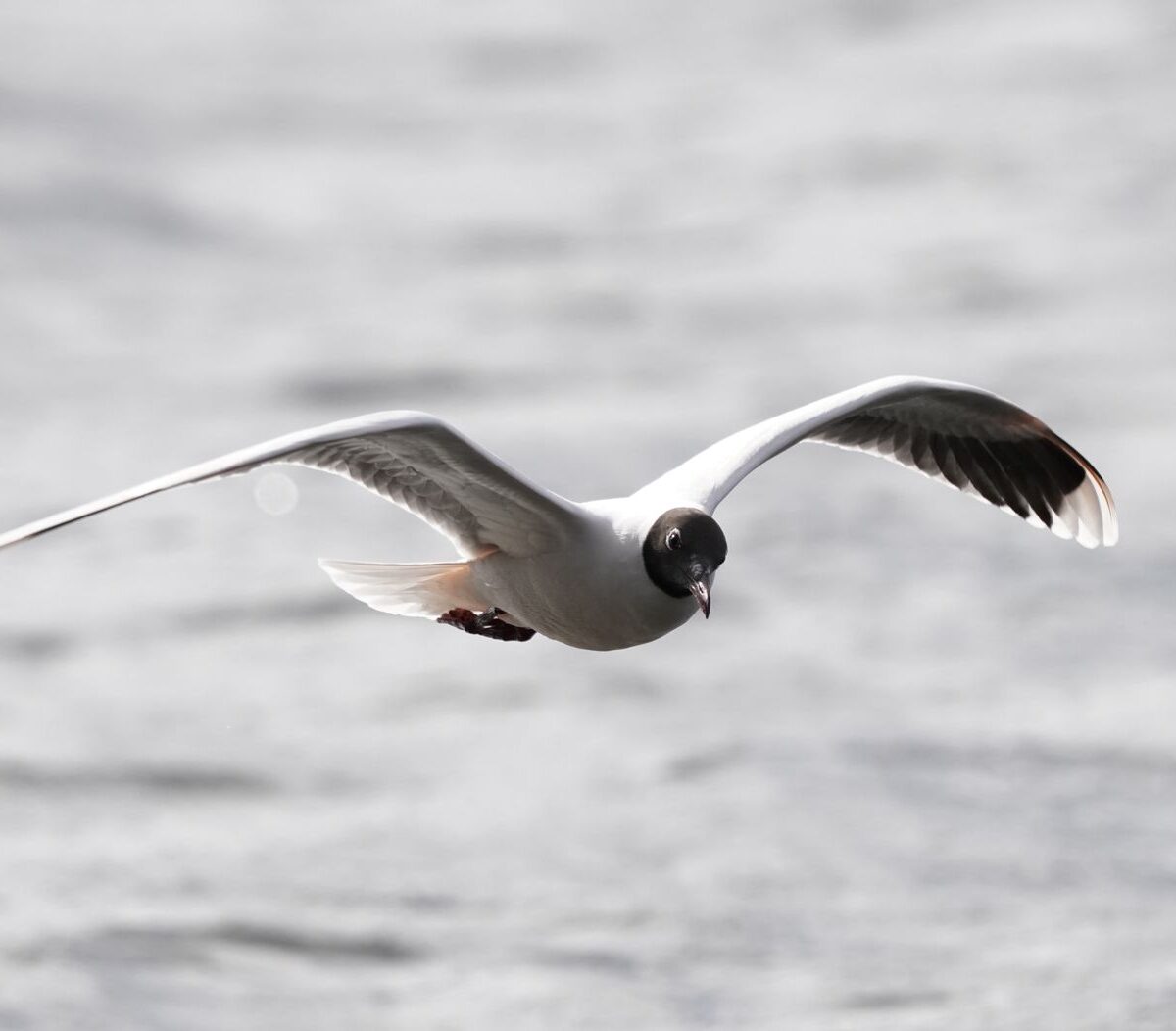
BLACK-HEADED GULL
Chroicocephalus ridibundus
DESCRIPTION
Black-headed Gull (Chroicocephalus ridibundus) is a medium-sized gull known for its distinctive chocolate-brown head during the breeding season, which contrasts with its white body and gray wings. This species is often found in large flocks, especially during migration and wintering, where they can be seen foraging for food along coastlines, lakes, and rivers. Their behavior includes a variety of vocalizations and social interactions, making them a lively presence in their habitats.
FUN FACTS
- Black-headed Gulls are known for their unique feeding behavior, often seen dipping and diving to catch fish or scavenging for food scraps left by humans
- They are also highly adaptable, thriving in both natural and urban environments, which has contributed to their widespread distribution across Europe and Asia.| During the breeding season, the chocolate-brown head of the Black-headed Gull is a striking feature, but it fades to a speckled gray in the winter months
- This seasonal change in plumage helps them blend into their surroundings, providing camouflage from predators
QUICK INFO
Lifespan10-15 years in the wild
Average Weight250-350 g
Average Length30-38 cm
Diet TypeOmnivore
Social StructureThey are typically found in groups, especially during feeding and roosting, but can also be seen in pairs during the breeding season.
Activity PatternDiurnal
Breeding SeasonSpring (April-June)
- Habitat
- They inhabit a variety of wetland environments, including coastal areas, lakes, and rivers, often nesting in colonies on islands or in marshes. During winter, they can be found in urban areas where food is abundant.
- Biomes
- Wetlands, Coastal, Urban
- Native Range
- Black-headed Gulls are native to Europe, Asia, and parts of North Africa, with some populations migrating to warmer regions during winter.
- Continent
- Europe, Asia, Africa
- Countries
- United Kingdom, France, Germany, Russia, India
- Diet
- Black-headed Gulls are opportunistic feeders, consuming a wide range of food items including fish, insects, and scraps from human activities.
- Diet Type
- Omnivore
- Favorite Food
- fish, insects, human food scraps
- Social Structure
- They are typically found in groups, especially during feeding and roosting, but can also be seen in pairs during the breeding season.
- Activity Pattern
- Diurnal
- Group Size
- 20-100
- Territorial
- 0

 VU
VU
 LC
LC
250-350 g
Weight
30-38 cm
Length
- Coloration
- White body with gray wings and a chocolate-brown head in breeding season.
- Lifespan
- 10-15 years in the wild
- Offspring per Birth
- 2-4
- Sexual Maturity
- 2-3 years
- Breeding Season
- Spring (April-June)
LC
Least Concern
IUCN Red List Status
- Population Status
- The population of Black-headed Gulls is generally stable, with some local increases noted in urban areas.
- Wild Population Estimate
- 1,000,000-2,000,000
- Population Trend
- Stable
- Endangered
- 0
- Threats
- Main threats include habitat loss due to urban development and pollution, as well as competition for food resources with other gull species.
- Predators
- Foxes, birds of prey, and domestic cats are known to prey on Black-headed Gull eggs and chicks.
- Defense Mechanisms
- They often use aggressive vocalizations and mobbing behavior to defend their nests from potential threats.
- Compatible Animals
- Other gull species, ducks, swans
- Found in Zoos
- Uncommon