


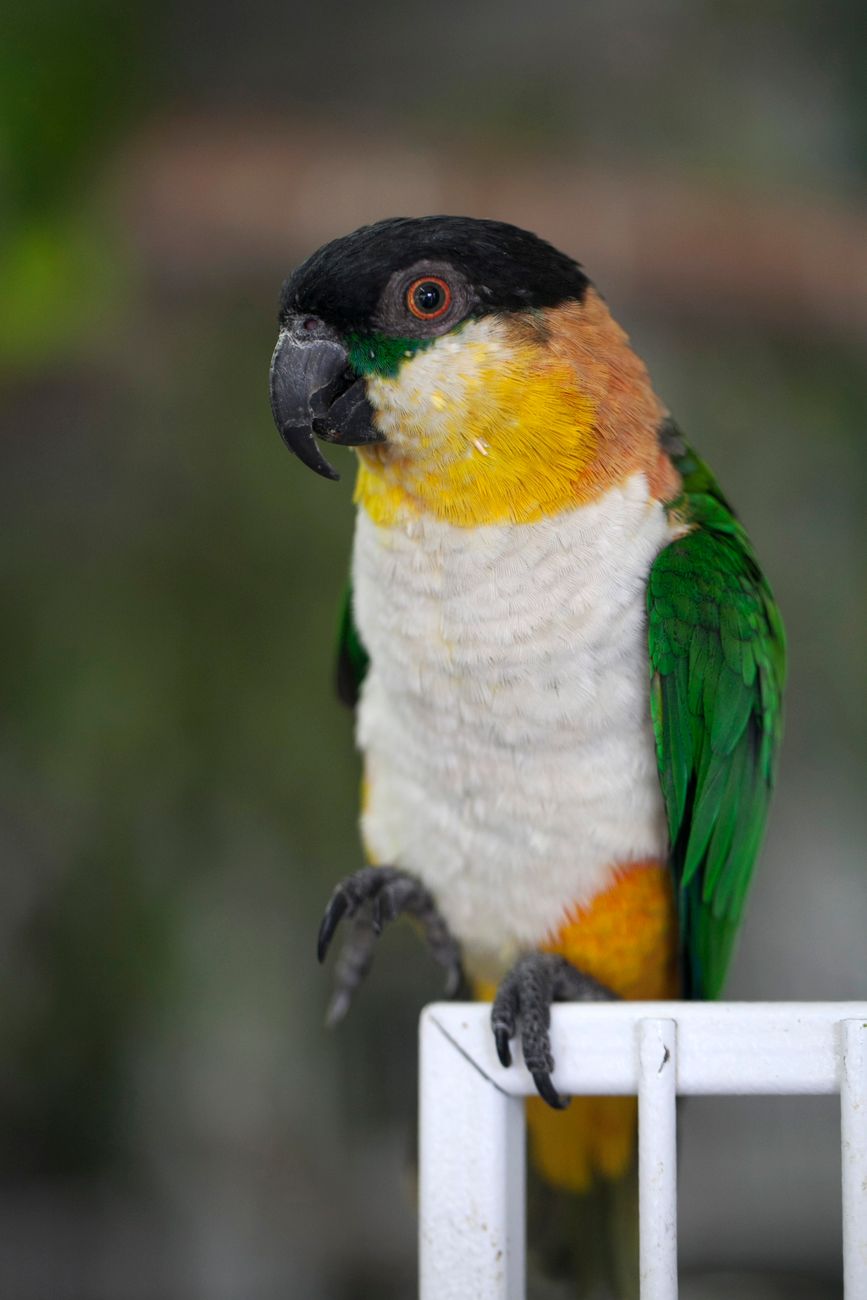
BLACK-HEADED PARROT
Pionites melanocephalus
DESCRIPTION
Black-Headed Parrot (Pionites melanocephalus) is a medium-sized parrot known for its striking appearance, featuring a black head and bright green body. This species exhibits playful and social behavior, often seen engaging in acrobatics and vocalizations. In the wild, they inhabit tropical forests and are known to form small flocks, which aids in their foraging and social interactions.
FUN FACTS
- Black-Headed Parrots are known for their intelligence and ability to mimic sounds, including human speech, making them popular pets
- In the wild, they play a crucial role in their ecosystem by helping to disperse seeds through their fruit-based diet
QUICK INFO
Lifespan20-30 years in captivity
Average Weight150-200 g
Average Length25-30 cm
Diet TypeHerbivore
Social StructureThey are typically found in small groups, often consisting of pairs or family units.
Activity PatternDiurnal
Breeding SeasonSpring (March-May)
- Habitat
- Black-Headed Parrots thrive in tropical rainforests, often found in the upper canopy where they can access a variety of food sources. They prefer areas with abundant fruiting trees and dense foliage.
- Biomes
- Tropical Rainforest
- Native Range
- This species is native to the Amazon Basin, particularly in regions of Brazil and parts of Bolivia.
- Continent
- South America
- Countries
- Brazil, Bolivia
- Diet
- They primarily feed on fruits, seeds, and nuts, foraging in the canopy of their forest habitat.
- Diet Type
- Herbivore
- Favorite Food
- Fruits and seeds
- Social Structure
- They are typically found in small groups, often consisting of pairs or family units.
- Activity Pattern
- Diurnal
- Group Size
- 2-10
- Territorial
- 0
150-200 g
Weight
25-30 cm
Length
- Coloration
- Bright green body with a distinctive black head and yellow accents on the wings and tail.
- Lifespan
- 20-30 years in captivity
- Offspring per Birth
- 2-4
- Sexual Maturity
- 2-3 years
- Breeding Season
- Spring (March-May)
LC
Least Concern
IUCN Red List Status
- Population Status
- The population is currently stable, but habitat loss poses a potential threat.
- Wild Population Estimate
- Unknown
- Population Trend
- Stable
- Endangered
- 0
- Threats
- Main threats include habitat destruction due to deforestation and illegal trapping for the pet trade. Conservation efforts are needed to protect their natural habitats.
- Predators
- Natural predators include birds of prey and larger snakes.
- Defense Mechanisms
- They often rely on their ability to fly quickly and their social behavior to evade predators.
- Compatible Animals
- Other small to medium-sized parrots, such as budgerigars and cockatiels.
- Found in Zoos
- Uncommon