


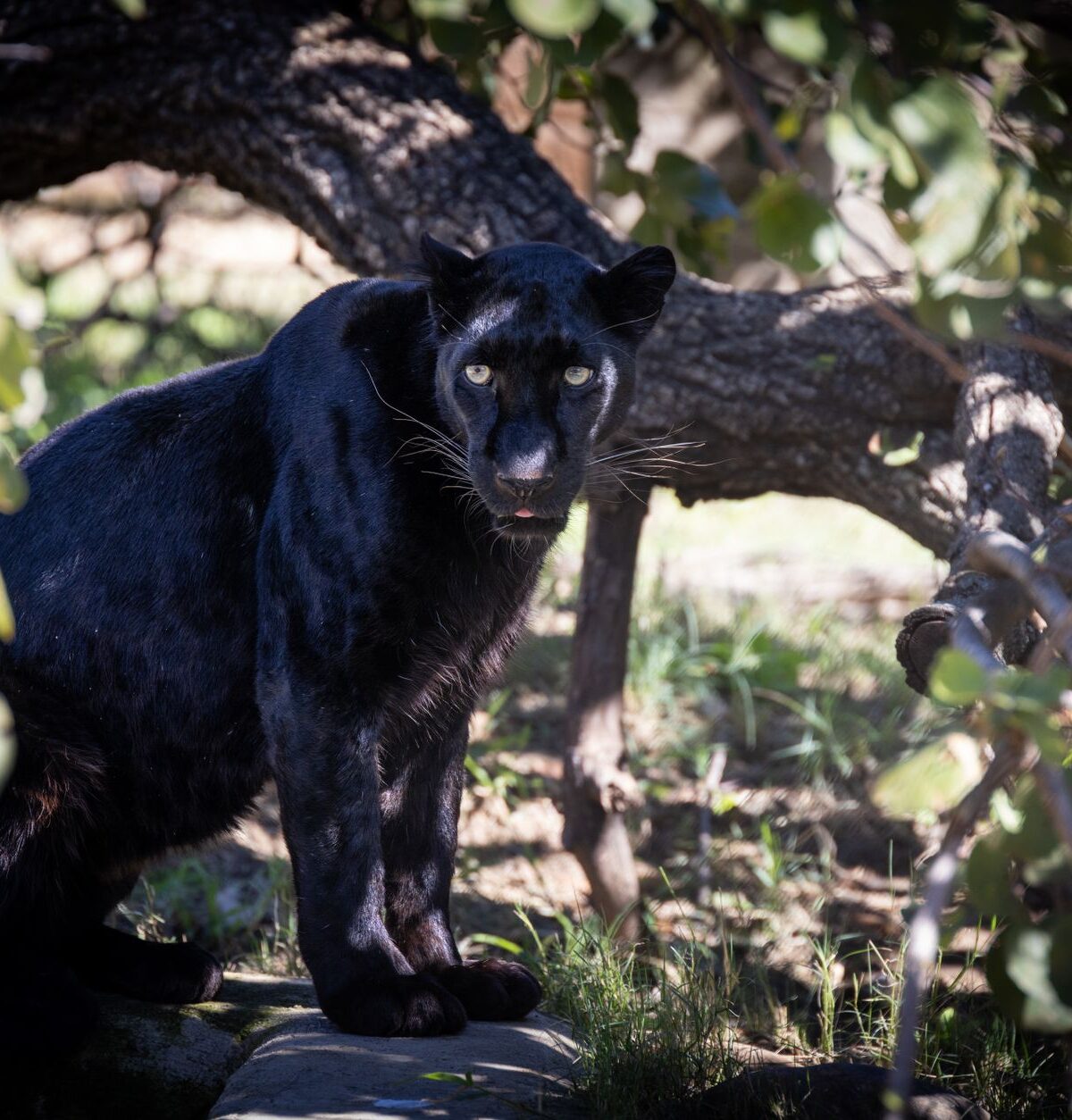
BLACK JAGUAR
Panthera onca
DESCRIPTION
Black Jaguar (Panthera onca) is a melanistic variant of the Jaguar, which is known for its distinctive rosettes and powerful build. These big cats are primarily solitary and are excellent swimmers, often found near water sources in their natural habitats. They play a crucial role in their ecosystems as apex predators, helping to maintain the balance of species in their environment.
FUN FACTS
- Black Jaguars are known for their incredible strength and ability to take down prey much larger than themselves, including caimans and even anacondas
- They are also excellent swimmers, often hunting in water and using their powerful limbs to swim with ease.|The melanistic coat of the Black Jaguar is a result of a genetic mutation, which makes them appear almost entirely black
- However, in certain lighting conditions, their characteristic rosettes can still be seen, showcasing their unique beauty
QUICK INFO
Lifespan12-15 years in the wild, up to 20-25 years in capt
Average Weight56-96 kg
Average Length1.5-2.4 m
Diet TypeCarnivore
Social Structuresolitary, typically living alone except during mating season or when a mother is raising her cubs
Activity PatternNocturnal
Breeding SeasonYear-round, with peaks depending on the region
- Habitat
- Black Jaguars inhabit a variety of environments, including tropical rainforests, swamps, and grasslands. They prefer areas with dense vegetation that provide cover for stalking prey.
- Biomes
- Tropical Rainforest, Wetlands, Savanna
- Native Range
- Black Jaguars are native to Central and South America, ranging from Mexico to Argentina.
- Continent
- North America, South America
- Countries
- Mexico, Brazil, Argentina, Colombia, Peru
- Diet
- Black Jaguars are carnivorous and primarily hunt large prey such as deer, capybaras, and peccaries. They are also known to eat smaller animals and fish when larger prey is scarce.
- Diet Type
- Carnivore
- Favorite Food
- Deer, capybaras, peccaries
- Social Structure
- solitary, typically living alone except during mating season or when a mother is raising her cubs
- Activity Pattern
- Nocturnal
- Group Size
- 1
- Territorial
- 1
56-96 kg
Weight
1.5-2.4 m
Length
- Coloration
- Black Jaguars have a dark coat that can appear solid black, but often their rosettes are visible in certain lighting.
- Sexual Dimorphism
- Males are generally larger and heavier than females.
- Lifespan
- 12-15 years in the wild, up to 20-25 years in capt
- Gestation Period
- 93-105 days
- Offspring per Birth
- 1-4
- Sexual Maturity
- 2-3 years
- Breeding Season
- Year-round, with peaks depending on the region
NT
Near Threatened
IUCN Red List Status
- Population Status
- The population of Black Jaguars is currently decreasing due to habitat loss and poaching.
- Wild Population Estimate
- 15,000-20,000
- Population Trend
- Decreasing
- Endangered
- 1
- Threats
- Main threats include habitat destruction due to deforestation, poaching for their beautiful pelts, and conflicts with humans. These factors have led to a decline in their populations across their range.
- Conservation Program
- Jaguar conservation programs in various countries focus on habitat protection and anti-poaching efforts.
- Predators
- Humans are the primary threat to Black Jaguars, as they hunt them for their fur and encroach on their habitats. Adult Jaguars have few natural predators, but cubs can be vulnerable to larger carnivores.
- Defense Mechanisms
- Black Jaguars rely on their strength, stealth, and powerful bite to defend themselves and hunt.
- Found in Zoos
- Common