


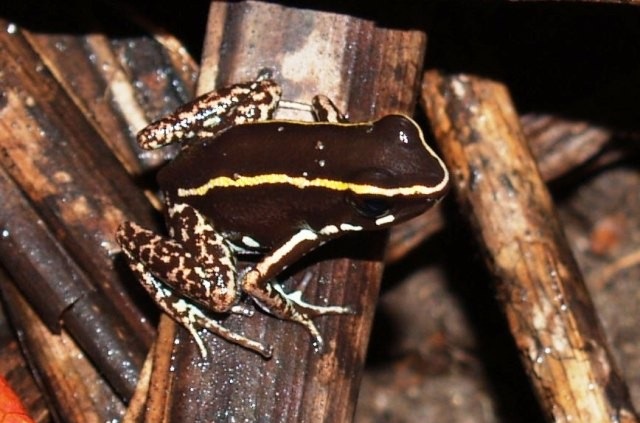
BLACK-LEGGED POISON DART FROG
Phyllobates lugubris
DESCRIPTION
Also called the Lugubrious Poison Frog, the Black-legged Poison Dart Frog (Phyllobates lugubris) is a small, brightly colored amphibian known for its striking black legs and vibrant yellow body. This species exhibits a unique coloration that serves as a warning to potential predators about its toxicity. Inhabiting humid tropical environments, these frogs are often found near water sources, where they engage in various behaviors such as calling and displaying during mating rituals.
FUN FACTS
- The toxins found in the skin of the Black-legged Poison Dart Frog are derived from its diet, particularly from consuming certain ants
- These toxins can be potent enough to cause serious harm to potential predators, making the frog a fascinating example of chemical defense in the animal kingdom
- | Unlike many other frogs, the Black-legged Poison Dart Frog does not produce its own toxins; instead, it relies on the alkaloids obtained from its prey to maintain its toxic properties
- This unique relationship highlights the intricate connections between diet and defense mechanisms in amphibians
QUICK INFO
Lifespan5-10 years in the wild
Average Length2.5-3.5 cm
Diet TypeInsectivore
Social Structuresolitary, with males calling to attract females during the breeding season
Activity PatternDiurnal
Breeding SeasonYear-round, with peaks during the rainy season
- Habitat
- This species thrives in humid tropical rainforests, often near streams and ponds. They require moist environments to maintain their skin hydration and reproductive activities.
- Biomes
- Tropical Rainforest
- Native Range
- The Black-legged Poison Dart Frog is native to the Pacific coast of Colombia and parts of western Ecuador.
- Continent
- South America
- Countries
- Colombia, Ecuador
- Diet
- The Black-legged Poison Dart Frog primarily feeds on small invertebrates, including ants and termites. Its diet contributes to its toxicity, as the frogs accumulate alkaloids from their prey.
- Diet Type
- Insectivore
- Favorite Food
- ants, termites
- Social Structure
- solitary, with males calling to attract females during the breeding season
- Activity Pattern
- Diurnal
- Group Size
- 1-5
- Territorial
- 0
 VU
VU
 LC
LC
2.5-3.5 cm
Length
- Coloration
- bright yellow body with black legs
- Sexual Dimorphism
- males are typically smaller than females
- Lifespan
- 5-10 years in the wild
- Sexual Maturity
- 1-2 years
- Breeding Season
- Year-round, with peaks during the rainy season
LC
Least Concern
IUCN Red List Status
- Population Status
- The population is currently stable, but habitat loss poses a potential threat.
- Wild Population Estimate
- unknown
- Population Trend
- Stable
- Endangered
- 0
- Threats
- Main threats include habitat destruction due to deforestation and pollution. Climate change also poses a risk to their humid rainforest habitat.
- Predators
- birds, snakes, and larger amphibians
- Defense Mechanisms
- The Black-legged Poison Dart Frog possesses potent skin toxins that deter predators.
- Found in Zoos
- Uncommon