


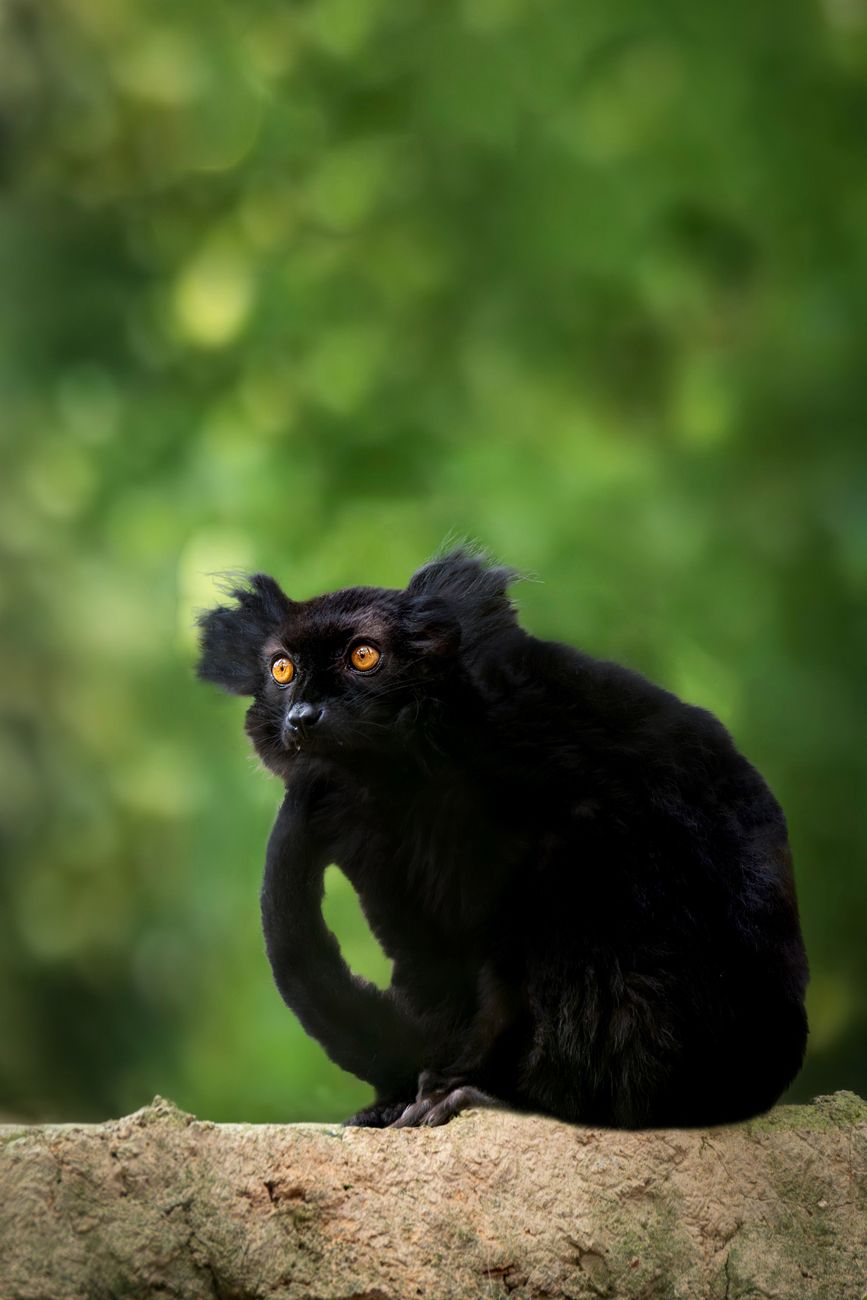
BLACK LEMUR
Eulemur macaco
DESCRIPTION
Black Lemur is a striking primate native to Madagascar, known for its distinctive black fur and expressive eyes. Males are typically black, while females exhibit a brownish coloration, showcasing sexual dimorphism. These lemurs are social animals, often found in groups, and are known for their vocalizations and playful behavior, which play a crucial role in their social interactions.
FUN FACTS
- Black Lemurs are unique among lemurs for their strong social bonds and complex vocal communication, which includes a variety of calls to convey different messages
- Additionally, they play a vital role in their ecosystem as seed dispersers, helping to maintain the health of their forest habitats
QUICK INFO
Lifespan15-20 years in the wild, up to 30 in captivity
Average Weight2.5-3.5 kg
Average Length40-50 cm
Diet TypeHerbivore
Social Structuregroup — typically matriarchal, with females leading the social hierarchy
Activity PatternDiurnal
Breeding SeasonSpring (September-November)
- Habitat
- Black Lemurs inhabit tropical rainforests and dry deciduous forests, where they can find ample food and shelter. They are arboreal, spending most of their time in trees.
- Biomes
- Tropical Rainforest, Dry Deciduous Forest
- Native Range
- endemic to Madagascar, specifically in the northwestern regions
- Continent
- Africa
- Countries
- Madagascar
- Diet
- Black Lemurs primarily consume fruits, leaves, and flowers, making them important seed dispersers in their ecosystem. They have a varied diet that changes with the seasons, reflecting the availability of food sources.
- Diet Type
- Herbivore
- Favorite Food
- fruits, leaves, flowers
- Social Structure
- group — typically matriarchal, with females leading the social hierarchy
- Activity Pattern
- Diurnal
- Group Size
- 5-15
- Territorial
- 1
 EN
EN
 LC
LC
2.5-3.5 kg
Weight
40-50 cm
Length
- Coloration
- males are black, females are brownish
- Sexual Dimorphism
- males are darker than females
- Lifespan
- 15-20 years in the wild, up to 30 in captivity
- Gestation Period
- 90-100 days
- Offspring per Birth
- 1-2
- Sexual Maturity
- 2-3 years
- Breeding Season
- Spring (September-November)
EN
Endangered
IUCN Red List Status
- Population Status
- The population is currently declining due to habitat loss and hunting.
- Wild Population Estimate
- 10,000-20,000
- Population Trend
- Decreasing
- Endangered
- 1
- Threats
- Main threats include deforestation due to agriculture and logging, as well as hunting for bushmeat. These pressures have led to significant habitat loss and fragmentation.
- Conservation Program
- Conservation efforts include habitat protection and restoration initiatives, as well as community education programs.
- Predators
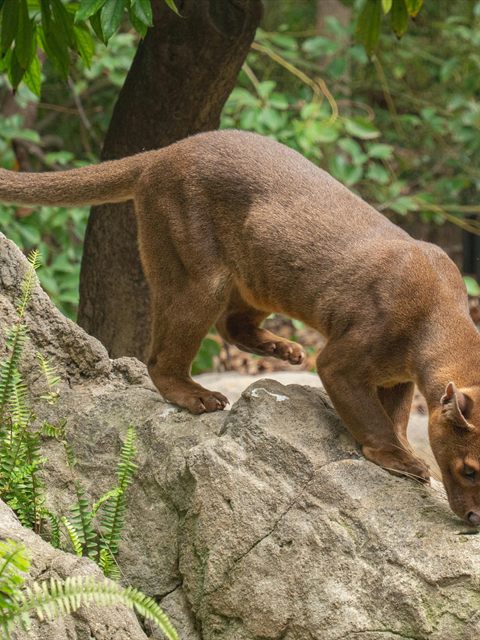
- Madagascar harrier hawk, fossa, domestic dogs
- Defense Mechanisms
- They use vocalizations to warn others of danger and can escape into the trees quickly.
- Found in Zoos
- Uncommon