


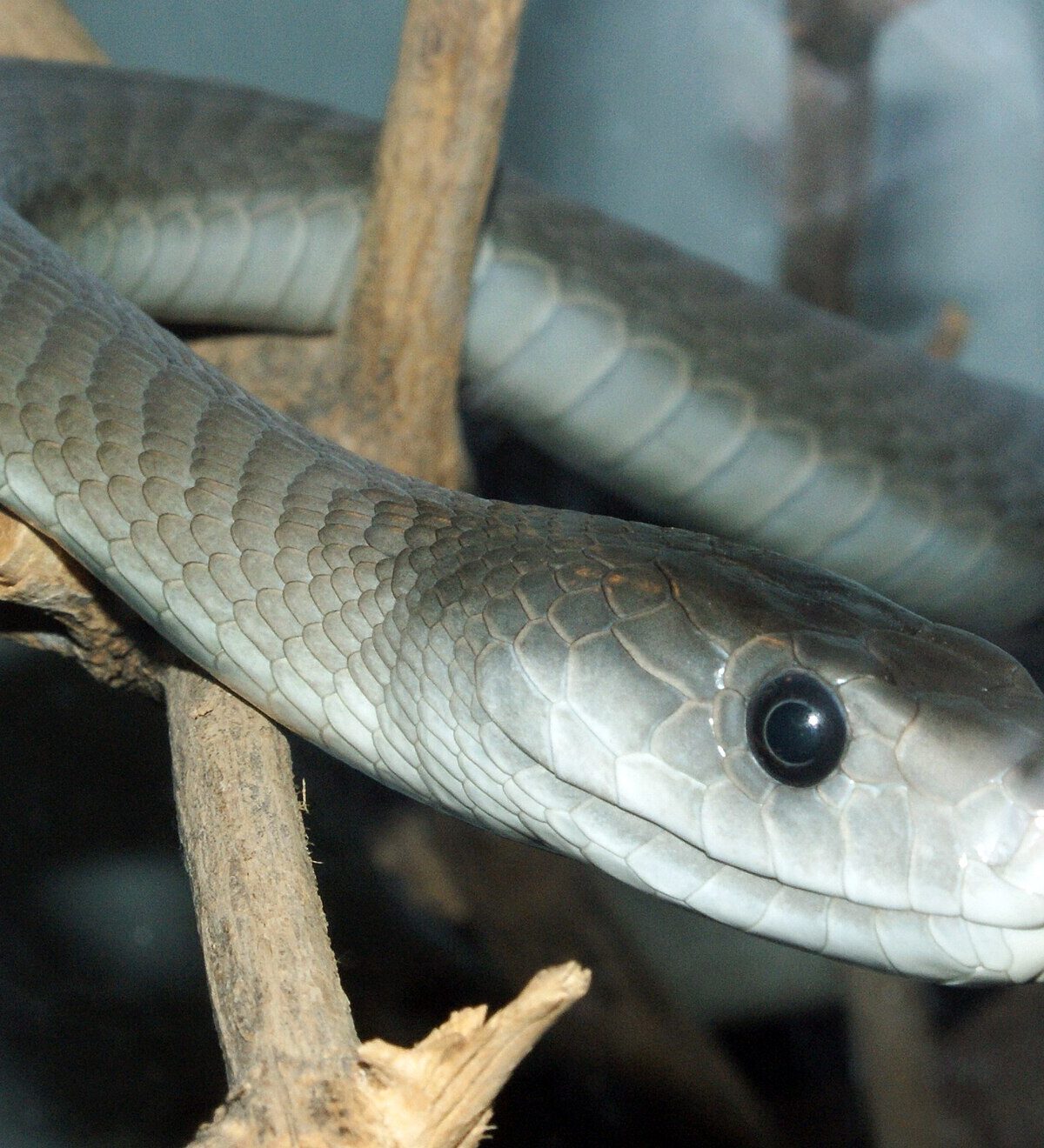
BLACK MAMBA
Dendroaspis polylepis
DESCRIPTION
The Black Mamba is one of the most venomous snakes in the world, characterized by its long, slender body and distinctive black coloration inside its mouth. Typically, it has a gray to olive-brown exterior, which can vary in shade, allowing it to blend into its environment. This species is known for its speed and agility, capable of moving at speeds up to 12 mph, and is often found in trees and shrubs, showcasing its adaptability to various habitats.
FUN FACTS
- The Black Mamba is not only one of the fastest snakes but also one of the most feared due to its potent venom, which can kill a human in less than an hour if untreated
- Interestingly, despite their fearsome reputation, Black Mambas are generally shy and will avoid human contact whenever possible, often fleeing rather than attacking.| Black Mambas are known for their unique social behavior; they can sometimes be seen basking together in the sun, especially during the cooler months
- This behavior is unusual for snakes, which are typically solitary, and it highlights the adaptability and social complexity of this species
QUICK INFO
Lifespan10-15 years in the wild, up to 20 years in captivi
Average Weight1.6-2.0 kg
Average Length2.5-4.5 m
Diet TypeCarnivore
Social Structuresolitary
Activity PatternDiurnal
Breeding SeasonSpring (September-November)
- Habitat
- Black Mambas inhabit a variety of environments, including savannas, woodlands, and rocky hillsides. They prefer areas with plenty of cover, such as bushes and trees, which provide both hunting grounds and shelter.
- Biomes
- Savanna, Woodland
- Native Range
- The Black Mamba is native to sub-Saharan Africa, found in countries such as South Africa, Kenya, and Tanzania.
- Continent
- Africa
- Countries
- South Africa, Kenya, Tanzania, Zimbabwe, Botswana
- Diet
- The Black Mamba primarily feeds on small mammals and birds, using its potent venom to immobilize prey quickly. It is an opportunistic hunter, often ambushing its victims or actively pursuing them.
- Diet Type
- Carnivore
- Favorite Food
- rodents, birds
- Social Structure
- solitary
- Activity Pattern
- Diurnal
- Group Size
- 1
- Territorial
- 1
 LC
LC
 LC
LC
1.6-2.0 kg
Weight
2.5-4.5 m
Length
- Coloration
- Typically gray to olive-brown with a lighter underside, and a black mouth.
- Sexual Dimorphism
- males are generally longer and slimmer than females
- Lifespan
- 10-15 years in the wild, up to 20 years in captivi
- Offspring per Birth
- 6-25
- Sexual Maturity
- 2-3 years
- Breeding Season
- Spring (September-November)
LC
Least Concern
IUCN Red List Status
- Population Status
- The population of Black Mambas is currently stable, but they face threats from habitat destruction and hunting.
- Wild Population Estimate
- unknown
- Population Trend
- Stable
- Endangered
- 0
- Threats
- Main threats include habitat loss due to agriculture and urbanization, as well as persecution by humans who fear their venomous nature. Despite their dangerous reputation, they play a crucial role in controlling rodent populations.
- Predators
- Eagles, large snakes, and humans
- Defense Mechanisms
- When threatened, the Black Mamba can deliver a series of rapid strikes and may also display aggressive postures to deter predators.
- Found in Zoos
- Common