


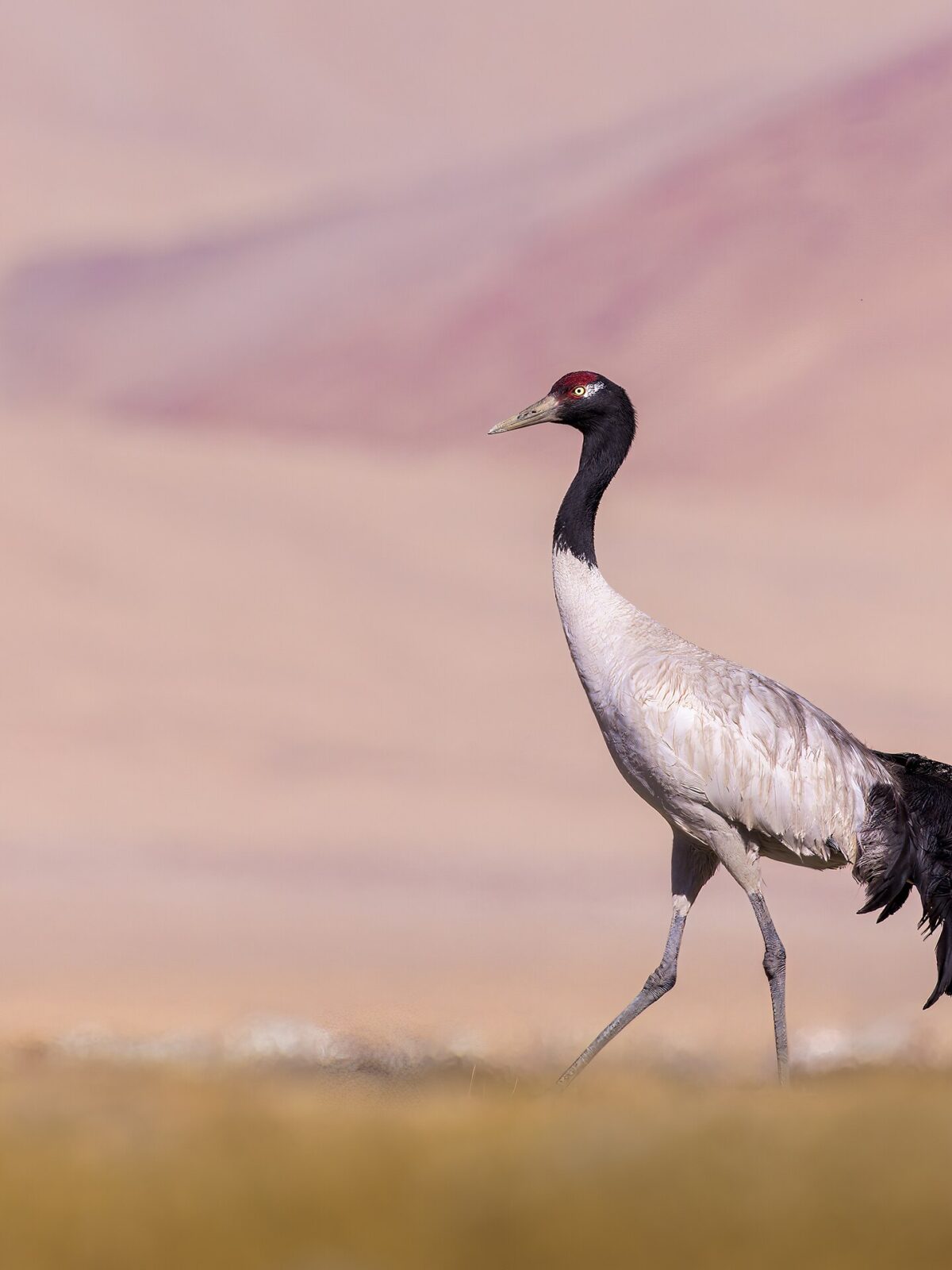
BLACK-NECKED CRANE
Grus nigricollis
DESCRIPTION
Black-Necked Crane (Grus nigricollis) is a large, elegant bird known for its striking black neck and head, contrasting with its white body and gray wings. This species is primarily found in the high-altitude wetlands of the Tibetan Plateau, where it engages in elaborate courtship dances during the breeding season. Black-Necked Cranes are known for their strong pair bonds and often return to the same nesting sites year after year, showcasing their loyalty and commitment to their mates.
FUN FACTS
- Black-Necked Cranes are known for their impressive courtship dances, which can involve jumping, bowing, and synchronized movements
- These displays not only strengthen pair bonds but also serve to attract potential mates
- | The species is culturally significant in Tibetan Buddhism, where it is often seen as a symbol of fidelity and longevity
- In some regions, they are also associated with various myths and legends, highlighting their importance in local traditions
QUICK INFO
Lifespan20-30 years in the wild
Average Weight4-6 kg
Average Length1.2-1.4 m
Diet TypeOmnivore
Social StructureThey are typically monogamous and form strong pair bonds, often seen together during foraging and nesting.
Activity PatternDiurnal
Breeding SeasonSpring (April-June)
- Habitat
- Black-Necked Cranes inhabit high-altitude wetlands, marshes, and grasslands, often near lakes and rivers. These habitats provide essential resources for feeding and nesting.
- Biomes
- Wetlands, Grasslands
- Native Range
- The species is native to the Tibetan Plateau and surrounding regions, including parts of China, India, and Bhutan.
- Continent
- Asia
- Countries
- China, India, Bhutan
- Diet
- They primarily feed on a variety of plant materials, including grasses, seeds, and tubers, as well as insects and small invertebrates.
- Diet Type
- Omnivore
- Favorite Food
- grasses, seeds, tubers
- Social Structure
- They are typically monogamous and form strong pair bonds, often seen together during foraging and nesting.
- Activity Pattern
- Diurnal
- Group Size
- 2-10
- Territorial
- 1
 LC
LC
4-6 kg
Weight
1.2-1.4 m
Length
- Coloration
- Predominantly white body with a black neck and head, gray wings, and a red crown.
- Sexual Dimorphism
- Males and females are similar in appearance, but males are generally larger.
- Lifespan
- 20-30 years in the wild
- Offspring per Birth
- 1-2
- Sexual Maturity
- 3-4 years
- Breeding Season
- Spring (April-June)
VU
Vulnerable
IUCN Red List Status
- Population Status
- The population is currently considered vulnerable due to habitat loss and other environmental pressures.
- Wild Population Estimate
- 10,000-15,000
- Population Trend
- Decreasing
- Endangered
- 1
- Threats
- Main threats include habitat destruction due to agricultural expansion, climate change, and human disturbance. These factors have led to a decline in suitable nesting and foraging areas.
- Predators
- Foxes, wolves, and large birds of prey such as eagles.
- Defense Mechanisms
- They rely on their ability to fly and their strong pair bonds for protection, often using alarm calls to warn of danger.
- Found in Zoos
- Uncommon