


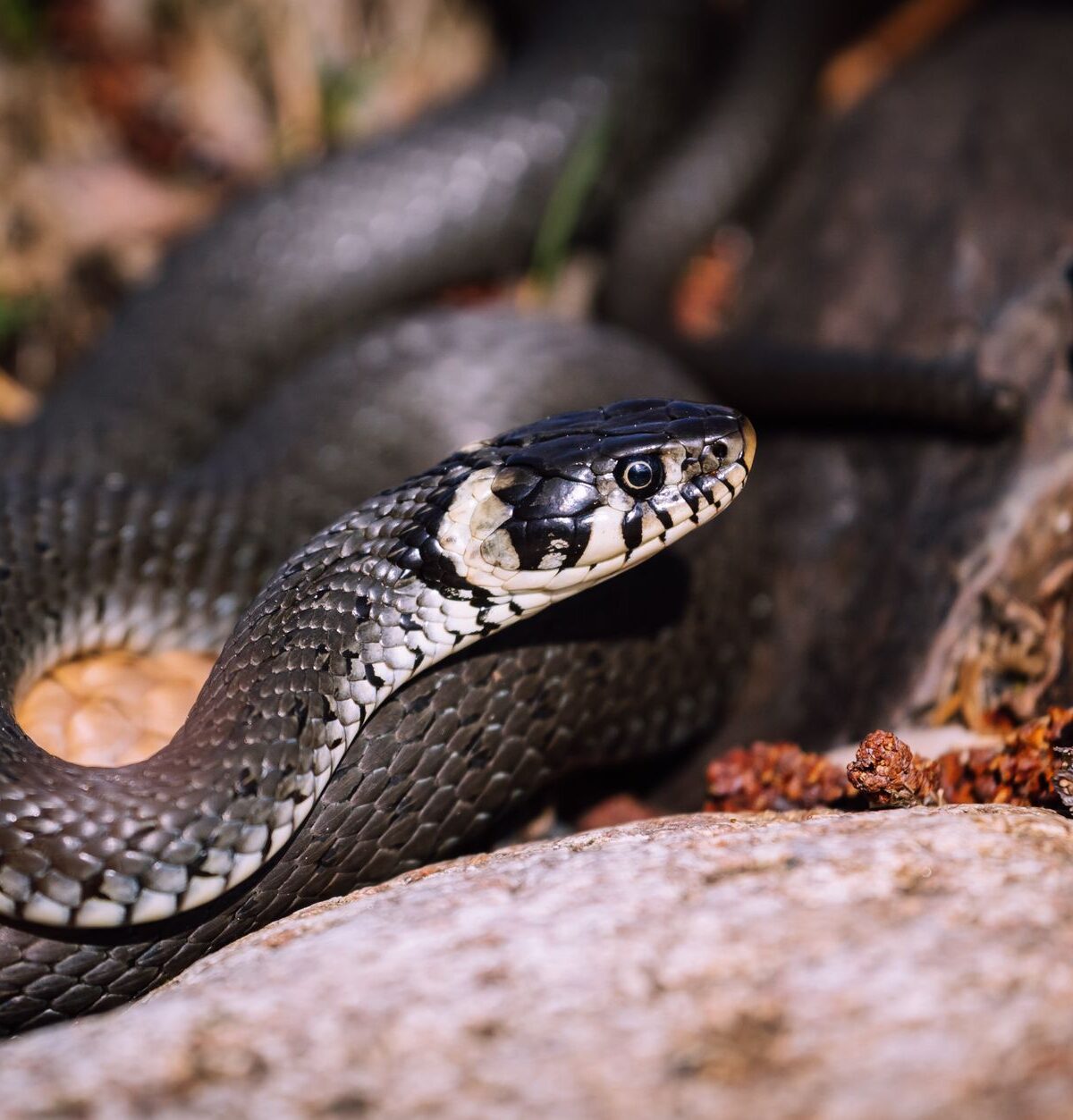
BLACK RAT SNAKE
Pantherophis obsoletus
DESCRIPTION
Black Rat Snake (Pantherophis obsoletus) is commonly known as the Eastern Rat Snake and is recognized for its striking black coloration with a lighter belly. This non-venomous constrictor can grow to impressive lengths, often reaching over six feet, and is known for its ability to climb trees and hunt birds. Inhabiting a variety of environments, they play a crucial role in controlling rodent populations, showcasing their adaptability and ecological importance.
FUN FACTS
- Black Rat Snakes are excellent climbers and can often be found in trees, where they hunt for birds and their eggs
- They are also known for their ability to constrict their prey, wrapping around it tightly until it suffocates
- | These snakes can vary in color, with some individuals displaying a more grayish or brownish hue, especially in the northern parts of their range
- This color variation helps them blend into their surroundings, making them effective ambush predators
QUICK INFO
Lifespan10-15 years in the wild, up to 30 years in captivi
Average Weight1.5-2.5 kg
Average Length1.5-2.4 m
Diet TypeCarnivore
Social Structuresolitary, typically found alone except during mating season
Activity PatternDiurnal
Breeding SeasonSpring (April-June)
- Habitat
- These snakes are commonly found in forests, fields, and near human settlements, often favoring areas with ample cover. They thrive in both wooded and open habitats, demonstrating versatility in their living conditions.
- Biomes
- Temperate Forest, Grassland
- Native Range
- The Black Rat Snake is native to the eastern United States, ranging from New England to the Gulf Coast.
- Continent
- North America
- Countries
- United States
- Diet
- Black Rat Snakes primarily feed on small mammals, birds, and their eggs. They are skilled hunters, using their keen sense of smell to locate prey.
- Diet Type
- Carnivore
- Favorite Food
- mice, birds
- Social Structure
- solitary, typically found alone except during mating season
- Activity Pattern
- Diurnal
- Group Size
- 1
- Territorial
- 0
 CR
CR
 LC
LC
1.5-2.5 kg
Weight
1.5-2.4 m
Length
- Coloration
- primarily black with a lighter belly, sometimes featuring a pattern of dark blotches
- Sexual Dimorphism
- males are generally smaller than females
- Lifespan
- 10-15 years in the wild, up to 30 years in captivi
- Gestation Period
- 60-70 days
- Offspring per Birth
- 5-20
- Sexual Maturity
- 2-3 years
- Breeding Season
- Spring (April-June)
LC
Least Concern
IUCN Red List Status
- Population Status
- The population is currently stable, with no significant declines reported.
- Wild Population Estimate
- unknown
- Population Trend
- Stable
- Endangered
- 0
- Threats
- Main threats include habitat destruction and road mortality. While not currently endangered, they face challenges from urban development and agricultural practices.
- Predators
- hawks, owls, raccoons, foxes
- Defense Mechanisms
- When threatened, Black Rat Snakes may mimic venomous snakes by flattening their heads and hissing loudly.
- Found in Zoos
- Common