


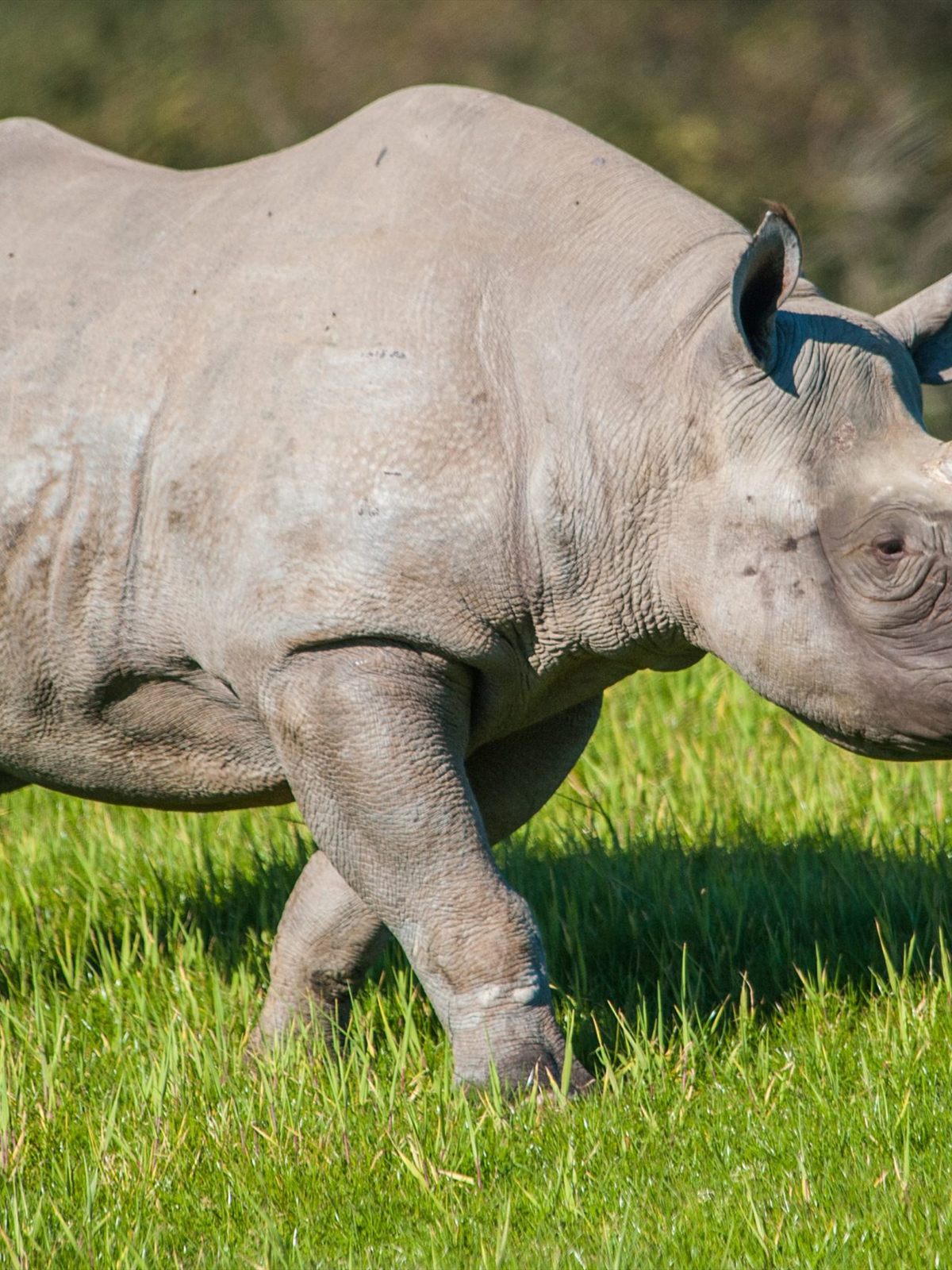
BLACK RHINOCEROS
DESCRIPTION
The Black Rhinoceros is a critically endangered species known for its distinctive hooked upper lip, which is adapted for grasping leaves and twigs. They are generally smaller than their white counterparts and are more solitary in nature.
FUN FACTS
- Black Rhinos can run up to 30 miles per hour | They have poor eyesight but an excellent sense of smell | Their horns are made of keratin, the same material as human hair and nails
QUICK INFO
Lifespan30-40 years in the wild, up to 50 in captivity
Average Weight800-1,400 kg
Average Length3.0-3.8 m
Diet TypeHerbivore
Social Structuresolitary, occasionally pairs or small groups
Activity PatternDiurnal
Breeding SeasonYear-round
- Habitat
- Black Rhinos inhabit a range of environments, including savannas, grasslands, and dense bush. They prefer areas with plenty of vegetation for browsing.
- Biomes
- Savanna, Grassland, Woodland
- Native Range
- Historically found throughout eastern and southern Africa, their range has significantly decreased due to habitat loss and poaching.
- Continent
- Africa
- Countries
- Kenya, Tanzania, South Africa, Namibia, Zimbabwe
- Diet
- Black Rhinos are herbivores that primarily feed on leaves, branches, and shrubs. They are known to consume a variety of plant species, often selecting those that are high in nutrients.
- Diet Type
- Herbivore
- Favorite Food
- Acacia leaves, shrubs
- Social Structure
- solitary, occasionally pairs or small groups
- Activity Pattern
- Diurnal
- Group Size
- 1-3
- Territorial
- 1
 LC
LC
800-1,400 kg
Weight
3.0-3.8 m
Length
1.2-1.4 m at shoulder
Height (Shoulder)
- Coloration
- dark gray to black, with a rough skin texture
- Sexual Dimorphism
- males are generally larger than females
- Lifespan
- 30-40 years in the wild, up to 50 in captivity
- Gestation Period
- 15-16 months
- Offspring per Birth
- 1
- Sexual Maturity
- 3-4 years
- Breeding Season
- Year-round
CR
Critically Endangered
IUCN Red List Status
- Population Status
- The population of Black Rhinos has been severely reduced due to poaching and habitat loss, but conservation efforts are ongoing.
- Wild Population Estimate
- 5,000-5,500
- Population Trend
- Increasing
- Endangered
- 1
- Threats
- The main threats to Black Rhinos include poaching for their horns and habitat destruction due to agriculture and human settlement.
- Conservation Program
- Various conservation programs are in place, including anti-poaching initiatives and habitat restoration efforts.
- Predators
- Humans are the primary threat; young rhinos may be vulnerable to lions and hyenas.
- Defense Mechanisms
- Black Rhinos have a strong sense of smell and hearing, and they can charge at high speeds to defend themselves.
- Compatible Animals
- none
- Found in Zoos
- Uncommon