


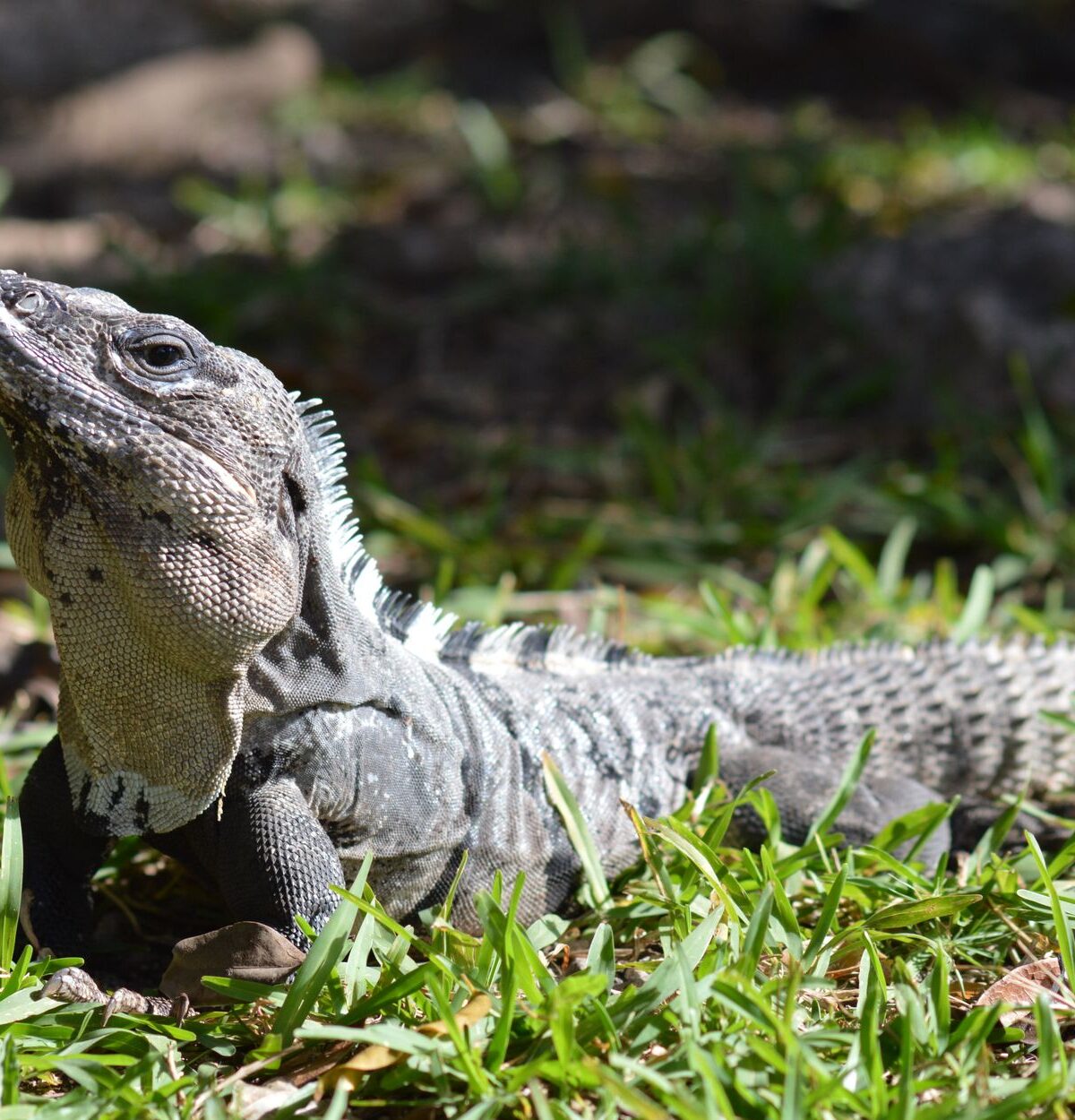
BLACK SPINY-TAILED IGUANA
Ctenosaura similis
DESCRIPTION
Black Spiny-tailed Iguana (Ctenosaura similis) is commonly known as the Central American Spiny-tailed Iguana. This species is characterized by its robust body, long tail, and distinctive spiny scales along its back, which can appear black or dark gray. They are primarily terrestrial and are known for their agility and speed, often basking in the sun on rocks or tree branches while being vigilant for predators.
FUN FACTS
- Black Spiny-tailed Iguanas are known for their impressive climbing abilities, often seen scaling trees and rocky surfaces with ease
- They can also shed their tails as a defense mechanism, allowing them to escape predators while the detached tail continues to move, distracting the threat.| These iguanas have a unique social structure, where males establish territories and engage in displays of dominance, such as head-bobbing and tail waving, to attract females and ward off rivals
QUICK INFO
Lifespan10-15 years in the wild, up to 20 years in captivi
Average Weight1-2 kg
Average Length0.6-1.2 m
Diet TypeOmnivore
Social StructureThey are generally solitary but can be found in small groups during basking or nesting.
Activity PatternDiurnal
Breeding SeasonSpring (March-May)
- Habitat
- Black Spiny-tailed Iguanas inhabit a range of environments, including dry forests, scrublands, and coastal areas. They prefer areas with plenty of sun and places to hide from predators.
- Biomes
- Tropical Dry Forest, Scrubland, Coastal
- Native Range
- This species is native to Central America, particularly found in countries like Mexico, Guatemala, and Honduras.
- Continent
- North America, Central America
- Countries
- Mexico, Guatemala, Honduras, El Salvador, Nicaragua
- Diet
- They are omnivorous, feeding on a variety of plant materials, fruits, and insects. Their diet can vary based on availability and habitat.
- Diet Type
- Omnivore
- Favorite Food
- fruits, leaves, insects
- Social Structure
- They are generally solitary but can be found in small groups during basking or nesting.
- Activity Pattern
- Diurnal
- Group Size
- 1-5
- Territorial
- 1
 VU
VU
 LC
LC
 LC
LC

1-2 kg
Weight
0.6-1.2 m
Length
- Coloration
- Typically dark gray to black with spiny scales along the back.
- Sexual Dimorphism
- Males are generally larger and have more pronounced spines than females.
- Lifespan
- 10-15 years in the wild, up to 20 years in captivi
- Offspring per Birth
- 5-20
- Sexual Maturity
- 2-3 years
- Breeding Season
- Spring (March-May)
LC
Least Concern
IUCN Red List Status
- Population Status
- The population is currently stable in many areas, but habitat loss poses a threat.
- Wild Population Estimate
- 50,000-100,000
- Population Trend
- Stable
- Endangered
- 0
- Threats
- Main threats include habitat destruction due to urbanization and agriculture, as well as hunting in some regions. They are also vulnerable to predation by domestic animals.
- Predators
- Birds of prey, snakes, domestic cats and dogs
- Defense Mechanisms
- They can run quickly to escape threats and may also use their sharp claws and teeth if cornered.
- Compatible Animals
- Other iguanas, certain reptiles
- Found in Zoos
- Common