


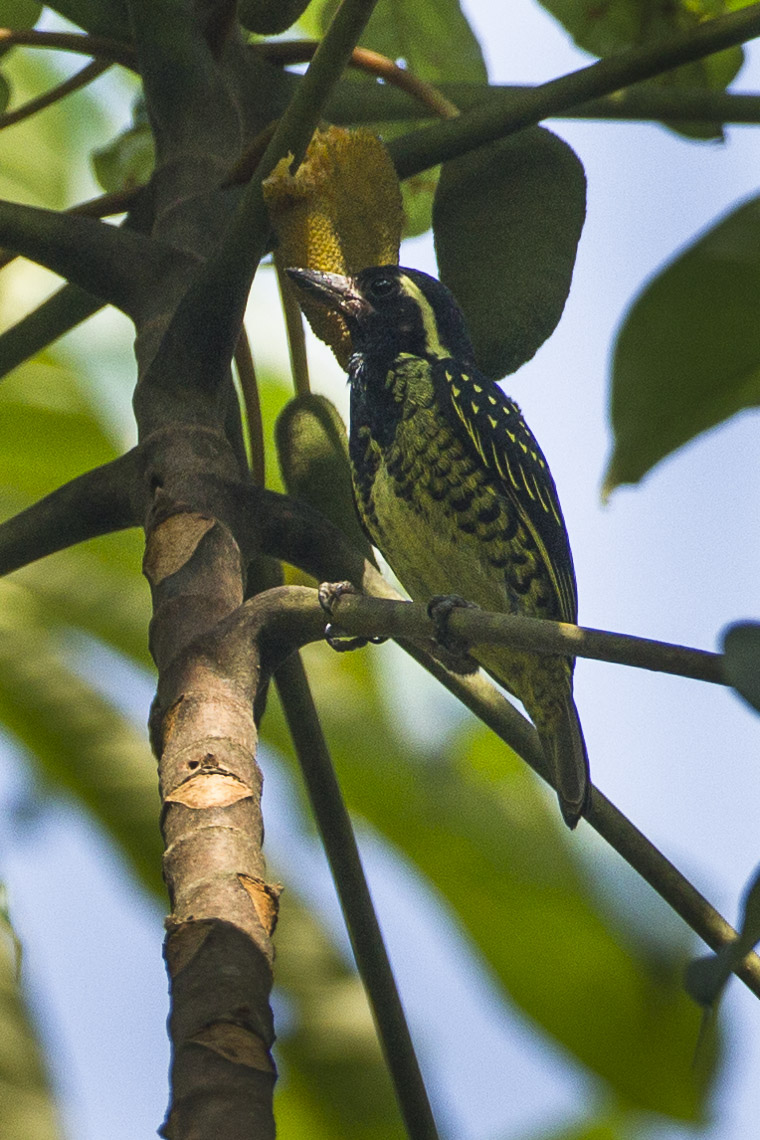
BLACK-SPOTTED BARBET
Buccanodon duchaillui
DESCRIPTION
Black-Spotted Barbet (Buccanodon duchaillui) is a striking bird known for its distinctive black spots on a vibrant green body. This species exhibits a stout bill, which is typical of barbets, and is often found in pairs or small groups. They are known for their loud, melodious calls that resonate through their forest habitats, where they play a crucial role in seed dispersal.
FUN FACTS
- Black-Spotted Barbets are known for their unique nesting habits, often excavating their own cavities in trees to lay their eggs
- This behavior not only provides them with a safe place to raise their young but also contributes to the health of their forest ecosystem by creating nesting sites for other species
- | These birds have a fascinating feeding technique; they often use their strong bills to crack open hard fruits and seeds, showcasing their adaptability in foraging
- Their role as seed dispersers is vital, as they help maintain the diversity of their forest habitats
QUICK INFO
LifespanUp to 10 years in the wild.
Average Weight50-70 g
Average Length18-20 cm
Diet TypeOmnivore
Social StructureThey are often found in pairs or small family groups, showcasing a social structure that promotes cooperative foraging.
Activity PatternDiurnal
Breeding SeasonSpring (September-November)
- Habitat
- Black-Spotted Barbets inhabit tropical and subtropical forests, often favoring areas with abundant fruiting trees. They are typically found in the canopy layer, where they can easily access their food sources.
- Biomes
- Tropical Rainforest
- Native Range
- This species is native to the lowland forests of the Amazon Basin.
- Continent
- South America
- Countries
- Brazil, Colombia, Peru
- Diet
- They primarily feed on fruits, seeds, and insects, showcasing a varied diet that supports their energetic lifestyle.
- Diet Type
- Omnivore
- Favorite Food
- fruits and seeds
- Social Structure
- They are often found in pairs or small family groups, showcasing a social structure that promotes cooperative foraging.
- Activity Pattern
- Diurnal
- Group Size
- 2-6
- Territorial
- 1
 LC
LC
 DD
DD
50-70 g
Weight
18-20 cm
Length
- Coloration
- Vibrant green body with distinctive black spots and a stout yellow bill.
- Lifespan
- Up to 10 years in the wild.
- Offspring per Birth
- 2-4
- Sexual Maturity
- 1-2 years
- Breeding Season
- Spring (September-November)
LC
Least Concern
IUCN Red List Status
- Population Status
- The population is currently stable, but habitat loss poses a potential threat.
- Wild Population Estimate
- Unknown
- Population Trend
- Stable
- Endangered
- 0
- Threats
- The main threats to the Black-Spotted Barbet include habitat destruction due to deforestation and agricultural expansion. These activities reduce their natural habitat and food sources.
- Predators
- Snakes, raptors, and larger birds may prey on Black-Spotted Barbets, particularly when they are nesting.
- Defense Mechanisms
- They often use their vocalizations to warn others of potential threats and may flee to dense foliage to avoid predators.
- Found in Zoos
- Uncommon