


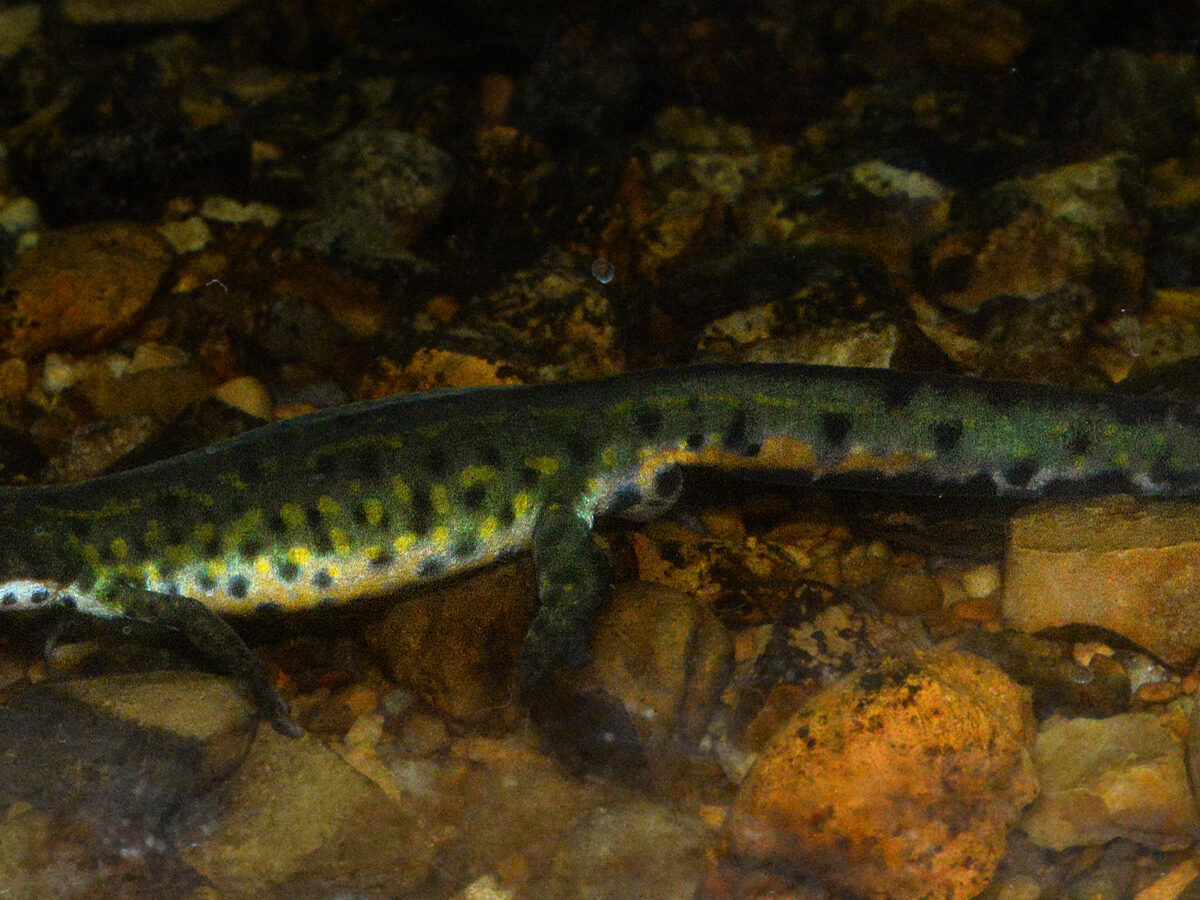
BLACK-SPOTTED NEWT
Notophthalmus meridionalis
DESCRIPTION
Black-spotted Newt (Notophthalmus meridionalis) is commonly known as the Southern Newt. This species is characterized by its striking coloration, featuring a dark brown to olive-green body adorned with distinctive black spots. They exhibit a unique life cycle, transitioning from aquatic larvae to terrestrial adults, showcasing a fascinating adaptation to their environment.
FUN FACTS
- Black-spotted Newts have a fascinating life cycle that includes a transformation from aquatic larvae to a terrestrial adult form, known as the eft stage
- During this stage, they exhibit bright colors to warn predators of their toxicity
- | These newts are capable of regenerating lost limbs, a remarkable ability that is a subject of scientific research
- This regeneration process can take several months, showcasing their unique biological adaptations
QUICK INFO
Lifespan10-15 years in the wild, up to 20 in captivity
Average Weight10-20 g
Average Length7-10 cm
Diet TypeCarnivore
Social Structuresolitary, typically found alone except during breeding
Activity PatternNocturnal
Breeding SeasonSpring (March-May)
- Habitat
- These newts inhabit a variety of freshwater environments, including ponds, marshes, and slow-moving streams. They prefer areas with abundant vegetation for cover and breeding.
- Biomes
- Temperate Forest, Wetlands
- Native Range
- The Black-spotted Newt is native to the southeastern United States, particularly in regions with suitable freshwater habitats.
- Continent
- North America
- Countries
- United States
- Diet
- Black-spotted Newts primarily consume small invertebrates, including insects and worms. They are opportunistic feeders, often foraging in both aquatic and terrestrial habitats.
- Diet Type
- Carnivore
- Favorite Food
- insects, worms
- Social Structure
- solitary, typically found alone except during breeding
- Activity Pattern
- Nocturnal
- Group Size
- 1-5
- Territorial
- 0
 VU
VU
 LC
LC
 LC
LC
10-20 g
Weight
7-10 cm
Length
- Coloration
- dark brown to olive-green with black spots
- Sexual Dimorphism
- males are generally smaller and have more vibrant coloration during breeding season
- Lifespan
- 10-15 years in the wild, up to 20 in captivity
- Offspring per Birth
- 100-200 eggs
- Sexual Maturity
- 2-3 years
- Breeding Season
- Spring (March-May)
LC
Least Concern
IUCN Red List Status
- Population Status
- The population is currently stable, but habitat loss poses a potential threat.
- Wild Population Estimate
- unknown
- Population Trend
- Stable
- Endangered
- 0
- Threats
- Main threats include habitat destruction due to urban development and pollution of water bodies. Climate change may also impact their breeding habitats.
- Predators
- birds, snakes, larger amphibians, fish
- Defense Mechanisms
- They possess toxic skin secretions that deter potential predators.
- Compatible Animals
- other small amphibians, certain fish species
- Found in Zoos
- Uncommon