


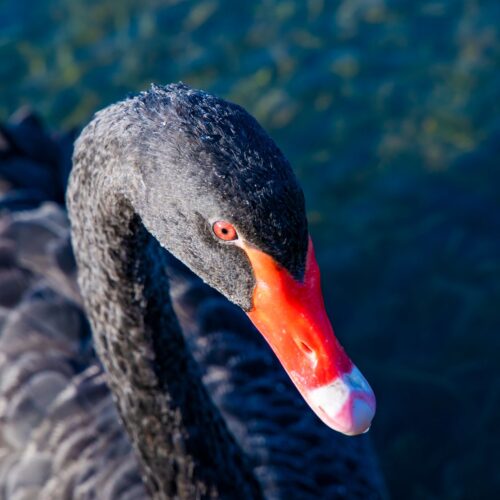
BLACK SWAN
Cygnus atratus
DESCRIPTION
The Black Swan (Cygnus atratus) is a large waterbird known for its striking black plumage and red bill. Unlike many other swan species, it has a more slender neck and a unique, graceful appearance. Black Swans are social birds, often seen in pairs or small groups, and are known for their elaborate courtship displays, which include synchronized swimming and head bobbing.
FUN FACTS
- Black Swans are unique among swan species for their black feathers, which are a result of a genetic mutation
- This striking coloration has made them a symbol of beauty and grace in various cultures
- | In addition to their beauty, Black Swans are known for their strong social bonds and complex courtship rituals, which can include synchronized swimming and elaborate displays
- These behaviors not only strengthen pair bonds but also play a role in attracting mates
QUICK INFO
Lifespan10-15 years in the wild, up to 30 years in captivi
Average Weight4-9 kg
Average Length1.1-1.4 m
Diet TypeHerbivore
Social Structurepair or group, often seen in small family groups or larger flocks during migration.
Activity PatternDiurnal
Breeding SeasonSpring to early summer
- Habitat
- Black Swans inhabit freshwater lakes, rivers, and wetlands, often preferring areas with abundant vegetation. They are also found in estuaries and coastal lagoons, where they can forage for food.
- Biomes
- Wetlands, Freshwater, Estuaries
- Native Range
- Black Swans are native to Australia and New Zealand, with some populations introduced to other regions.
- Continent
- Australia, Oceania
- Countries
- Australia, New Zealand
- Diet
- Black Swans primarily feed on aquatic plants, including algae, and various types of grasses. They are known to graze on land as well, particularly in the early morning and late afternoon.
- Diet Type
- Herbivore
- Favorite Food
- aquatic plants, grasses
- Social Structure
- pair or group, often seen in small family groups or larger flocks during migration.
- Activity Pattern
- Diurnal
- Group Size
- 2-30
- Territorial
- 1

 LC
LC
4-9 kg
Weight
1.1-1.4 m
Length
- Coloration
- entirely black plumage with a distinctive red bill
- Sexual Dimorphism
- males and females are similar in appearance, but males are generally larger.
- Lifespan
- 10-15 years in the wild, up to 30 years in captivi
- Offspring per Birth
- 5-8
- Sexual Maturity
- 2-3 years
- Breeding Season
- Spring to early summer
LC
Least Concern
IUCN Red List Status
- Population Status
- The population of Black Swans is currently stable, with healthy numbers in their native range.
- Wild Population Estimate
- 100,000+
- Population Trend
- Stable
- Endangered
- 0
- Threats
- Main threats include habitat loss due to wetland drainage and pollution. Additionally, they can be affected by hunting and predation by introduced species.
- Predators
- foxes, eagles, and large predatory birds
- Defense Mechanisms
- Black Swans can be aggressive when threatened, using their strong wings and beaks to defend themselves.
- Compatible Animals
- other waterfowl, ducks, geese
- Found in Zoos
- Common