


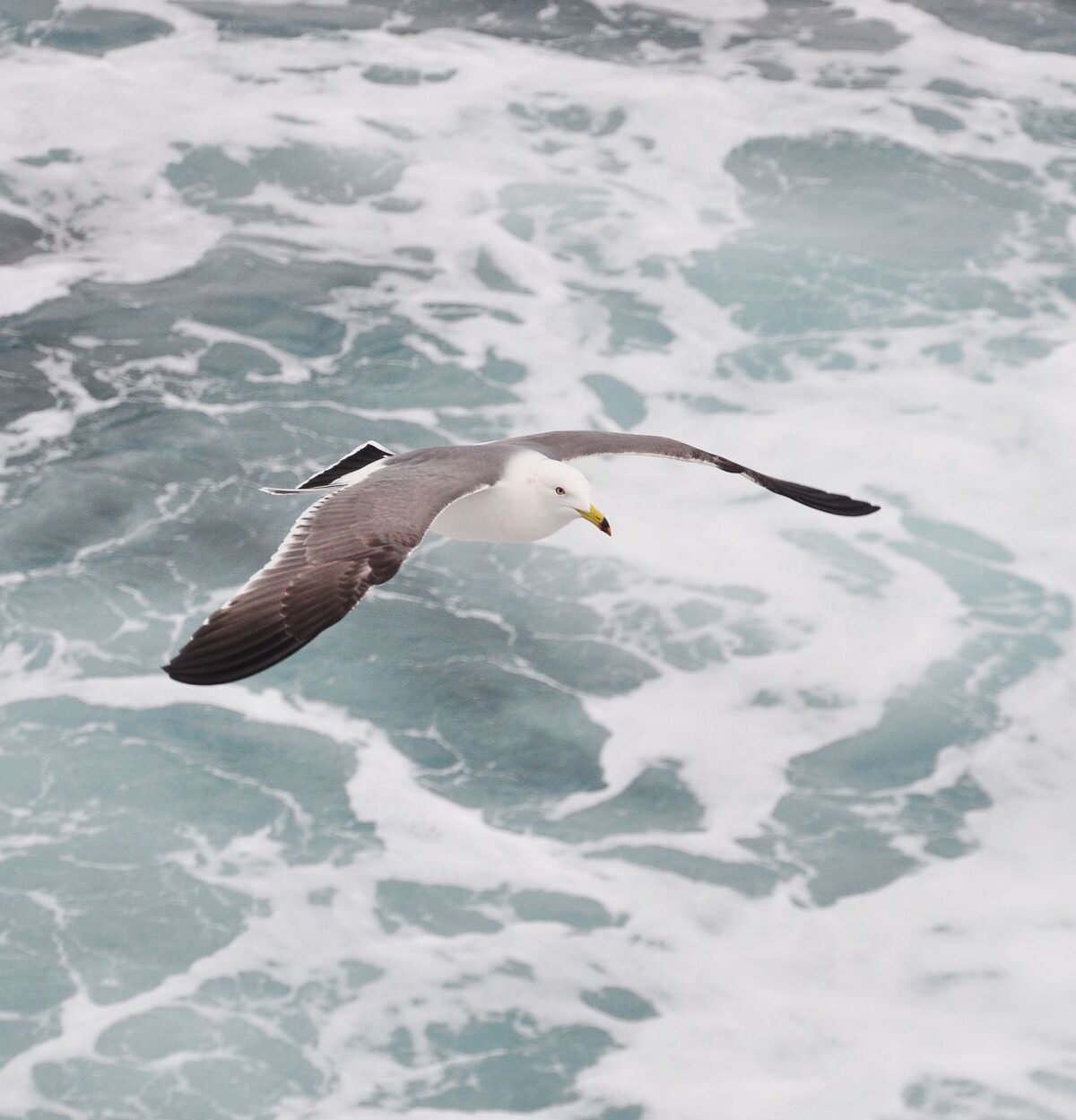
BLACK-TAILED GULL
Larus crassirostris
DESCRIPTION
Black-tailed Gull (Larus crassirostris) is commonly known as the Japanese Black-tailed Gull. This medium-sized gull features a distinctive black tail and a robust body, with a grayish mantle and white underparts. It is often seen foraging along coastlines and in urban areas, displaying a range of vocalizations and social behaviors, particularly during the breeding season.
FUN FACTS
- Black-tailed Gulls are known for their intelligence and adaptability, often seen scavenging in urban areas for food
- They have a unique breeding behavior where they form large colonies, which helps protect their young from predators.| These gulls are also known for their striking appearance, particularly during the breeding season when their plumage is at its most vibrant
- Their ability to thrive in both natural and urban environments showcases their versatility as a species
QUICK INFO
Lifespan10-15 years in the wild
Average Weight600-800 g
Average Length45-50 cm
Diet TypeOmnivore
Social StructureThey are often found in groups, especially during foraging and breeding seasons.
Activity PatternDiurnal
Breeding SeasonSpring (April-June)
- Habitat
- This species inhabits coastal regions, including beaches, estuaries, and urban areas near water. It prefers areas where it can easily access food sources and nesting sites.
- Biomes
- Coastal, Urban
- Native Range
- The Black-tailed Gull is native to the coastal regions of East Asia, particularly around Japan, Korea, and parts of China.
- Continent
- Asia
- Countries
- Japan, South Korea, China, Russia
- Diet
- The Black-tailed Gull primarily feeds on fish, crustaceans, and various invertebrates. It is known to scavenge in urban areas, taking advantage of human food waste.
- Diet Type
- Omnivore
- Favorite Food
- fish, crustaceans
- Social Structure
- They are often found in groups, especially during foraging and breeding seasons.
- Activity Pattern
- Diurnal
- Group Size
- 10-50
- Territorial
- 0
 VU
VU
 CR
CR
600-800 g
Weight
45-50 cm
Length
- Coloration
- The plumage is predominantly white with gray wings and a black tail, while the head is white with a dark mantle.
- Lifespan
- 10-15 years in the wild
- Offspring per Birth
- 2-3
- Sexual Maturity
- 3-4 years
- Breeding Season
- Spring (April-June)
LC
Least Concern
IUCN Red List Status
- Population Status
- The population of Black-tailed Gulls is currently stable, with no immediate threats to their numbers.
- Wild Population Estimate
- 100,000-200,000
- Population Trend
- Stable
- Endangered
- 0
- Threats
- Main threats include habitat loss due to urban development and pollution. Climate change may also impact their breeding and feeding grounds.
- Predators
- Large birds of prey, such as eagles and hawks, as well as domestic cats and dogs.
- Defense Mechanisms
- They often use vocalizations and aggressive displays to defend their nests and young from potential threats.
- Found in Zoos
- Uncommon