


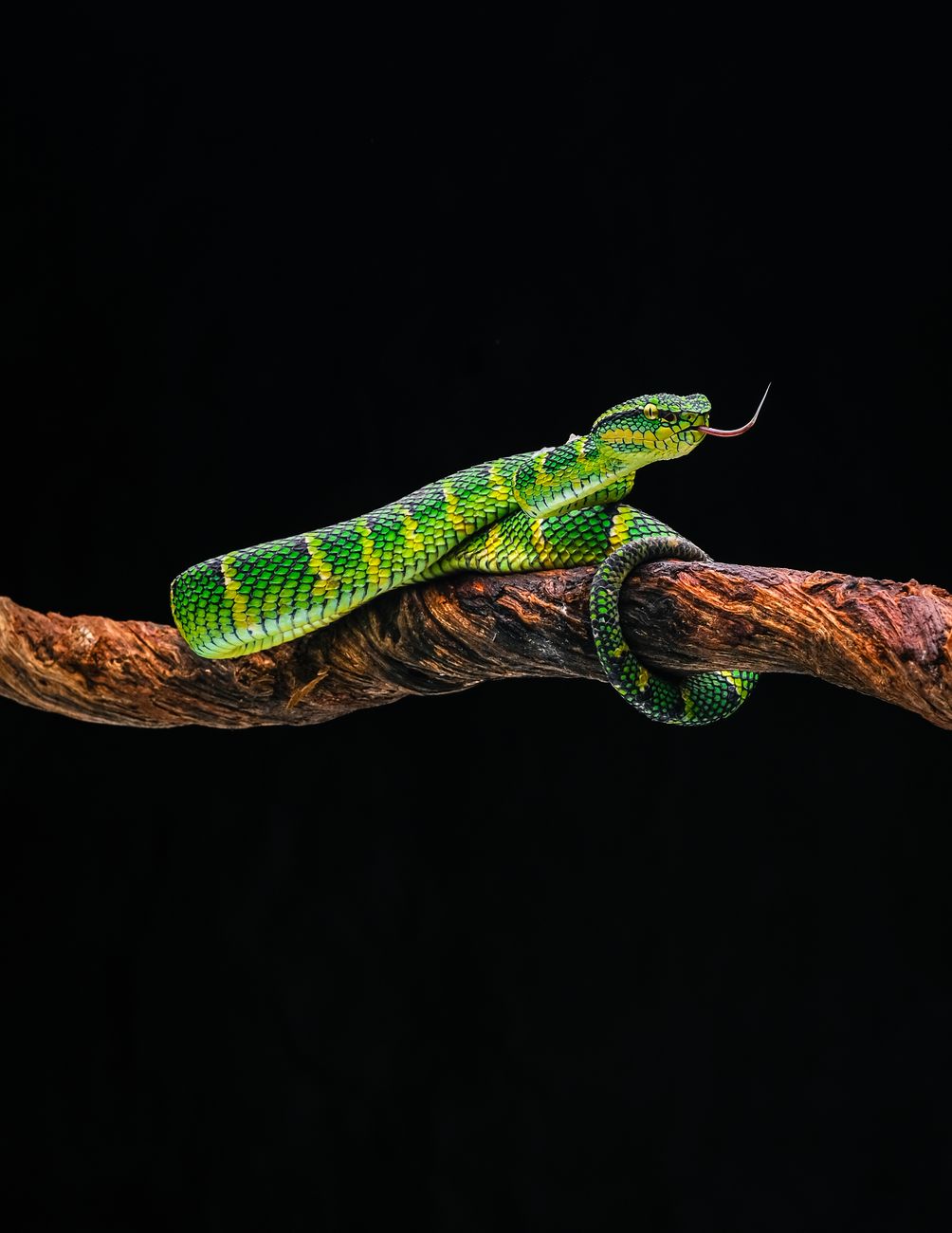
BLACK-TAILED HORNED PITVIPER
Bothriechis nigroviridis
DESCRIPTION
Black-tailed Horned Pitviper (Bothriechis nigroviridis) is commonly known as the Green Pit Viper due to its vibrant green coloration, which helps it blend into the foliage of its natural habitat. This species is characterized by its distinctive black tail and prominent horn-like scales above its eyes, giving it a unique appearance among pit vipers. Primarily arboreal, it exhibits a behavior of resting on branches and is known for its ambush predation strategy, waiting for unsuspecting prey to come close before striking.
FUN FACTS
- The Black-tailed Horned Pitviper is known for its striking appearance, which not only serves as camouflage but also as a warning to potential predators about its venomous nature
- Interestingly, these snakes can change their coloration slightly based on their environment, enhancing their ability to blend in with the surrounding foliage
- | Despite their venomous bite, they are often misunderstood and play a crucial role in controlling rodent populations in their ecosystems, showcasing the importance of snakes in maintaining ecological balance
QUICK INFO
Lifespan10-15 years in the wild, up to 20 in captivity
Average Weight0.5-1 kg
Average Length1-1.5 m
Diet TypeCarnivore
Social Structuresolitary, typically found alone except during mating season
Activity PatternNocturnal
Breeding SeasonSpring (March-May)
- Habitat
- The Black-tailed Horned Pitviper inhabits humid tropical and subtropical forests, often found in the canopy or on low vegetation. It prefers areas with dense foliage that provide cover and hunting opportunities.
- Biomes
- Tropical Rainforest, Subtropical Forest
- Native Range
- This species is native to Central America, specifically found in countries such as Costa Rica and Panama.
- Continent
- North America, Central America
- Countries
- Costa Rica, Panama
- Diet
- It primarily feeds on small mammals, birds, and occasionally amphibians. The snake uses its heat-sensing pits to detect warm-blooded prey.
- Diet Type
- Carnivore
- Favorite Food
- small mammals, birds
- Social Structure
- solitary, typically found alone except during mating season
- Activity Pattern
- Nocturnal
- Group Size
- 1
- Territorial
- 0
 VU
VU
0.5-1 kg
Weight
1-1.5 m
Length
- Coloration
- vibrant green with a black tail and distinctive horn-like scales
- Sexual Dimorphism
- females are generally larger than males
- Lifespan
- 10-15 years in the wild, up to 20 in captivity
- Gestation Period
- 6-7 months
- Offspring per Birth
- 2-10
- Sexual Maturity
- 2-3 years
- Breeding Season
- Spring (March-May)
LC
Least Concern
IUCN Red List Status
- Population Status
- The population is currently stable, but habitat loss poses a potential threat.
- Wild Population Estimate
- unknown
- Population Trend
- Stable
- Endangered
- 0
- Threats
- Main threats include habitat destruction due to deforestation and human encroachment. Additionally, they are sometimes targeted for the pet trade.
- Predators
- Birds of prey, larger snakes, and mammals such as raccoons may prey on the Black-tailed Horned Pitviper.
- Defense Mechanisms
- It relies on camouflage to avoid detection and can deliver a venomous bite if threatened.
- Found in Zoos
- Uncommon