


BLACK-TAILED MAKI
Eulemur macaco
DESCRIPTION
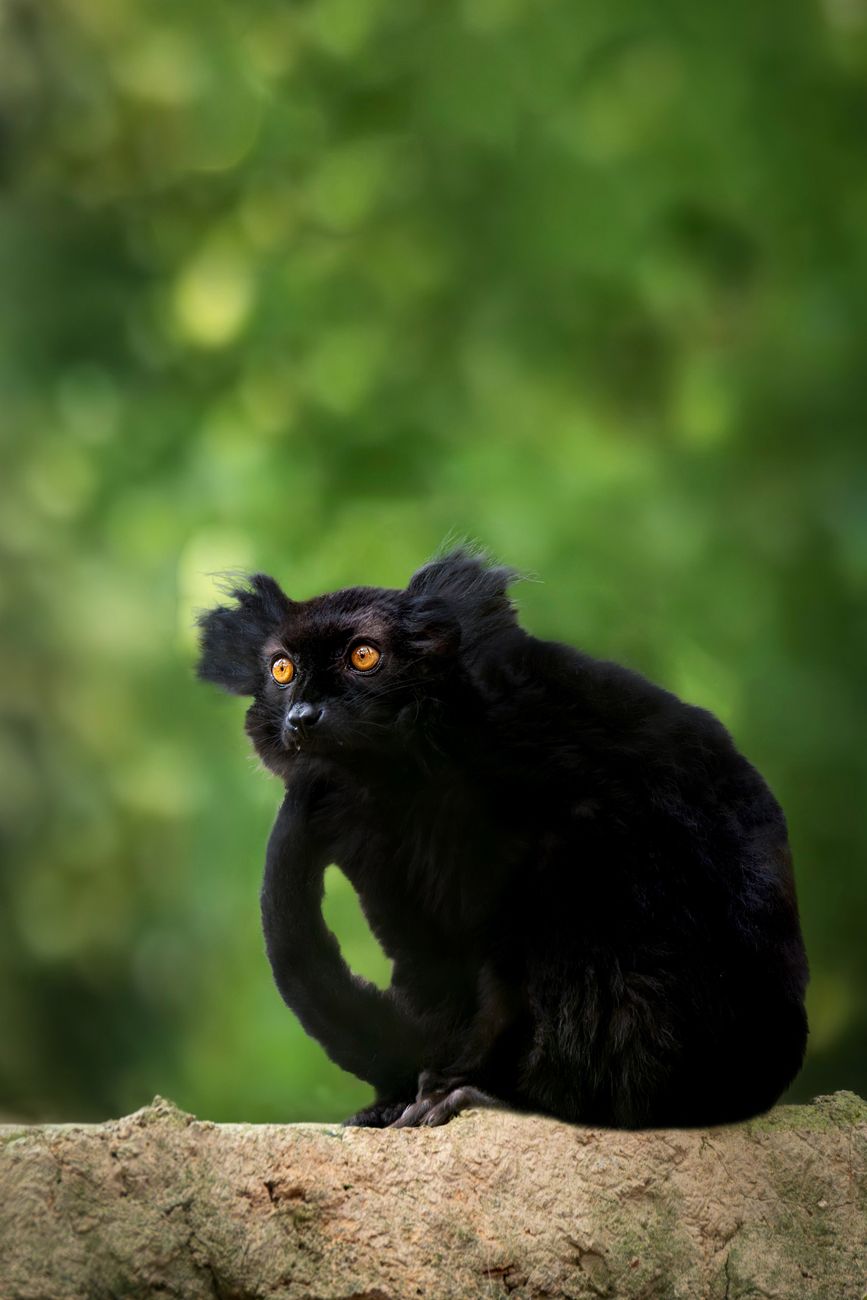
Black-Tailed Maki (Eulemur macaco) is commonly known as the Black Lemur, characterized by its striking black fur and distinctive tail. This species exhibits sexual dimorphism, with males being entirely black while females have a mix of black and brown fur. They are social animals, often found in groups, and are known for their vocalizations and complex social interactions.
FUN FACTS
- Black-Tailed Makis are known for their unique social behaviors, including grooming and playing, which strengthen social bonds within their groups
- They are also one of the few lemur species that exhibit significant sexual dimorphism, making them visually distinct between males and females.| These lemurs have a complex vocal repertoire, using different calls to communicate various messages, such as alerts to danger or calls to gather the group
- Their social structure is fascinating, as females often lead the groups, which is relatively rare among primates
QUICK INFO
Lifespan15-20 years in the wild, up to 30 years in captivi
Average Weight2.5-3.5 kg
Average Length40-50 cm
Diet TypeOmnivore
Social StructureThey live in small groups, typically consisting of a few females and one or more males, exhibiting a matriarchal social structure.
Activity PatternDiurnal
Breeding SeasonSpring (September-November)
- Habitat
- They inhabit tropical and subtropical forests, often preferring areas with dense vegetation. These lemurs are arboreal, spending most of their time in trees.
- Biomes
- Tropical Rainforest, Subtropical Forest
- Native Range
- Endemic to Madagascar, specifically found in the northwestern regions of the island.
- Continent
- Africa
- Countries
- Madagascar
- Diet
- Black-Tailed Makis primarily consume fruits, leaves, and flowers, making them frugivorous. They also occasionally eat insects and other small invertebrates.
- Diet Type
- Omnivore
- Favorite Food
- fruits, leaves
- Social Structure
- They live in small groups, typically consisting of a few females and one or more males, exhibiting a matriarchal social structure.
- Activity Pattern
- Diurnal
- Group Size
- 5-15
- Territorial
- 1
 LC
LC
2.5-3.5 kg
Weight
40-50 cm
Length
- Coloration
- Males are entirely black, while females have a mix of black and brown fur with a lighter underside.
- Sexual Dimorphism
- Males are darker and larger than females.
- Lifespan
- 15-20 years in the wild, up to 30 years in captivi
- Gestation Period
- 120 days
- Offspring per Birth
- 1-2
- Sexual Maturity
- 2-3 years
- Breeding Season
- Spring (September-November)
EN
Endangered
IUCN Red List Status
- Population Status
- The population is currently declining due to habitat loss and hunting.
- Wild Population Estimate
- 10,000-20,000
- Population Trend
- Decreasing
- Endangered
- 1
- Threats
- Main threats include deforestation due to agriculture and logging, as well as hunting for bushmeat. These pressures have significantly impacted their habitat and population numbers.
- Conservation Program
- Conservation efforts include habitat protection and restoration initiatives in Madagascar.
- Predators
- Main predators include Madagascar's native raptors and snakes, as well as domestic dogs.
- Defense Mechanisms
- They use vocalizations to warn others of danger and can also flee into the trees to escape predators.
- Found in Zoos
- Uncommon