


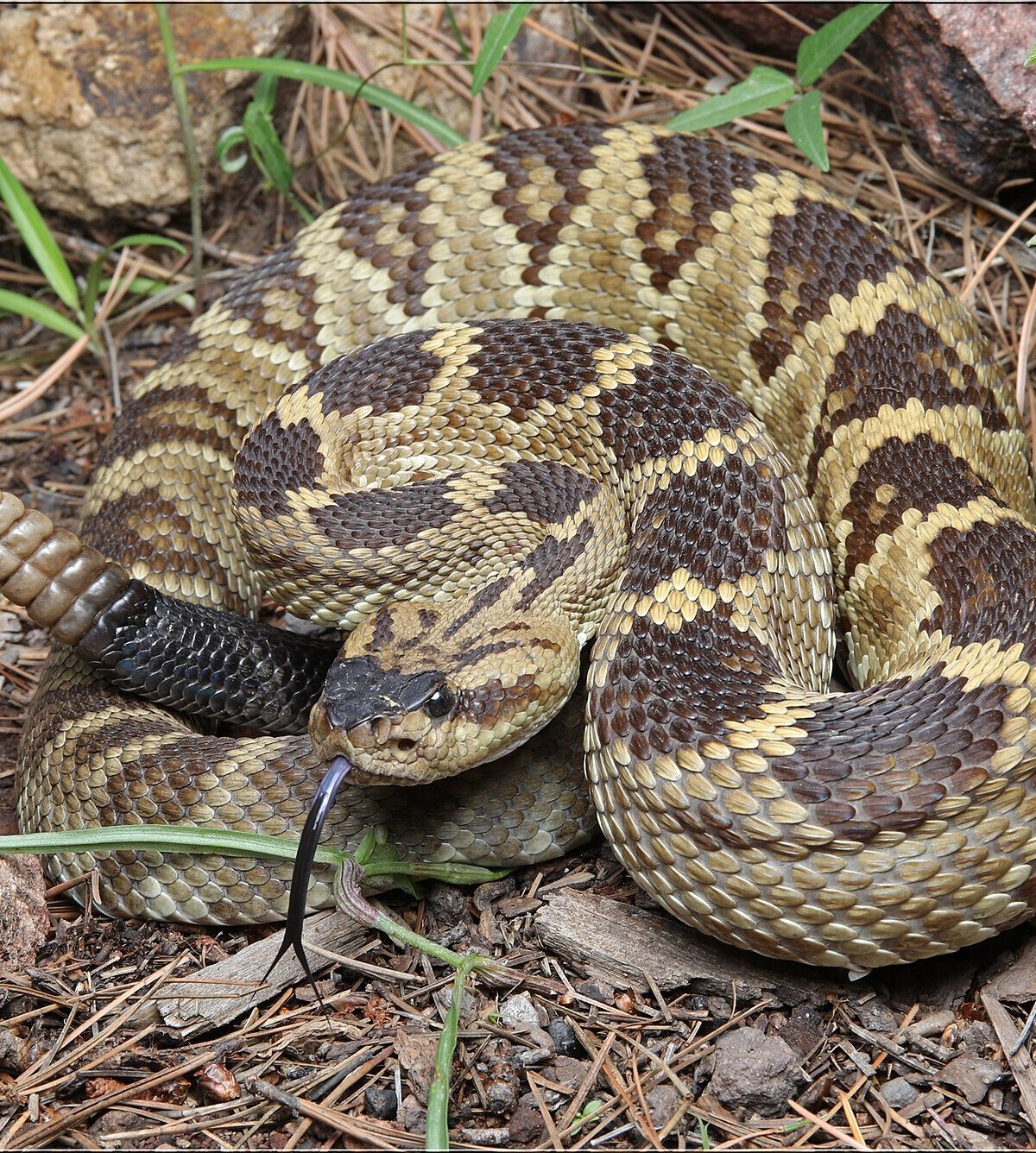
BLACK-TAILED RATTLESNAKE
Crotalus molossus
DESCRIPTION
Black-tailed Rattlesnake (Crotalus molossus) is commonly known as the Mexican Rattlesnake and is characterized by its distinctive black tail and a pattern of dark bands on a lighter background. This species exhibits a robust body and can vary in coloration, often displaying shades of brown, gray, or yellow. They are primarily terrestrial and are known for their defensive behavior, often rattling their tails as a warning before striking.
FUN FACTS
- Black-tailed Rattlesnakes are known for their impressive ability to regulate their body temperature by basking in the sun or seeking shade
- They are also capable of producing a wide range of vocalizations, including hissing and rattling, to communicate with other snakes or deter potential threats.| These snakes play a crucial role in their ecosystem as both predator and prey, helping to control rodent populations while also serving as food for larger animals
- Their venom is also of interest in medical research for potential applications in pain management
QUICK INFO
Lifespan10-20 years in the wild, up to 30 years in captivi
Average Weight1-2 kg
Average Length1.2-1.8 m
Diet TypeCarnivore
Social Structuresolitary, typically found alone except during mating season
Activity PatternNocturnal
Breeding SeasonSpring (April-June)
- Habitat
- Black-tailed Rattlesnakes inhabit a variety of environments, including rocky hillsides, grasslands, and desert areas. They prefer areas with ample cover and places to hide from predators.
- Biomes
- Desert, Grassland, Scrubland
- Native Range
- This species is native to the southwestern United States and parts of Mexico.
- Continent
- North America
- Countries
- United States, Mexico
- Diet
- They primarily feed on small mammals, birds, and occasionally reptiles. Their hunting strategy involves ambushing prey and using their venom to subdue it.
- Diet Type
- Carnivore
- Favorite Food
- small mammals, birds
- Social Structure
- solitary, typically found alone except during mating season
- Activity Pattern
- Nocturnal
- Group Size
- 1
- Territorial
- 1
 VU
VU
1-2 kg
Weight
1.2-1.8 m
Length
- Coloration
- Typically brown or gray with darker bands and a distinctive black tail.
- Sexual Dimorphism
- Males are generally smaller than females.
- Lifespan
- 10-20 years in the wild, up to 30 years in captivi
- Gestation Period
- 90-100 days
- Offspring per Birth
- 5-15
- Sexual Maturity
- 2-3 years
- Breeding Season
- Spring (April-June)
LC
Least Concern
IUCN Red List Status
- Population Status
- The population is currently stable, but habitat loss poses a potential threat.
- Wild Population Estimate
- Unknown
- Population Trend
- Stable
- Endangered
- 0
- Threats
- Main threats include habitat destruction and road mortality. They are also sometimes killed out of fear or misunderstanding.
- Predators
- Birds of prey, larger snakes, and mammals such as coyotes may prey on Black-tailed Rattlesnakes.
- Defense Mechanisms
- They use their rattle as a warning signal and can deliver a venomous bite if threatened.
- Found in Zoos
- Uncommon