


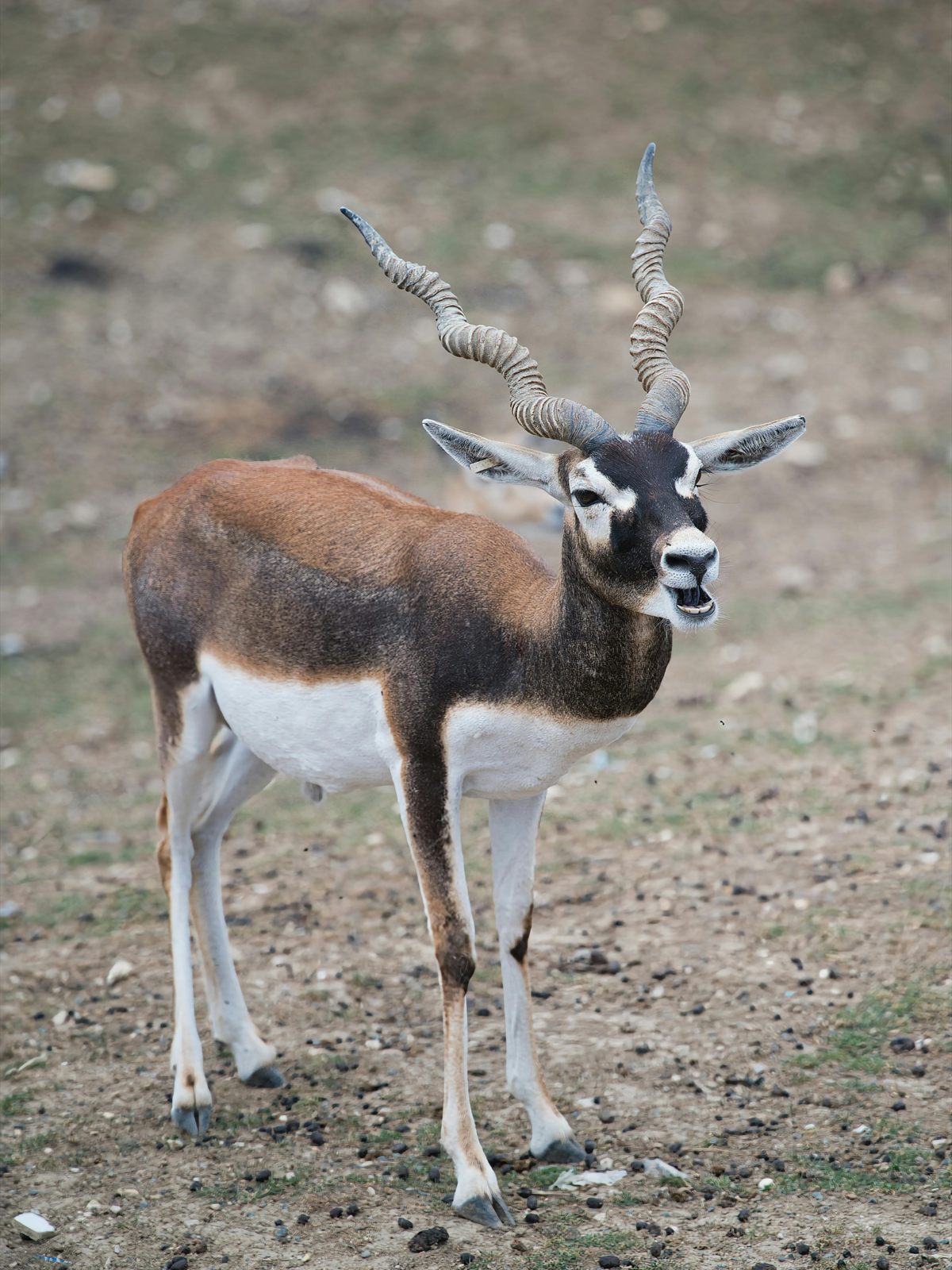
BLACKBUCK
Antilope cervicapra
DESCRIPTION
Also called the Indian Antelope, Blackbuck is a medium-sized antelope known for its striking appearance, characterized by a dark brown to black coat in males and a lighter tan coat in females. Males possess long, spiral horns that can reach up to 80 cm in length, while females are hornless. Blackbucks are social animals, often found in herds, and are known for their incredible speed and agility, which they use to evade predators in their open grassland habitats.
FUN FACTS
- Blackbucks are known for their incredible speed, capable of running at speeds up to 80 km/h, making them one of the fastest antelopes
- They have a unique social structure where males establish territories and engage in elaborate displays to attract females, showcasing their impressive horns and agility.|The Blackbuck is also culturally significant in India, where it is considered a symbol of grace and beauty
- In some regions, it is revered and protected, leading to the establishment of wildlife sanctuaries dedicated to its conservation
QUICK INFO
Lifespan10-12 years in the wild, up to 15 years in captivi
Average Weight40-80 kg
Average Length1.2-1.5 m
Diet TypeHerbivore
Social StructureBlackbucks are typically found in groups, often consisting of females and their young, while males may be solitary or form small bachelor groups.
Activity PatternDiurnal
Breeding SeasonYear-round, with peaks during the monsoon season
- Habitat
- Blackbucks inhabit open grasslands, scrublands, and savannas. They prefer areas with short grass and scattered bushes, which provide both food and cover from predators.
- Biomes
- Grassland, Savanna
- Native Range
- Blackbucks are native to the Indian subcontinent, primarily found in India and Nepal.
- Continent
- Asia
- Countries
- India, Nepal
- Diet
- Blackbucks are herbivores that primarily graze on grasses, leaves, and shoots. They are known to prefer young, tender vegetation.
- Diet Type
- Herbivore
- Favorite Food
- grasses
- Social Structure
- Blackbucks are typically found in groups, often consisting of females and their young, while males may be solitary or form small bachelor groups.
- Activity Pattern
- Diurnal
- Group Size
- 5-50
- Territorial
- 1
 EN
EN
 VU
VU
40-80 kg
Weight
1.2-1.5 m
Length
0.75-1 m at shoulder
Height (Shoulder)
- Coloration
- Males are dark brown to black, while females are light tan.
- Sexual Dimorphism
- Males are larger and have long spiral horns, while females are smaller and hornless.
- Lifespan
- 10-12 years in the wild, up to 15 years in captivi
- Gestation Period
- 180 days
- Offspring per Birth
- 1
- Sexual Maturity
- 1-2 years
- Breeding Season
- Year-round, with peaks during the monsoon season
LC
Least Concern
IUCN Red List Status
- Population Status
- The population of Blackbucks has been declining due to habitat loss and hunting, but conservation efforts have helped stabilize some populations.
- Wild Population Estimate
- 50,000-60,000
- Population Trend
- Stable
- Endangered
- 0
- Threats
- Main threats to Blackbucks include habitat destruction due to agricultural expansion and poaching. Additionally, competition with livestock for food resources poses a significant challenge.
- Conservation Program
- Project Blackbuck, initiated in India, aims to conserve and protect Blackbuck populations and their habitats.
- Predators
- Tigers, leopards, and wild dogs are known predators of Blackbucks.
- Defense Mechanisms
- Blackbucks rely on their speed and agility to escape from predators, often running in zigzag patterns to evade capture.
- Compatible Animals
- nilgai, chital, various bird species
- Found in Zoos
- Common