


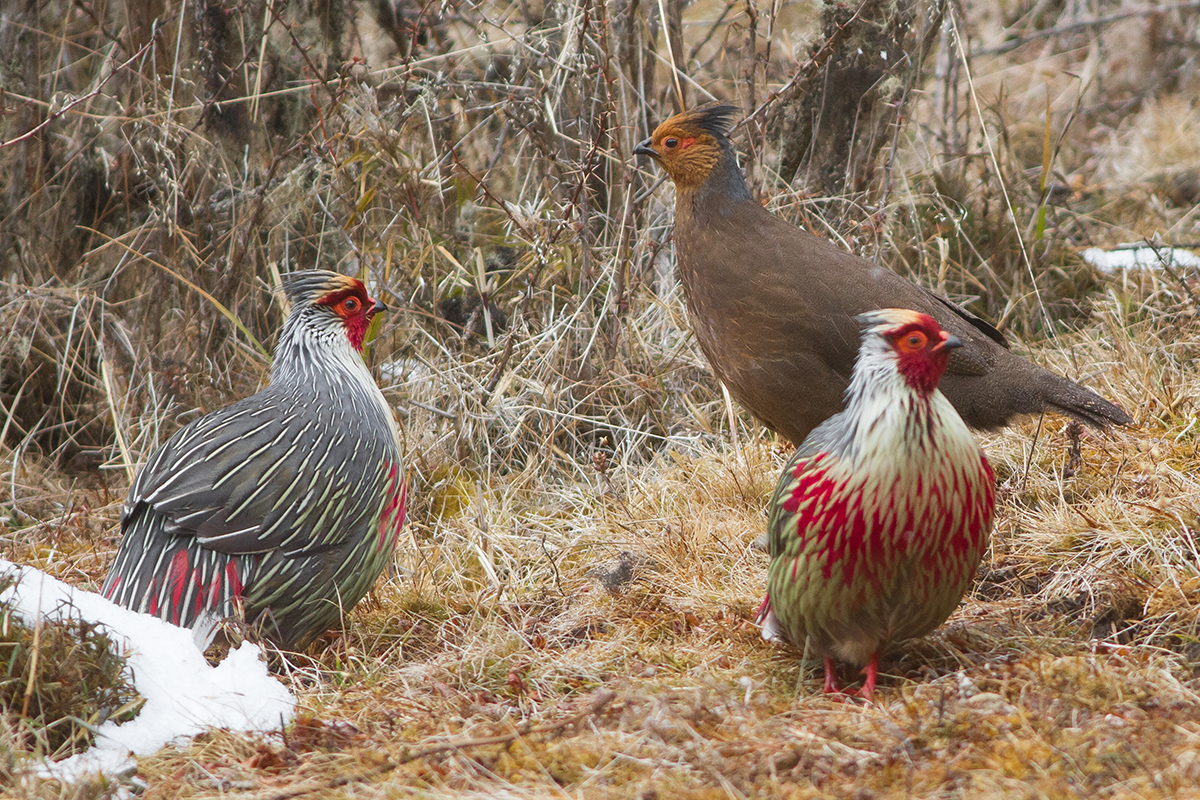
BLOOD PHEASANT
Ithaginis cruentus
DESCRIPTION
Blood Pheasant (Ithaginis cruentus) is a striking bird known for its vibrant plumage, which features a mix of deep red, black, and white colors. This species is primarily found in the mountainous regions of the eastern Himalayas, where it inhabits dense underbrush and forested areas. Blood Pheasants are known for their elusive behavior, often hiding among the foliage and being more active during the early morning and late afternoon hours.
FUN FACTS
- Blood Pheasants are often considered a symbol of the Himalayan region due to their unique appearance and elusive nature
- They are also known for their distinctive calls, which can be heard echoing through the forests during the breeding season.|Despite their name, Blood Pheasants are not actually related to the more commonly known pheasants and belong to a distinct genus
- Their vibrant coloration and unique behaviors make them a fascinating subject for birdwatchers and ornithologists alike
QUICK INFO
Lifespan5-10 years in the wild
Average Weight0.5-1 kg
Average Length40-50 cm
Diet TypeOmnivore
Social Structuresolitary or in small groups, especially during breeding
Activity PatternDiurnal
Breeding SeasonSpring (March-May)
- Habitat
- Blood Pheasants thrive in dense forests and shrublands, often at high altitudes. They prefer areas with ample cover for foraging and nesting.
- Biomes
- Temperate Forest, Montane Forest
- Native Range
- The native range of the Blood Pheasant includes the eastern Himalayas, particularly in regions of Nepal, Bhutan, and northern India.
- Continent
- Asia
- Countries
- Nepal, Bhutan, India
- Diet
- Blood Pheasants primarily feed on seeds, fruits, and various plant materials, foraging on the ground for food. They may also consume insects and small invertebrates occasionally.
- Diet Type
- Omnivore
- Favorite Food
- seeds, fruits, plant materials
- Social Structure
- solitary or in small groups, especially during breeding
- Activity Pattern
- Diurnal
- Group Size
- 1-5
- Territorial
- 0
 LC
LC

 VU
VU
0.5-1 kg
Weight
40-50 cm
Length
- Coloration
- vibrant red body with black and white markings
- Sexual Dimorphism
- males are more brightly colored than females
- Lifespan
- 5-10 years in the wild
- Offspring per Birth
- 4-8 eggs
- Sexual Maturity
- 1 year
- Breeding Season
- Spring (March-May)
LC
Least Concern
IUCN Red List Status
- Population Status
- The population of Blood Pheasants is currently stable, but they are affected by habitat loss.
- Wild Population Estimate
- unknown
- Population Trend
- Stable
- Endangered
- 0
- Threats
- Main threats to Blood Pheasants include habitat destruction due to deforestation and human encroachment. Additionally, hunting poses a risk in some areas.
- Predators
- eagles, foxes, and other birds of prey
- Defense Mechanisms
- Blood Pheasants rely on their camouflage and secretive behavior to avoid detection by predators.
- Found in Zoos
- Uncommon