


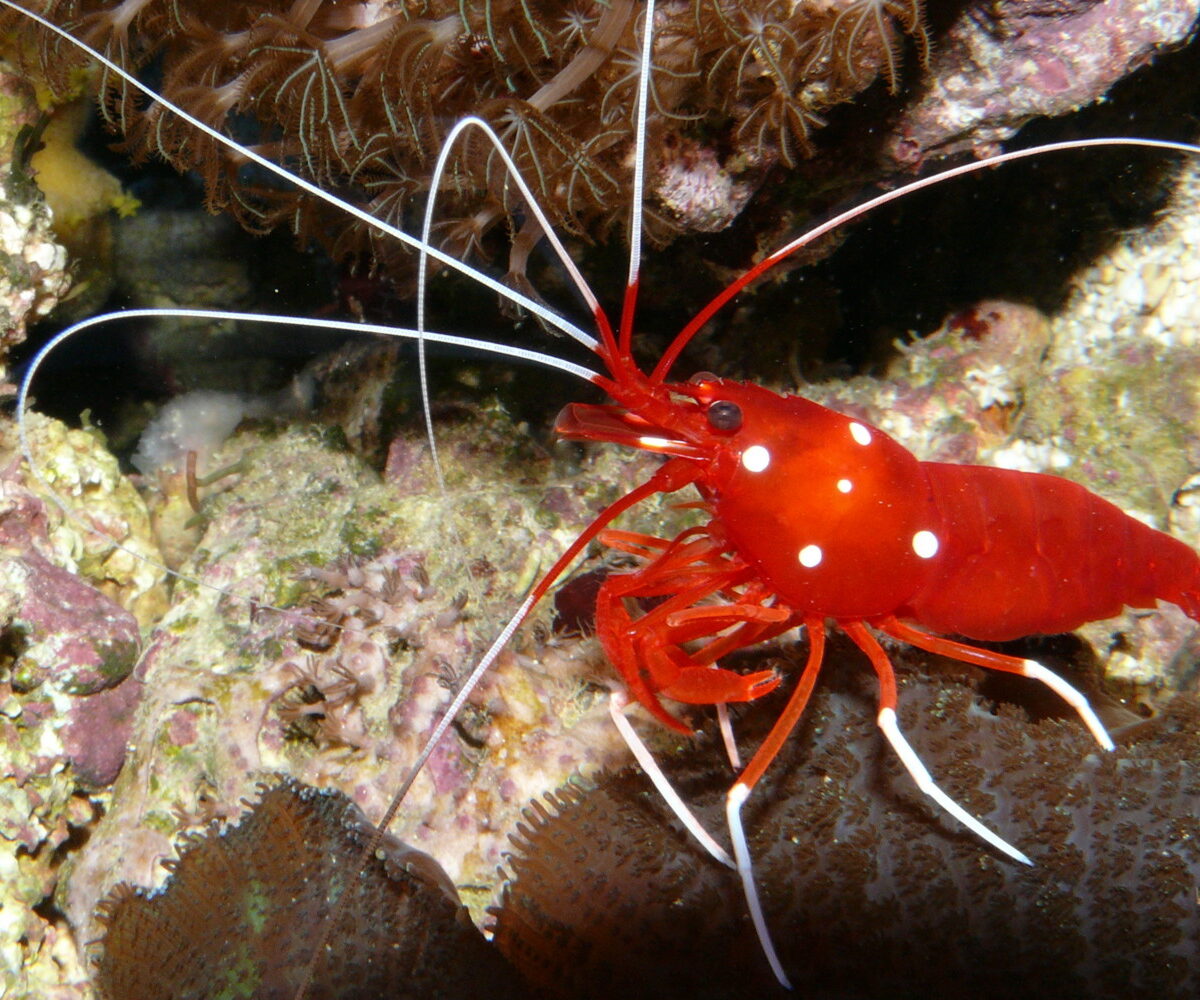
BLOOD RED FIRE SHRIMP
DESCRIPTION
Blood Red Fire Shrimp, also known as Fire Shrimp and Scarlet Shrimp, is a strikingly colorful species of shrimp that is popular in the aquarium trade. They are characterized by their vibrant red coloration, which can vary in intensity, and their long antennae. These shrimp are known for their cleaning behavior, often seen picking parasites and debris off fish, which plays a crucial role in maintaining the health of their aquatic environment.
FUN FACTS
- Blood Red Fire Shrimp are not only beautiful but also play an essential role in the health of coral reef ecosystems by cleaning fish
- They have a unique behavior where they wave their antennae to attract fish, signaling that they are ready to clean them
- | In addition to their cleaning habits, Blood Red Fire Shrimp can also change their color slightly based on their environment and mood, making them fascinating subjects for observation in aquariums
QUICK INFO
Lifespan1-2 years in the wild, up to 5 years in captivity
Average Weight1-2 g
Average Length4-5 cm
Diet TypeOmnivore
Social StructureThey are generally found in small groups, often forming symbiotic relationships with fish.
Activity PatternDiurnal
Breeding SeasonYear-round in suitable conditions
- Habitat
- These shrimp are typically found in coral reefs and rocky substrates where they can find ample hiding spots. They thrive in warm, shallow waters, often in areas with plenty of algae and organic debris.
- Biomes
- Coral Reef, Marine
- Native Range
- Blood Red Fire Shrimp are native to the Indo-Pacific region, including areas around the Red Sea, the Great Barrier Reef, and various tropical islands.
- Continent
- Asia, Australia, Africa
- Countries
- Australia, Indonesia, Philippines, Maldives, Red Sea countries
- Diet
- Blood Red Fire Shrimp are primarily scavengers, feeding on detritus, algae, and small organic matter. They also consume parasites and dead tissue from fish, contributing to the overall cleanliness of their habitat.
- Diet Type
- Omnivore
- Favorite Food
- algae, detritus, parasites
- Social Structure
- They are generally found in small groups, often forming symbiotic relationships with fish.
- Activity Pattern
- Diurnal
- Group Size
- 2-10
- Territorial
- 0
 LC
LC
1-2 g
Weight
4-5 cm
Length
- Coloration
- vibrant red with white stripes
- Sexual Dimorphism
- Males are typically smaller and have more elongated bodies compared to females.
- Lifespan
- 1-2 years in the wild, up to 5 years in captivity
- Gestation Period
- 30 days
- Offspring per Birth
- 20-30
- Sexual Maturity
- 6-12 months
- Breeding Season
- Year-round in suitable conditions
LC
Least Concern
IUCN Red List Status
- Population Status
- The population is generally stable, but local declines can occur due to habitat destruction.
- Wild Population Estimate
- Unknown
- Population Trend
- Stable
- Endangered
- 0
- Threats
- Main threats include habitat loss due to coral reef degradation and pollution. Over-collection for the aquarium trade can also impact local populations.
- Predators
- Larger fish, crabs, and some species of sea anemones are known to prey on Blood Red Fire Shrimp.
- Defense Mechanisms
- They use their ability to hide in crevices and their quick swimming to evade predators.
- Compatible Animals
- Clownfish, Gobies, other small reef fish
- Found in Zoos
- Common