


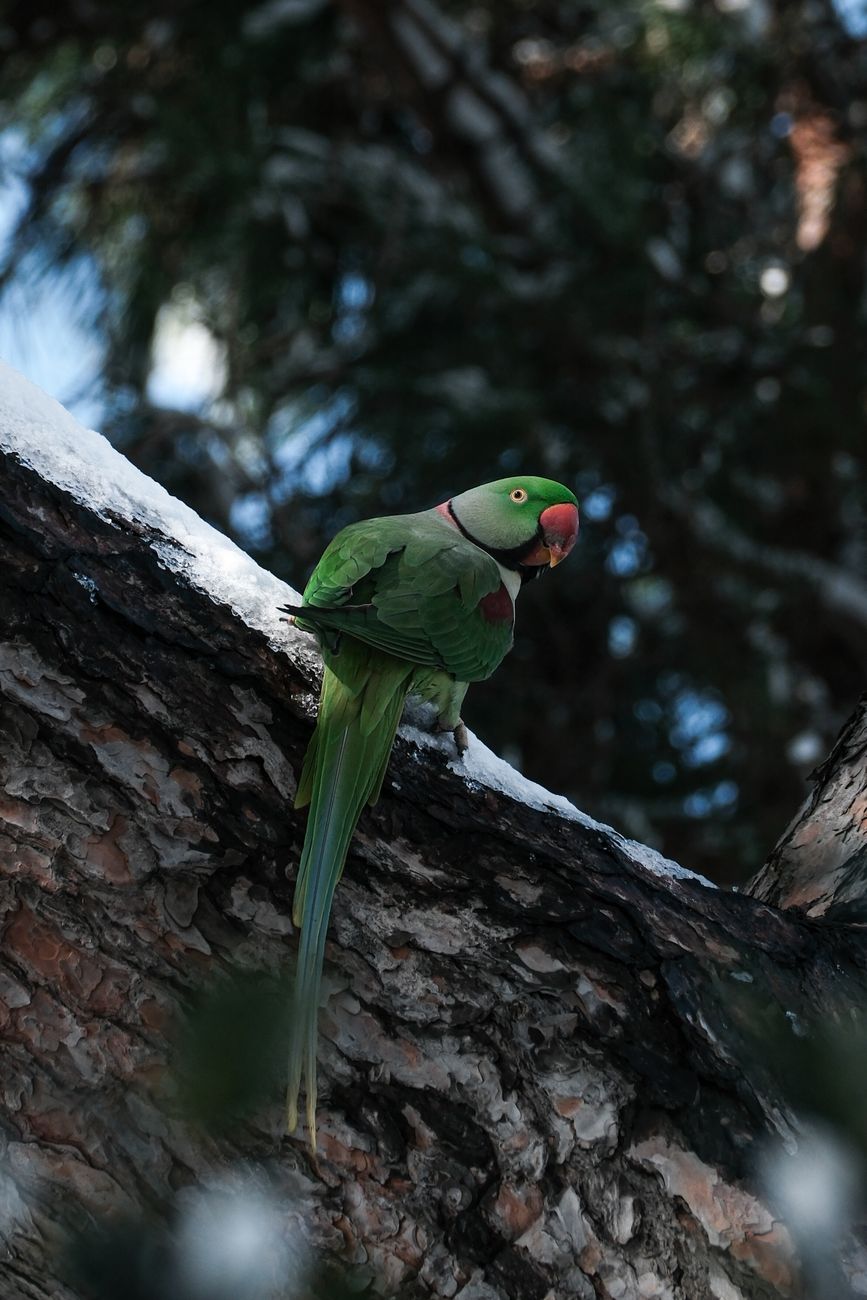
BLOSSOM-HEADED PARAKEET
Psittacula roseata
DESCRIPTION
Blossom-headed Parakeet (Psittacula roseata) is commonly known as the Rose-ringed Parakeet and Indian Ringneck Parakeet. This medium-sized parakeet is characterized by its striking coloration, with a vibrant green body, a distinctive rose-colored head in males, and a long, pointed tail. They are social birds often found in flocks, exhibiting playful behavior and a variety of vocalizations, which they use to communicate with each other in their natural habitats.
FUN FACTS
- Blossom-headed Parakeets are known for their impressive mimicry skills, often imitating human speech and other sounds they hear in their environment
- They are also popular pets due to their vibrant colors and playful personalities, making them a favorite among bird enthusiasts
QUICK INFO
Lifespan15-20 years in the wild, up to 30 years in captivi
Average Weight100-150 g
Average Length38-40 cm
Diet TypeHerbivore
Social StructureThey are typically found in pairs or small flocks, showcasing strong social bonds.
Activity PatternDiurnal
Breeding SeasonSpring (March-May)
- Habitat
- Blossom-headed Parakeets inhabit a range of environments, including forests, woodlands, and urban areas. They prefer areas with abundant trees for nesting and foraging.
- Biomes
- Tropical Rainforest, Savanna, Urban
- Native Range
- They are native to the Indian subcontinent and parts of Southeast Asia.
- Continent
- Asia
- Countries
- India, Nepal, Bangladesh, Myanmar
- Diet
- They primarily feed on seeds, fruits, and nuts, often foraging in trees and shrubs. Their strong beaks allow them to crack open hard seeds and nuts.
- Diet Type
- Herbivore
- Favorite Food
- seeds, fruits, nuts
- Social Structure
- They are typically found in pairs or small flocks, showcasing strong social bonds.
- Activity Pattern
- Diurnal
- Group Size
- 5-30
- Territorial
- 0
 VU
VU
 LC
LC
100-150 g
Weight
38-40 cm
Length
- Coloration
- Vibrant green body with a rose-colored head in males and a yellowish-green head in females.
- Sexual Dimorphism
- Males have a rose-colored head and a black neck ring, while females lack the neck ring and have a more uniform coloration.
- Lifespan
- 15-20 years in the wild, up to 30 years in captivi
- Offspring per Birth
- 3-6
- Sexual Maturity
- 2-3 years
- Breeding Season
- Spring (March-May)
LC
Least Concern
IUCN Red List Status
- Population Status
- The population is currently stable, with a wide distribution across its native range.
- Wild Population Estimate
- 100,000+
- Population Trend
- Stable
- Endangered
- 0
- Threats
- Main threats include habitat loss due to deforestation and capture for the pet trade. However, they are adaptable and can thrive in urban environments.
- Predators
- Birds of prey, snakes, and larger mammals may prey on young parakeets or eggs.
- Defense Mechanisms
- They use their agility and vocalizations to evade predators, often taking flight to escape danger.
- Compatible Animals
- Other parakeets, small parrots, finches
- Found in Zoos
- Common