


BLOW VIPER
Bothrops asper
DESCRIPTION
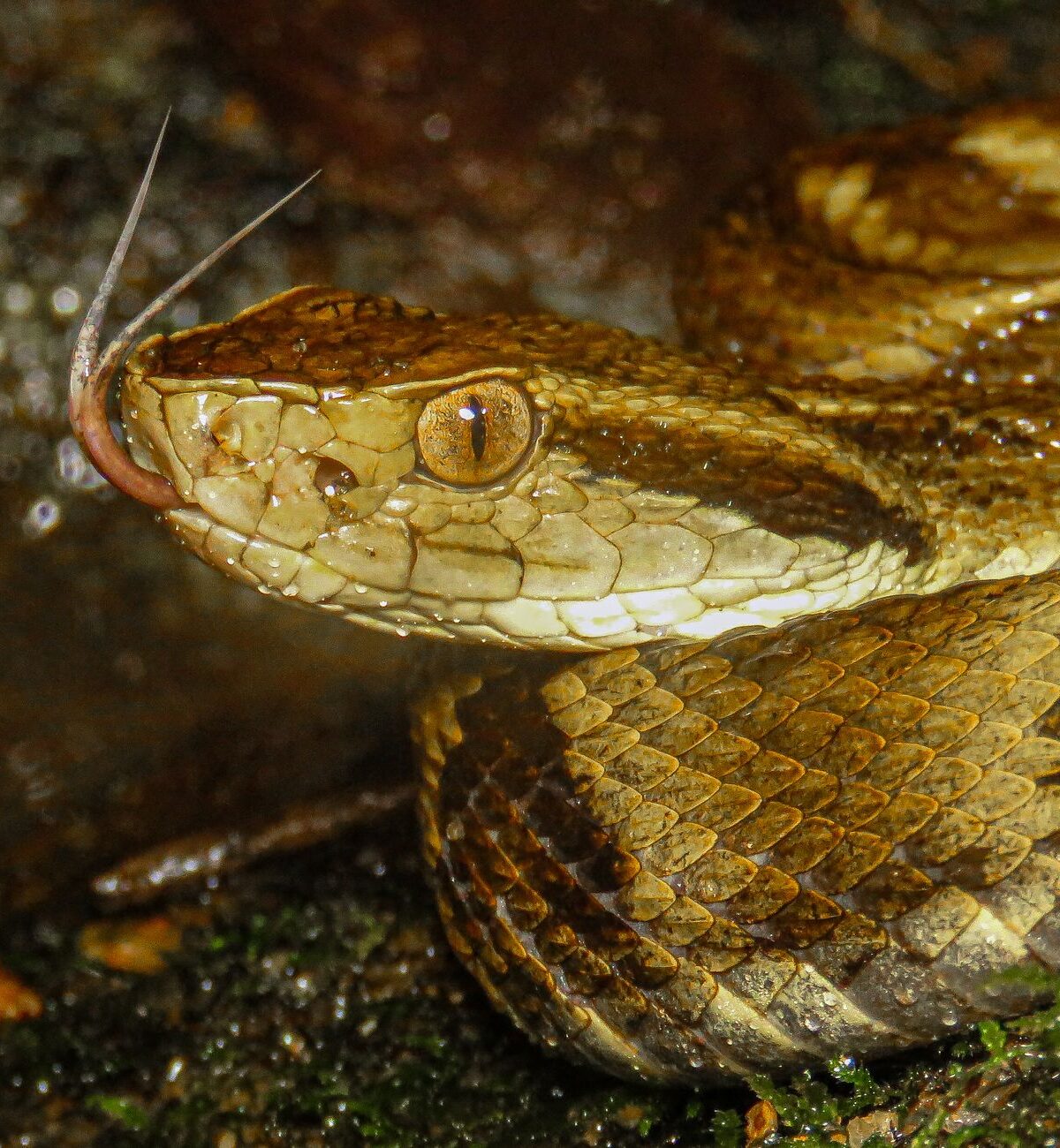
Blow Viper (Bothrops asper) is commonly known as Fer-de-Lance and Terciopelo, recognized for its robust body and distinctive coloration. This species exhibits a range of colors from olive green to brown, often with darker bands or spots, which provide excellent camouflage in its natural habitat. Behaviorally, Blow Vipers are primarily terrestrial and are known for their ambush hunting strategy, lying in wait for unsuspecting prey, which includes small mammals and birds.
FUN FACTS
- Blow Vipers are known for their potent venom, which can cause severe tissue damage and is considered one of the most dangerous snake venoms in Central America
- | Interestingly, Blow Vipers are viviparous, meaning they give birth to live young rather than laying eggs, which is relatively uncommon among snakes
QUICK INFO
Lifespan10-15 years in the wild, up to 20 years in captivi
Average Weight1-2 kg
Average Length1.5-2.5 m
Diet TypeCarnivore
Social Structuresolitary
Activity PatternNocturnal
Breeding SeasonSpring to early summer
- Habitat
- Blow Vipers inhabit a variety of environments, including tropical rainforests, secondary forests, and agricultural areas. They are often found near water sources, which provide both hydration and hunting opportunities.
- Biomes
- Tropical Rainforest, Temperate Forest
- Native Range
- The native range of Blow Vipers extends from southern Mexico through Central America to western Colombia and Ecuador.
- Continent
- North America, South America
- Countries
- Mexico, Guatemala, Honduras, Nicaragua, Costa Rica, Panama, Colombia, Ecuador
- Diet
- Blow Vipers primarily feed on small mammals, birds, and occasionally amphibians. They use their heat-sensing pits to detect warm-blooded prey in their environment.
- Diet Type
- Carnivore
- Favorite Food
- small mammals, birds
- Social Structure
- solitary
- Activity Pattern
- Nocturnal
- Group Size
- 1
- Territorial
- 1
 VU
VU
1-2 kg
Weight
1.5-2.5 m
Length
- Coloration
- Typically olive green or brown with darker bands or spots.
- Sexual Dimorphism
- Females are generally larger than males.
- Lifespan
- 10-15 years in the wild, up to 20 years in captivi
- Gestation Period
- 6-7 months
- Offspring per Birth
- 10-30
- Sexual Maturity
- 2-3 years
- Breeding Season
- Spring to early summer
LC
Least Concern
IUCN Red List Status
- Population Status
- The population status of Blow Vipers is currently stable, although local declines may occur due to habitat destruction.
- Wild Population Estimate
- Unknown
- Population Trend
- Stable
- Endangered
- 0
- Threats
- Main threats include habitat loss due to deforestation and agricultural expansion. Additionally, they are often killed out of fear or misunderstanding by humans.
- Predators
- Birds of prey, larger snakes, and mammals such as raccoons may prey on Blow Vipers.
- Defense Mechanisms
- Blow Vipers rely on their venomous bite for defense and can also exhibit aggressive posturing when threatened.
- Found in Zoos
- Uncommon