


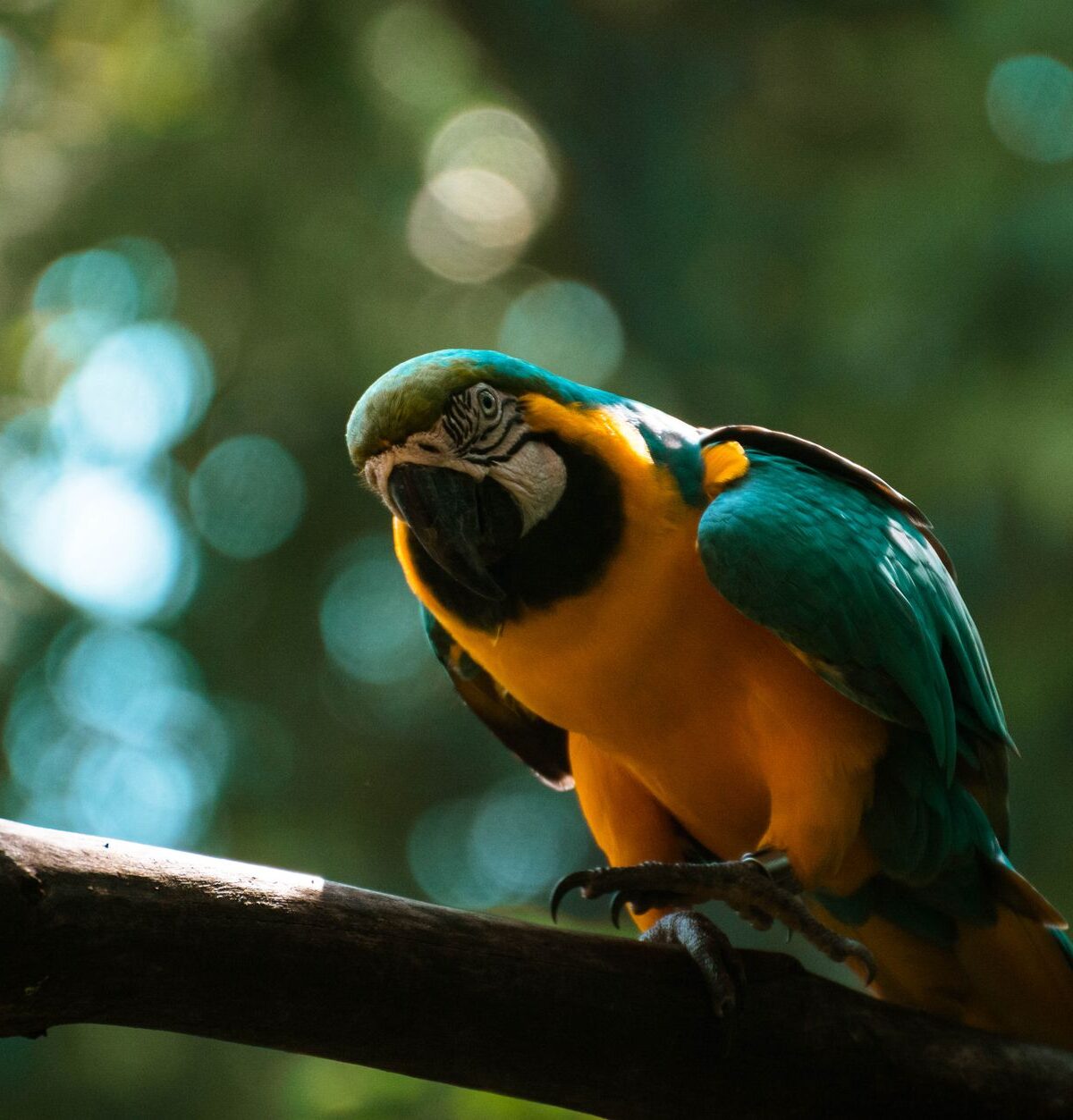
BLUE AND GOLD MACAW
DESCRIPTION
Also called the Blue Macaw and Gold Macaw, the Blue and Gold Macaw is a large, colorful parrot known for its striking blue feathers on the back and bright yellow underparts. These birds are highly social and intelligent, often seen in pairs or small groups, engaging in playful behavior and vocalizations. In their natural habitat, they play a crucial role in seed dispersal, contributing to the health of their ecosystem.
FUN FACTS
- Blue and Gold Macaws are known for their impressive vocal abilities, capable of mimicking human speech and other sounds
- They are also highly intelligent, often solving puzzles and engaging in complex social interactions with their companions.|These macaws are monogamous and often mate for life, showcasing strong pair bonds
- In the wild, they can be seen engaging in elaborate courtship displays, which include synchronized flying and vocal duets
QUICK INFO
Lifespan30-50 years in the wild, up to 60 years in captivi
Average Weight900-1,200 g
Average Length76-86 cm
Diet TypeHerbivore
Social StructureThey are typically found in pairs or small groups, showcasing a strong social structure.
Activity PatternDiurnal
Breeding SeasonSpring (March-May)
- Habitat
- These macaws inhabit tropical rainforests, savannas, and woodlands, often near water sources. They prefer areas with abundant food resources and nesting sites in tall trees.
- Biomes
- Tropical Rainforest, Savanna
- Native Range
- The Blue and Gold Macaw is native to the tropical regions of Central and South America, particularly in countries like Brazil, Bolivia, and Paraguay.
- Continent
- South America
- Countries
- Brazil, Bolivia, Paraguay
- Diet
- The Blue and Gold Macaw primarily feeds on fruits, nuts, and seeds, utilizing its strong beak to crack open hard shells. They also enjoy flowers and occasionally consume clay from riverbanks, which helps with digestion.
- Diet Type
- Herbivore
- Favorite Food
- Fruits, nuts, seeds
- Social Structure
- They are typically found in pairs or small groups, showcasing a strong social structure.
- Activity Pattern
- Diurnal
- Group Size
- 2-30
- Territorial
- 1
 LC
LC
900-1,200 g
Weight
76-86 cm
Length
- Coloration
- Vibrant blue wings and back with bright yellow underparts and a green forehead.
- Sexual Dimorphism
- Males and females are similar in appearance, making it difficult to distinguish between the sexes.
- Lifespan
- 30-50 years in the wild, up to 60 years in captivi
- Offspring per Birth
- 1-3
- Sexual Maturity
- 3-4 years
- Breeding Season
- Spring (March-May)
LC
Least Concern
IUCN Red List Status
- Population Status
- The population of Blue and Gold Macaws is currently stable, but they face threats from habitat loss and the pet trade.
- Wild Population Estimate
- 50,000-100,000
- Population Trend
- Stable
- Endangered
- 0
- Threats
- Main threats include habitat destruction due to deforestation and illegal trapping for the pet trade. Conservation efforts are in place to protect their natural habitats.
- Conservation Program
- Various local and international conservation programs aim to protect their habitats and regulate the pet trade.
- Predators
- Main predators include large birds of prey, such as hawks and eagles, as well as snakes and some mammals.
- Defense Mechanisms
- They use their strong beaks and loud vocalizations to deter predators, and they often fly away to escape danger.
- Compatible Animals
- Other macaws, large parrots, and some species of birds of similar size
- Found in Zoos
- Common