


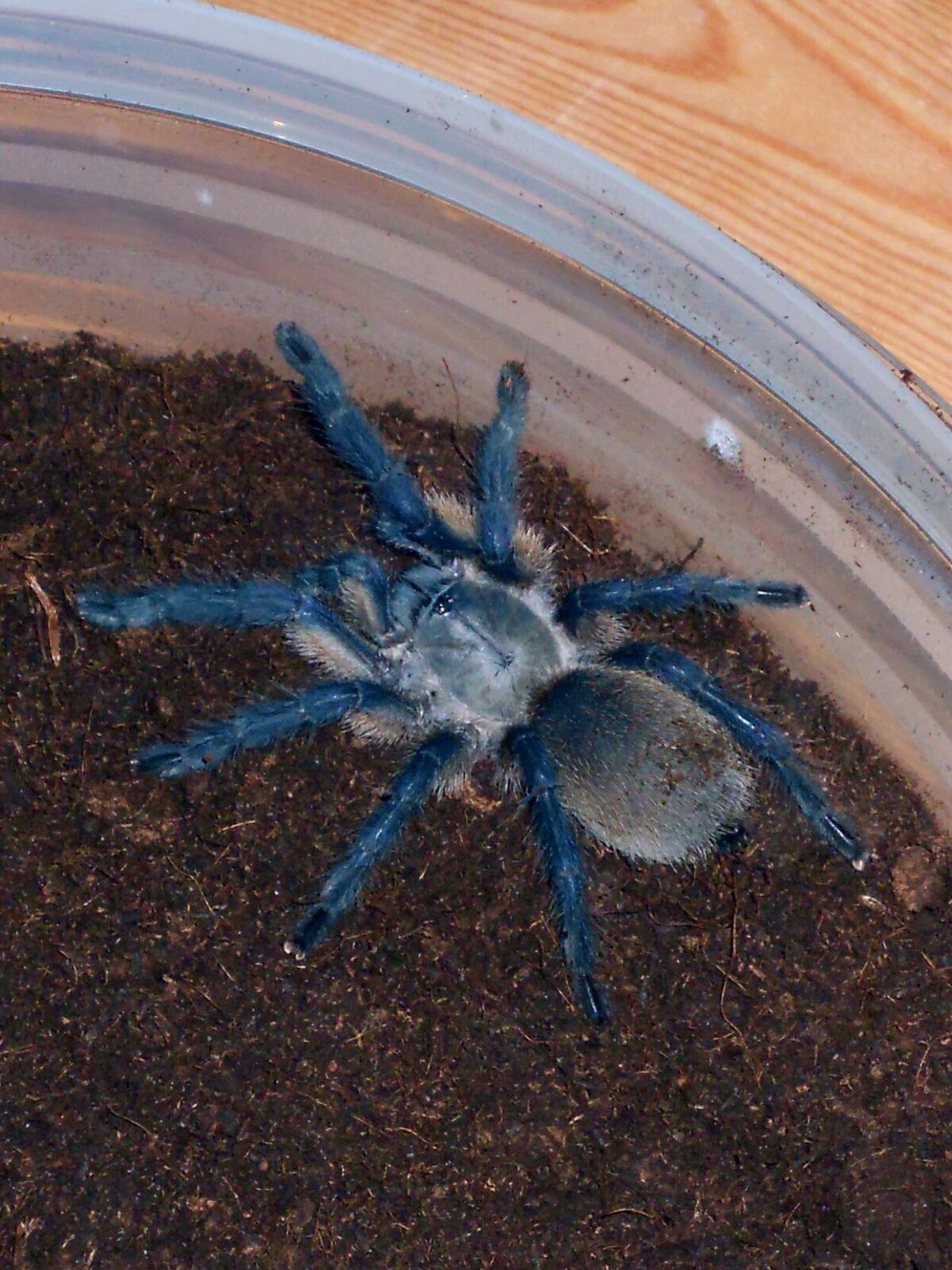
BLUE BABOON TARANTULA
DESCRIPTION
Blue Baboon Tarantula, also known as the Cobalt Blue Tarantula, is a striking species characterized by its vibrant blue coloration and robust body. This tarantula is native to the tropical forests of Southeast Asia, where it exhibits a burrowing behavior, creating extensive tunnel systems in the ground. Its defensive nature makes it a less common choice for beginners in the pet trade, as it can be quite aggressive when threatened.
FUN FACTS
- The Blue Baboon Tarantula is known for its stunning coloration, which can appear even more vibrant under certain lighting conditions
- This species is also famous for its speed and agility, making it one of the more challenging tarantulas to handle in captivity.| Despite their aggressive nature, many enthusiasts are drawn to the Blue Baboon Tarantula for its beauty and unique behavior, often showcasing it in specialized tarantula collections
QUICK INFO
Lifespan10-15 years in the wild, up to 20 years in captivi
Average Length4-5 inches
Diet TypeCarnivore
Social Structuresolitary, as they prefer to live alone in their burrows.
Activity PatternNocturnal
- Habitat
- This species thrives in humid tropical environments, often found in burrows within forested areas. It prefers areas with ample leaf litter and organic debris for camouflage and hunting.
- Biomes
- Tropical Rainforest
- Native Range
- Southeast Asia, particularly in countries like Thailand and Myanmar.
- Continent
- Asia
- Countries
- Thailand, Myanmar
- Diet
- The Blue Baboon Tarantula primarily feeds on insects and other small invertebrates. It uses its venom to subdue prey before consuming it.
- Diet Type
- Carnivore
- Favorite Food
- insects, small invertebrates
- Social Structure
- solitary, as they prefer to live alone in their burrows.
- Activity Pattern
- Nocturnal
- Group Size
- 1
- Territorial
- 1
 VU
VU
 LC
LC
4-5 inches
Length
- Coloration
- vibrant blue with a dark carapace and legs
- Sexual Dimorphism
- males are generally smaller and have longer legs than females.
- Lifespan
- 10-15 years in the wild, up to 20 years in captivi
- Offspring per Birth
- 100-200
- Sexual Maturity
- 2-3 years
DD
Data Deficient
IUCN Red List Status
- Population Status
- The population status is not well-documented, but habitat loss poses a threat.
- Population Trend
- Decreasing
- Endangered
- 0
- Threats
- Habitat destruction due to deforestation and the pet trade are significant threats to this species. Their specific habitat requirements make them vulnerable to environmental changes.
- Predators
- birds, larger mammals, and other tarantulas.
- Defense Mechanisms
- They can deliver a painful bite and may also kick urticating hairs from their abdomen as a defense mechanism.
- Found in Zoos
- Uncommon