


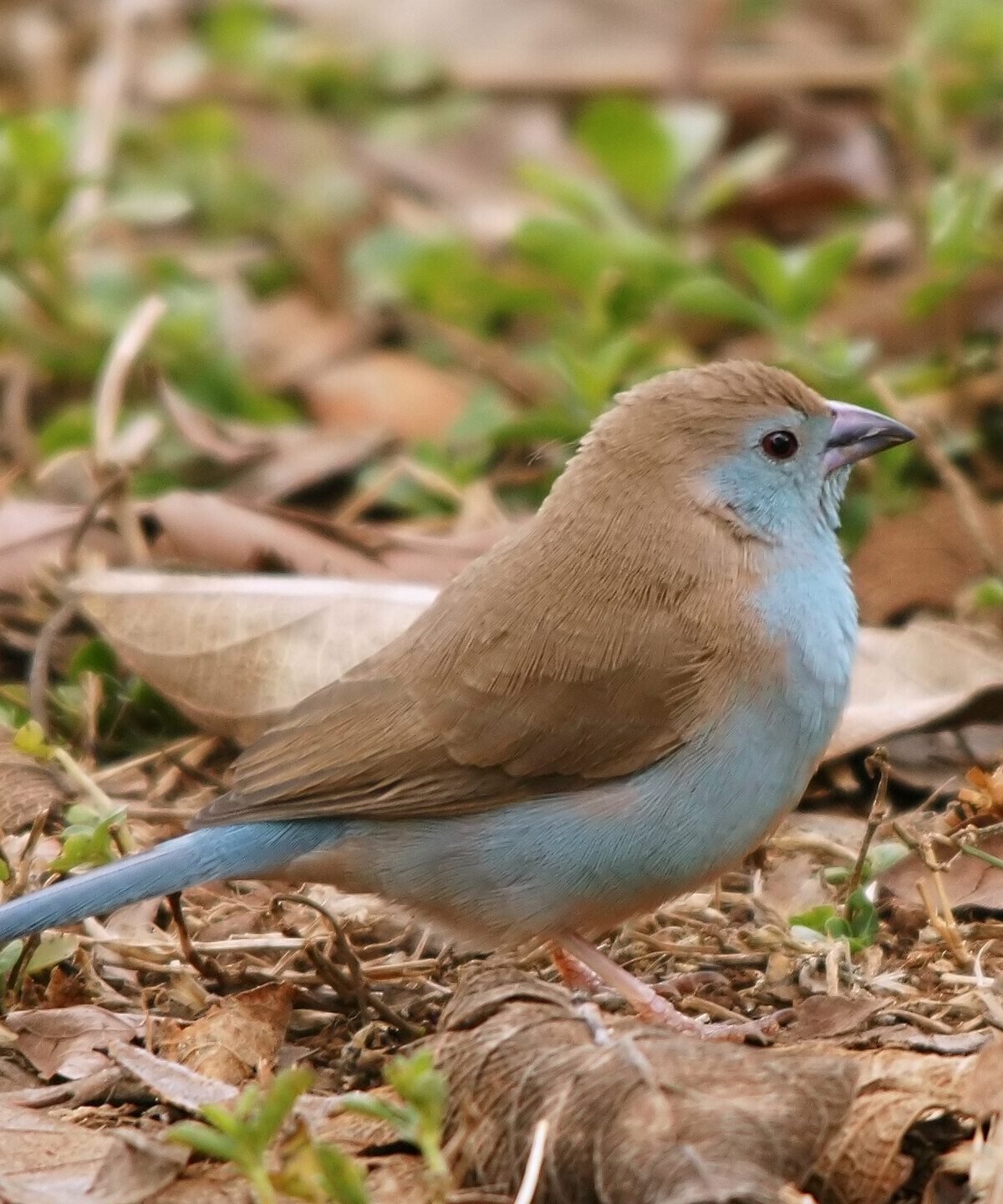
BLUE-BREASTED CORDON-BLEU
Uraeginthus angolensis
DESCRIPTION
Blue-breasted Cordon-bleu (Uraeginthus angolensis) is commonly known as the Angolan Cordon-bleu and is a small, colorful finch native to Africa. This bird is characterized by its striking blue breast and throat, contrasting with its brownish back and wings, making it a visually appealing species. They are social birds often found in small flocks, displaying lively behavior as they forage for seeds and insects in their natural habitat.
FUN FACTS
- Blue-breasted Cordon-bleus are known for their elaborate courtship displays, where males perform intricate dances and vocalizations to attract females
- These displays are not only a means of attracting mates but also serve to strengthen social bonds within flocks
- | In captivity, they are popular pets due to their vibrant colors and cheerful songs, often thriving in aviaries where they can socialize and exhibit natural behaviors
- Their adaptability to various environments makes them a favorite among bird enthusiasts
QUICK INFO
Lifespan5-10 years in the wild, up to 15 years in captivit
Average Weight10-15 g
Average Length11-12 cm
Diet TypeOmnivore
Social StructureThey are typically found in small groups or pairs, often forming loose flocks during foraging.
Activity PatternDiurnal
Breeding SeasonSpring to early summer
- Habitat
- Blue-breasted Cordon-bleus inhabit open grasslands, savannas, and scrublands where they can find ample food sources. They prefer areas with scattered bushes or trees that provide shelter and nesting sites.
- Biomes
- Savanna, Grassland
- Native Range
- They are native to parts of sub-Saharan Africa, particularly in countries like Angola, Namibia, Botswana, and Zambia.
- Continent
- Africa
- Countries
- Angola, Namibia, Botswana, Zambia
- Diet
- They primarily feed on seeds, grains, and small insects, which provide essential nutrients for their growth and energy. Their diet is supplemented with various plant materials, making them adaptable foragers.
- Diet Type
- Omnivore
- Favorite Food
- seeds, grains, small insects
- Social Structure
- They are typically found in small groups or pairs, often forming loose flocks during foraging.
- Activity Pattern
- Diurnal
- Group Size
- 5-15
- Territorial
- 0
 LC
LC
10-15 g
Weight
11-12 cm
Length
- Coloration
- The males are vibrant blue on the breast and face, with a brownish back and wings, while females are more subdued in color, featuring a lighter brown overall.
- Sexual Dimorphism
- Males are more brightly colored than females, especially during the breeding season.
- Lifespan
- 5-10 years in the wild, up to 15 years in captivit
- Offspring per Birth
- 3-6
- Sexual Maturity
- 6 months
- Breeding Season
- Spring to early summer
LC
Least Concern
IUCN Red List Status
- Population Status
- The population is currently stable, with no major declines reported.
- Wild Population Estimate
- Not specifically estimated, but considered common in suitable habitats.
- Population Trend
- Stable
- Endangered
- 0
- Threats
- Habitat loss due to agricultural expansion and urbanization poses a threat to their populations. However, they are not currently facing significant threats that would endanger their survival.
- Predators
- Predators include various birds of prey, snakes, and small mammals that may hunt them.
- Defense Mechanisms
- They rely on their agility and ability to quickly take flight to evade predators.
- Compatible Animals
- Other small finches, canaries, and similar-sized birds
- Found in Zoos
- Common