


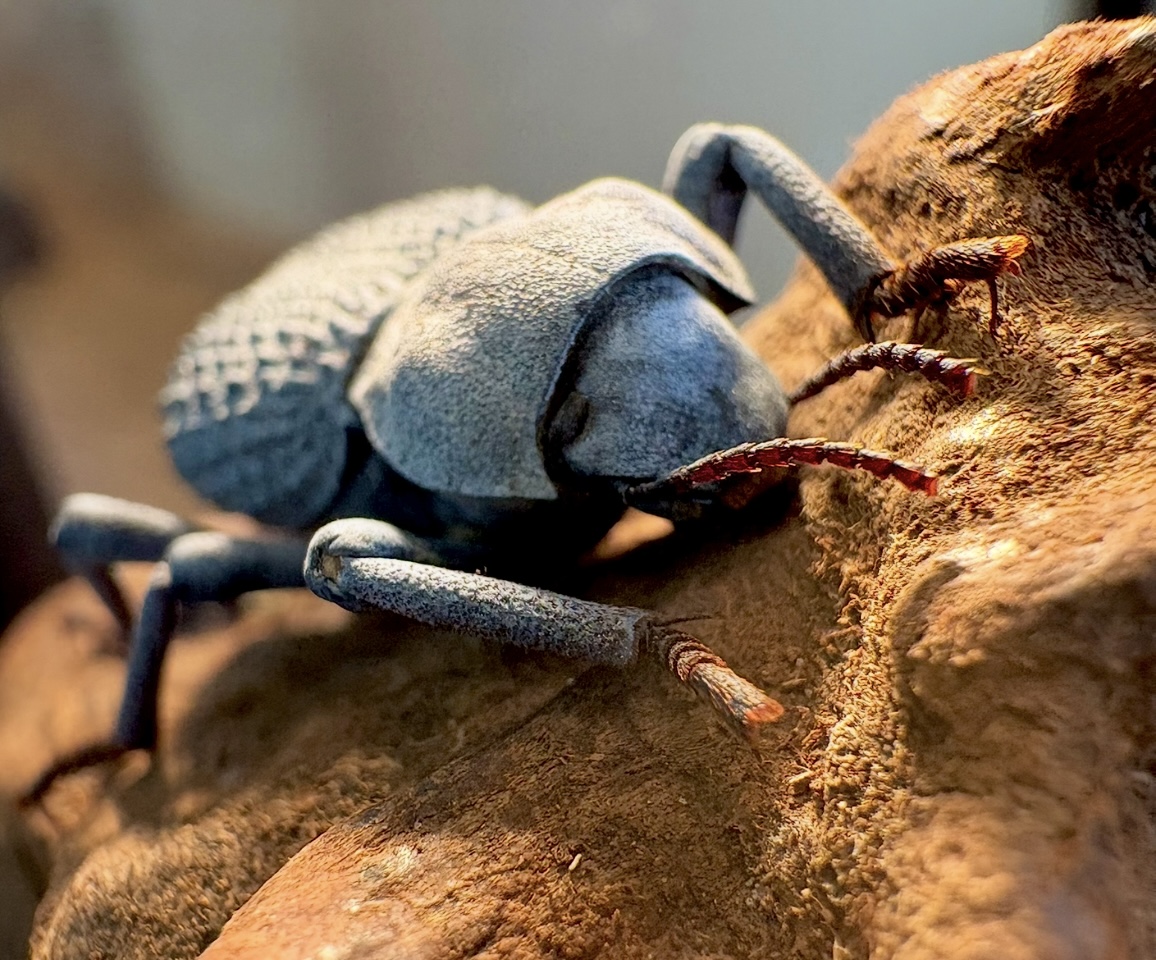
BLUE DEATH-FEIGNING BEETLE
DESCRIPTION
Also known as the Blue Death-feigning Beetle, this species is notable for its striking blue coloration and unique behavior. When threatened, it can play dead for extended periods, a defense mechanism that helps it avoid predation. This beetle is primarily found in arid environments, where it plays a role in the ecosystem by breaking down organic matter.
FUN FACTS
- The Blue Death-feigning Beetle's ability to play dead is so effective that it can remain motionless for several minutes, making it difficult for predators to detect it
- This behavior is not just a simple reaction; it is a sophisticated survival strategy that has evolved over time to enhance its chances of survival in the wild
- | Interestingly, the vibrant blue coloration of the beetle is not just for show; it also serves as a warning to potential predators about its unpalatable taste
- This aposematic coloration is a common trait among many beetle species, signaling that they are not a good choice for a meal
QUICK INFO
Lifespanup to 3 years
Average Length1-2 inches
Diet TypeDetritivore
Social Structuresolitary
Activity PatternNocturnal
Breeding SeasonSpring to early summer
- Habitat
- This beetle is typically found in dry, sandy areas such as deserts and scrublands. It thrives in environments where organic matter is available for feeding.
- Biomes
- Desert, Grassland
- Native Range
- The Blue Death-feigning Beetle is native to the southwestern United States and parts of Mexico.
- Continent
- North America
- Countries
- United States, Mexico
- Diet
- The Blue Death-feigning Beetle primarily feeds on decaying plant material and organic debris. It plays an important role in the decomposition process.
- Diet Type
- Detritivore
- Favorite Food
- decaying plant material
- Social Structure
- solitary
- Activity Pattern
- Nocturnal
- Group Size
- 1
- Territorial
- 0
 VU
VU

1-2 inches
Length
- Coloration
- vibrant blue with a hard exoskeleton
- Lifespan
- up to 3 years
- Offspring per Birth
- 20-30
- Sexual Maturity
- 6-12 months
- Breeding Season
- Spring to early summer
LC
Least Concern
IUCN Red List Status
- Population Status
- The population is currently stable, with no significant threats reported.
- Population Trend
- Stable
- Endangered
- 0
- Threats
- The main threats to the Blue Death-feigning Beetle include habitat loss due to urban development and climate change. However, it is not currently facing significant threats.
- Predators
- Birds, small mammals, and other insectivorous animals.
- Defense Mechanisms
- The beetle can feign death by playing dead, which helps it avoid predation.
- Found in Zoos
- Uncommon