


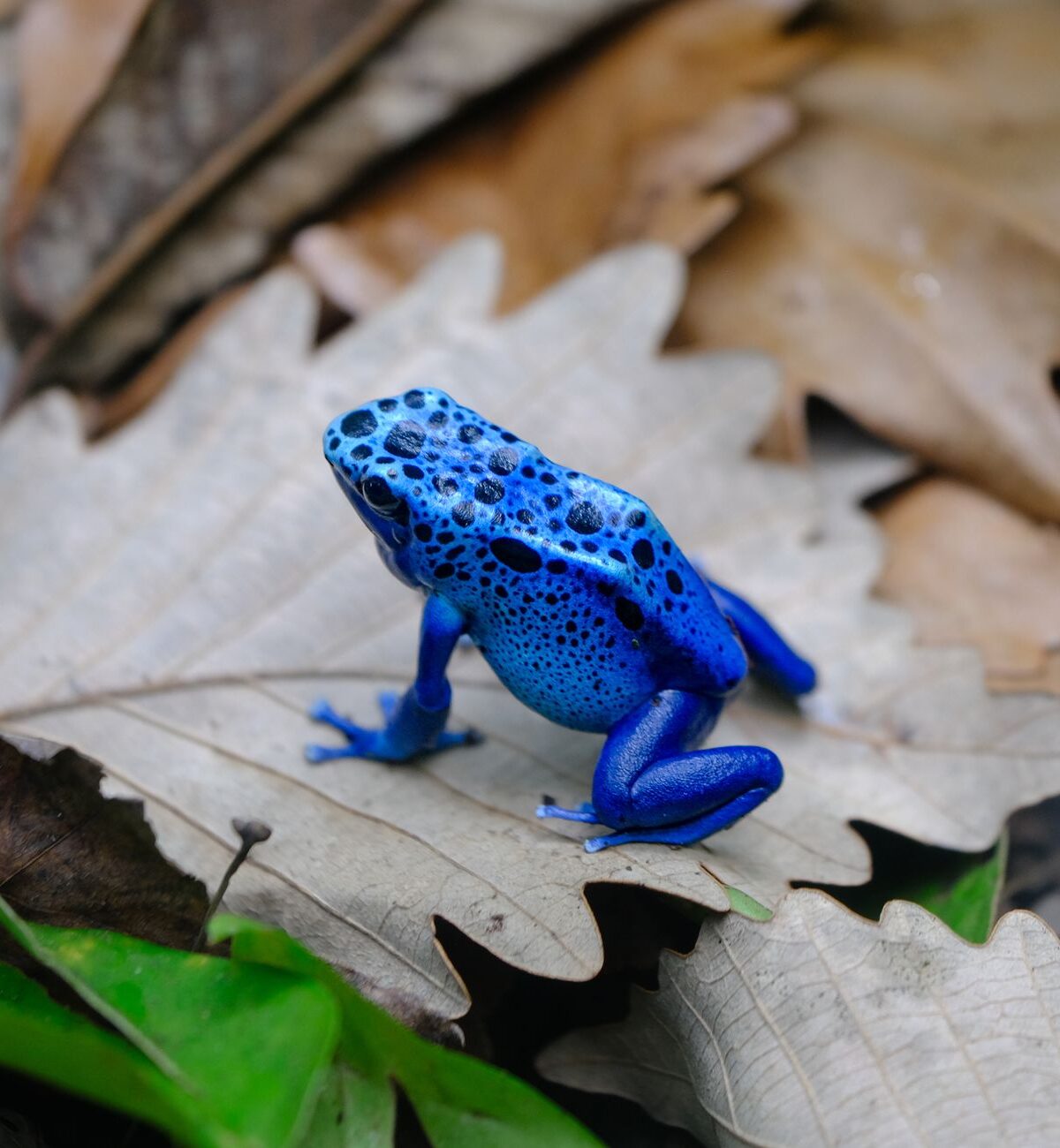
BLUE FROG
DESCRIPTION
Blue Frog, also known as the Azure Frog, is a striking amphibian characterized by its vibrant blue coloration, which serves as a warning to potential predators about its toxicity. This species exhibits a small to medium size, with smooth skin and distinctive black spots or patterns that enhance its visual appeal. Inhabiting tropical rainforests, Blue Frogs are primarily arboreal, often found perched on leaves or branches, where they engage in vocalizations to attract mates during the breeding season.
FUN FACTS
- Blue Frogs are not only visually stunning but also play a vital role in their ecosystem by controlling insect populations
- Their bright coloration is a classic example of aposematism, where bright colors signal danger to potential predators
- | Interestingly, the toxicity of Blue Frogs varies depending on their diet; frogs that consume more toxic insects tend to be more poisonous themselves
- This fascinating relationship highlights the interconnectedness of species within their habitat
QUICK INFO
Lifespan5-10 years in the wild
Average Weight10-30 g
Average Length3-5 cm
Diet TypeInsectivore
Social Structuresolitary, with males often calling from territories during the breeding season
Activity PatternNocturnal
Breeding SeasonWet season (varies by region)
- Habitat
- Blue Frogs thrive in humid, tropical rainforest environments, often near water sources such as streams or ponds. They require moist conditions for breeding and development of their eggs.
- Biomes
- Tropical Rainforest
- Native Range
- Blue Frogs are native to the rainforests of Central and South America, particularly in regions like the Amazon Basin.
- Continent
- South America
- Countries
- Brazil, Colombia, Ecuador, Peru
- Diet
- Blue Frogs primarily consume small insects and invertebrates, which they catch using their long, sticky tongues. Their diet plays a crucial role in their ecological niche, helping to control insect populations.
- Diet Type
- Insectivore
- Favorite Food
- small insects, invertebrates
- Social Structure
- solitary, with males often calling from territories during the breeding season
- Activity Pattern
- Nocturnal
- Group Size
- 1-5
- Territorial
- 1
 VU
VU
 LC
LC
10-30 g
Weight
3-5 cm
Length
- Coloration
- vibrant blue with black spots
- Sexual Dimorphism
- males are typically smaller and more colorful than females
- Lifespan
- 5-10 years in the wild
- Offspring per Birth
- 10-30 eggs
- Sexual Maturity
- 1-2 years
- Breeding Season
- Wet season (varies by region)
LC
Least Concern
IUCN Red List Status
- Population Status
- The population of Blue Frogs is currently stable, although habitat loss poses a potential threat.
- Wild Population Estimate
- unknown
- Population Trend
- Stable
- Endangered
- 0
- Threats
- Main threats include habitat destruction due to deforestation and pollution. Climate change also poses a risk to their delicate rainforest ecosystems.
- Predators
- birds, snakes, larger amphibians
- Defense Mechanisms
- Blue Frogs possess toxic skin secretions that deter predators, making them unpalatable.
- Found in Zoos
- Uncommon