


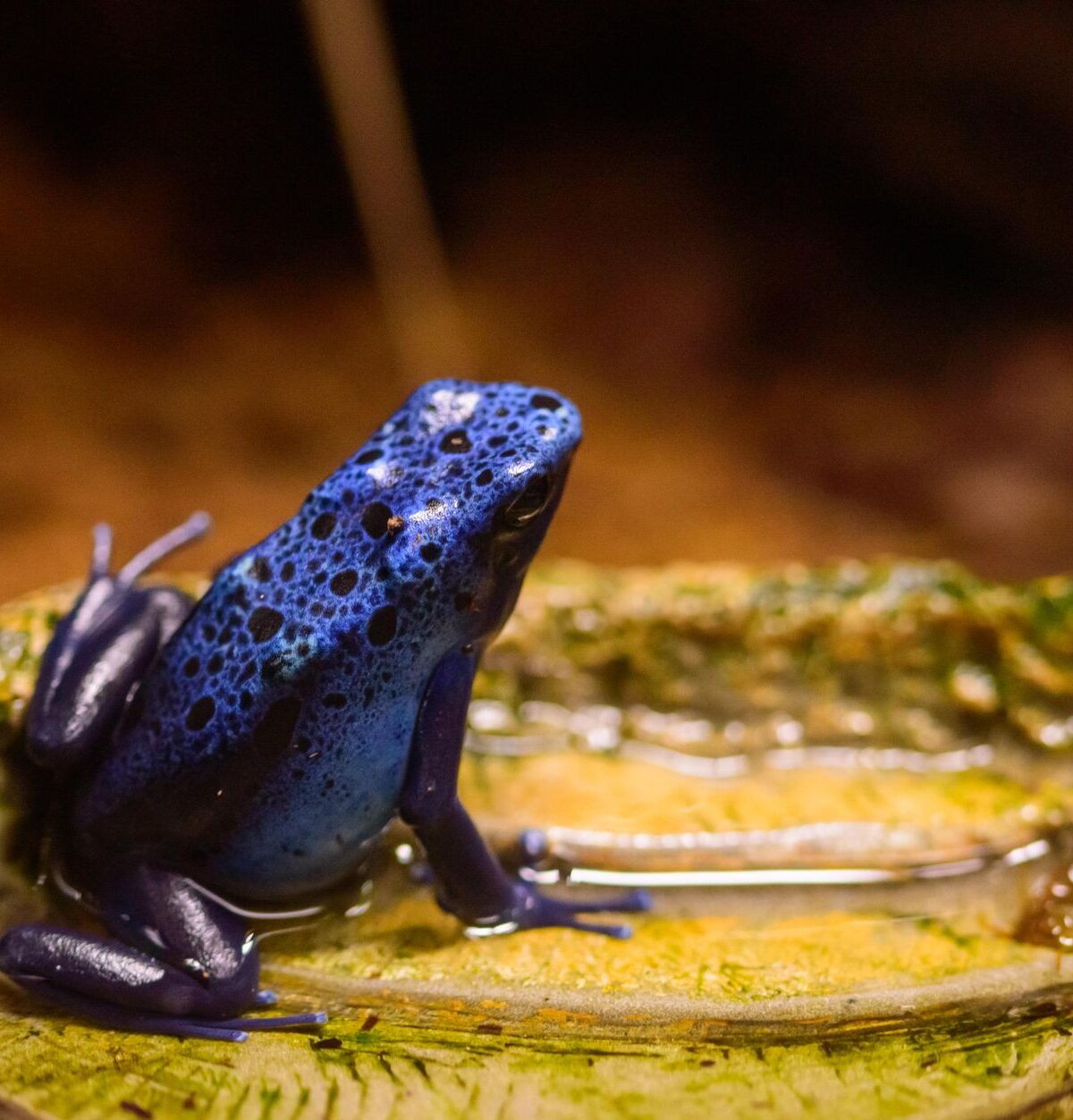
BLUE POISON DART FROG
Dendrobates tinctorius azureus
DESCRIPTION
Also called the Blue Poison Arrow Frog, the Blue Poison Dart Frog is a strikingly vibrant amphibian known for its bright blue coloration, which serves as a warning to potential predators about its toxicity. These small frogs typically measure around 3-4 centimeters in length and have distinctive black spots or patterns on their skin. They are primarily found in the humid tropical rainforests of Suriname and surrounding areas, where they thrive in moist environments and are often seen perched on leaves or rocks.
FUN FACTS
- The Blue Poison Dart Frog's skin contains potent alkaloids that can be lethal to predators, making it one of the most toxic frogs in the world
- Interestingly, these frogs acquire their toxicity from the specific diet they consume in the wild, primarily consisting of certain ants and other small insects
- | In captivity, when fed a different diet, they lose their toxicity, demonstrating the fascinating relationship between diet and toxicity in amphibians
- This has made them popular in the pet trade, although their care requires specific conditions to thrive
QUICK INFO
Lifespan4-6 years in the wild, up to 10 years in captivity
Average Weight2-5 grams
Average Length3-4 cm
Diet TypeInsectivore
Social StructureThey are generally solitary, although they may be found in pairs during the breeding season.
Activity PatternDiurnal
Breeding SeasonRainy season
- Habitat
- This species inhabits tropical rainforests, often near streams or other water sources. They prefer areas with dense vegetation that provides ample cover and humidity.
- Biomes
- Tropical Rainforest
- Native Range
- The Blue Poison Dart Frog is native to the rainforests of Suriname and parts of Brazil and French Guiana.
- Continent
- South America
- Countries
- Suriname, Brazil, French Guiana
- Diet
- The Blue Poison Dart Frog primarily feeds on small insects, particularly ants and termites, which contribute to its toxic skin secretions. This diet is crucial for the frog to acquire the alkaloids that make it poisonous.
- Diet Type
- Insectivore
- Favorite Food
- ants, termites
- Social Structure
- They are generally solitary, although they may be found in pairs during the breeding season.
- Activity Pattern
- Diurnal
- Group Size
- 1-2
- Territorial
- 0
 VU
VU
 LC
LC
2-5 grams
Weight
3-4 cm
Length
- Coloration
- vibrant blue with black spots
- Sexual Dimorphism
- Males are typically smaller and more brightly colored than females.
- Lifespan
- 4-6 years in the wild, up to 10 years in captivity
- Offspring per Birth
- 2-10
- Sexual Maturity
- 1-2 years
- Breeding Season
- Rainy season
LC
Least Concern
IUCN Red List Status
- Population Status
- The population is currently stable, but habitat loss poses a potential threat.
- Wild Population Estimate
- Unknown
- Population Trend
- Stable
- Endangered
- 0
- Threats
- Main threats include habitat destruction due to deforestation and climate change. Pollution and the pet trade also pose risks to their populations.
- Predators
- Birds, snakes, and larger amphibians are known predators of the Blue Poison Dart Frog.
- Defense Mechanisms
- Their bright coloration serves as a warning to predators about their toxicity, which is a key defense mechanism.
- Found in Zoos
- Common