


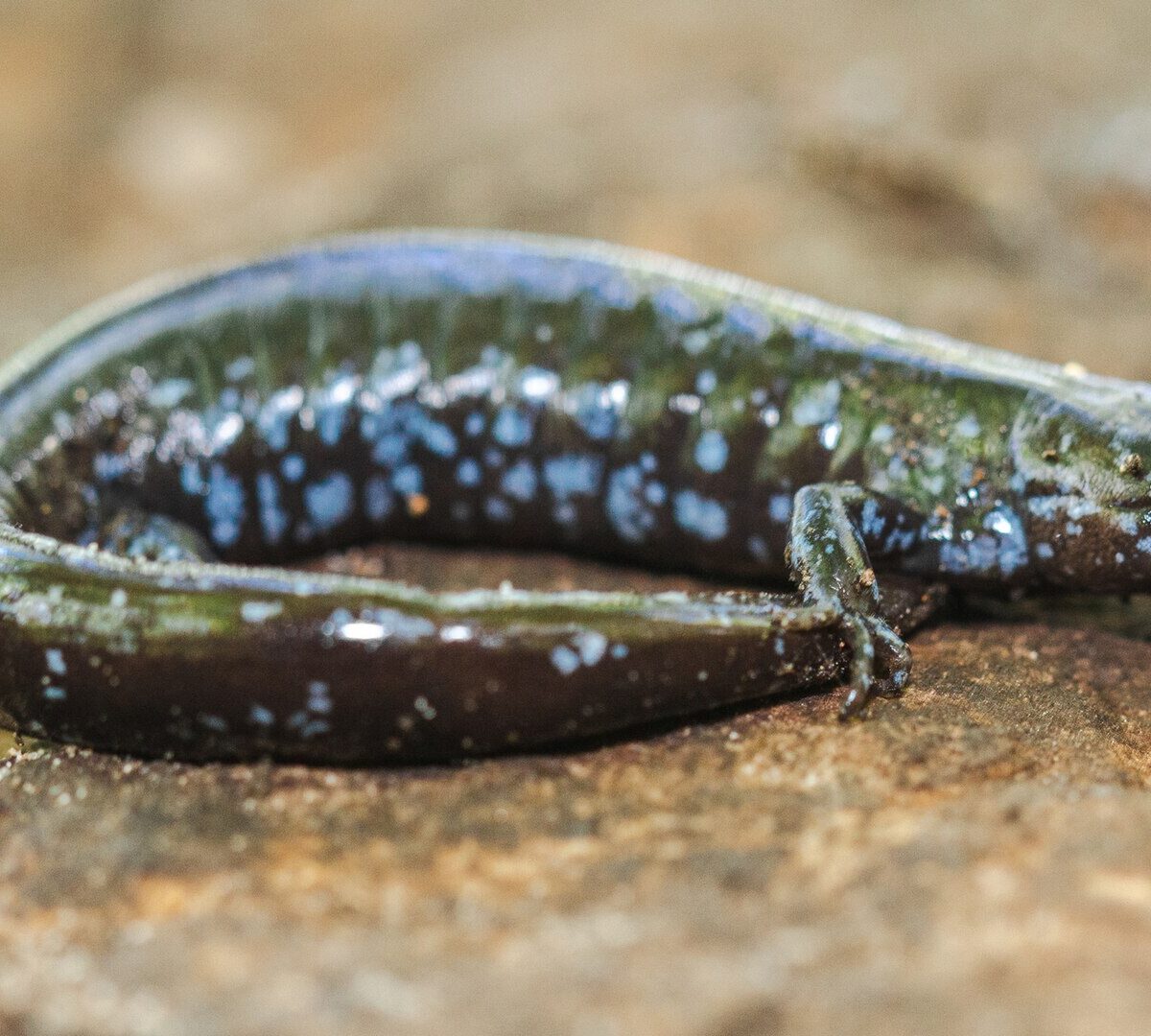
BLUE-SPOTTED SALAMANDER
Ambystoma laterale
DESCRIPTION
Blue-Spotted Salamander (Ambystoma laterale) is commonly known as the Lateral Blue-Spotted Salamander due to its distinctive blue spots on a dark background. This species typically exhibits a slender body with a smooth skin texture, and it can vary in color from gray to black. They are primarily found in moist environments and are known for their secretive behavior, often hiding under leaf litter or logs during the day.
FUN FACTS
- Blue-Spotted Salamanders are known for their striking coloration, which serves as a warning to potential predators about their toxicity
- They play a crucial role in their ecosystem by helping to control insect populations and serving as prey for larger animals.|During the breeding season, males can be seen performing elaborate courtship displays to attract females, which often involves vocalizations and physical displays to showcase their fitness
QUICK INFO
Lifespan10-15 years in the wild
Average Length4-7 inches
Diet TypeInsectivore
Social Structuresolitary, typically found alone except during breeding season
Activity PatternNocturnal
Breeding SeasonSpring (March-April)
- Habitat
- These salamanders prefer moist, wooded areas, often near ponds or wetlands where they can breed. They require specific conditions for their eggs and larvae, making them sensitive to habitat changes.
- Biomes
- Temperate Forest, Wetland
- Native Range
- The Blue-Spotted Salamander is native to parts of North America, particularly in the northeastern United States and southeastern Canada.
- Continent
- North America
- Countries
- United States, Canada
- Diet
- Blue-Spotted Salamanders primarily feed on small invertebrates, including insects and worms. They are opportunistic feeders and will consume a variety of small prey items available in their habitat.
- Diet Type
- Insectivore
- Favorite Food
- insects, worms
- Social Structure
- solitary, typically found alone except during breeding season
- Activity Pattern
- Nocturnal
- Group Size
- 1-2
- Territorial
- 0
 VU
VU
 LC
LC

4-7 inches
Length
- Coloration
- dark gray to black with bright blue spots
- Lifespan
- 10-15 years in the wild
- Offspring per Birth
- 10-50 eggs
- Sexual Maturity
- 2-3 years
- Breeding Season
- Spring (March-April)
LC
Least Concern
IUCN Red List Status
- Population Status
- The population is currently stable, but habitat loss poses a potential threat.
- Wild Population Estimate
- unknown
- Population Trend
- Stable
- Endangered
- 0
- Threats
- Main threats include habitat destruction due to urban development and pollution of breeding ponds. Climate change may also impact their habitats and breeding success.
- Predators
- birds, snakes, small mammals
- Defense Mechanisms
- They can secrete toxins through their skin as a defense mechanism against predators.
- Found in Zoos
- Uncommon