


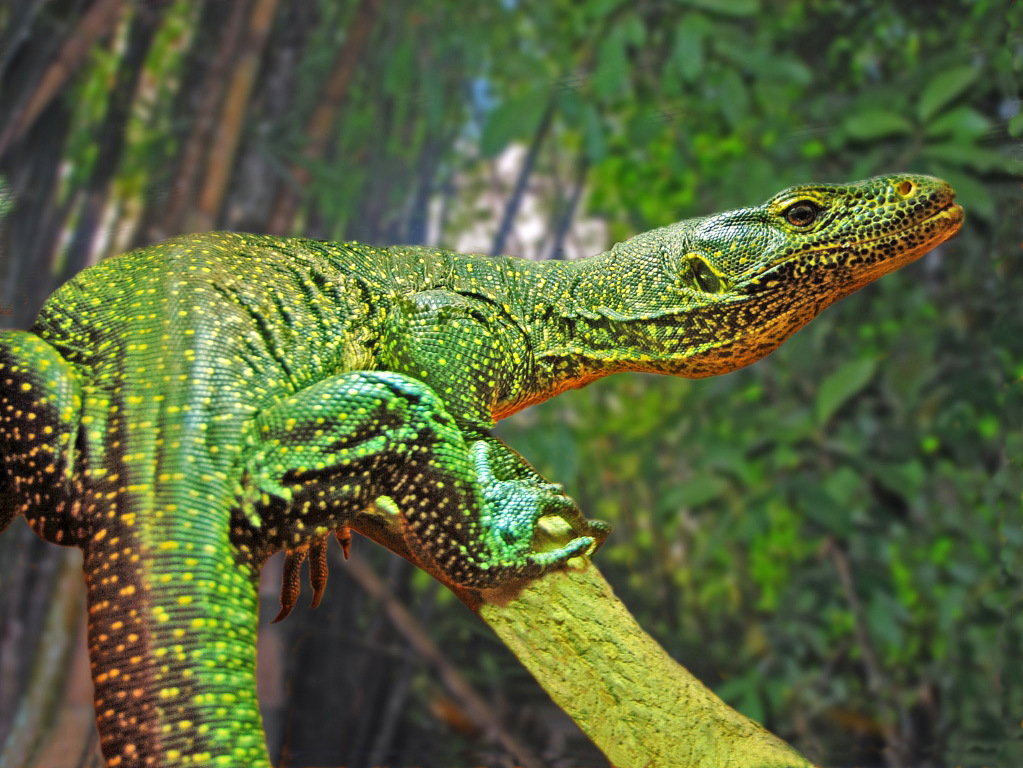
BLUE-TAILED MONITOR
Varanus doreanus
DESCRIPTION
Blue-tailed monitor (Varanus doreanus) is commonly known as the Dorean's monitor due to its striking coloration and unique habitat preferences. This species exhibits a vibrant blue tail, which contrasts with its darker body, making it visually distinctive among monitor lizards. Typically found in forested areas, these monitors are adept climbers and often hunt in trees, showcasing a combination of terrestrial and arboreal behaviors.
FUN FACTS
- The Blue-tailed monitor is known for its impressive climbing abilities, often seen scaling trees in search of food or basking in the sun
- Additionally, their vibrant blue tails are not just for show; they play a role in communication and signaling to other monitors in their territory
QUICK INFO
Lifespan10-15 years in the wild, up to 20 in captivity
Average Weight2-4 kg
Average Length1-1.5 m
Diet TypeCarnivore
Social Structuresolitary
Activity PatternDiurnal
Breeding SeasonSpring (March-May)
- Habitat
- This species inhabits tropical forests and woodlands, often favoring areas near water sources. They are known to be both terrestrial and arboreal, utilizing trees for hunting and shelter.
- Biomes
- Tropical Rainforest, Woodland
- Native Range
- The Blue-tailed monitor is native to the islands of Indonesia, particularly in the regions of New Guinea and surrounding islands.
- Continent
- Asia, Australia
- Countries
- Indonesia, Papua New Guinea
- Diet
- Blue-tailed monitors are carnivorous, primarily feeding on small mammals, birds, and insects. They are opportunistic hunters, using their keen eyesight and agility to capture prey.
- Diet Type
- Carnivore
- Favorite Food
- small mammals, birds, insects
- Social Structure
- solitary
- Activity Pattern
- Diurnal
- Group Size
- 1-2
- Territorial
- 1
 VU
VU
 LC
LC
2-4 kg
Weight
1-1.5 m
Length
- Coloration
- dark body with a vibrant blue tail
- Sexual Dimorphism
- males are typically larger than females
- Lifespan
- 10-15 years in the wild, up to 20 in captivity
- Offspring per Birth
- 5-15
- Sexual Maturity
- 2-3 years
- Breeding Season
- Spring (March-May)
VU
Vulnerable
IUCN Red List Status
- Population Status
- The population status of the Blue-tailed monitor is currently not well-documented, but habitat loss poses a potential threat.
- Population Trend
- Decreasing
- Endangered
- 1
- Threats
- Main threats include habitat destruction due to logging and agricultural expansion. Additionally, they face pressure from the pet trade, which can impact local populations.
- Predators
- Birds of prey, large snakes, and other carnivorous reptiles.
- Defense Mechanisms
- They may use their agility to escape predators and can also display aggressive behaviors when threatened.
- Found in Zoos
- Uncommon