


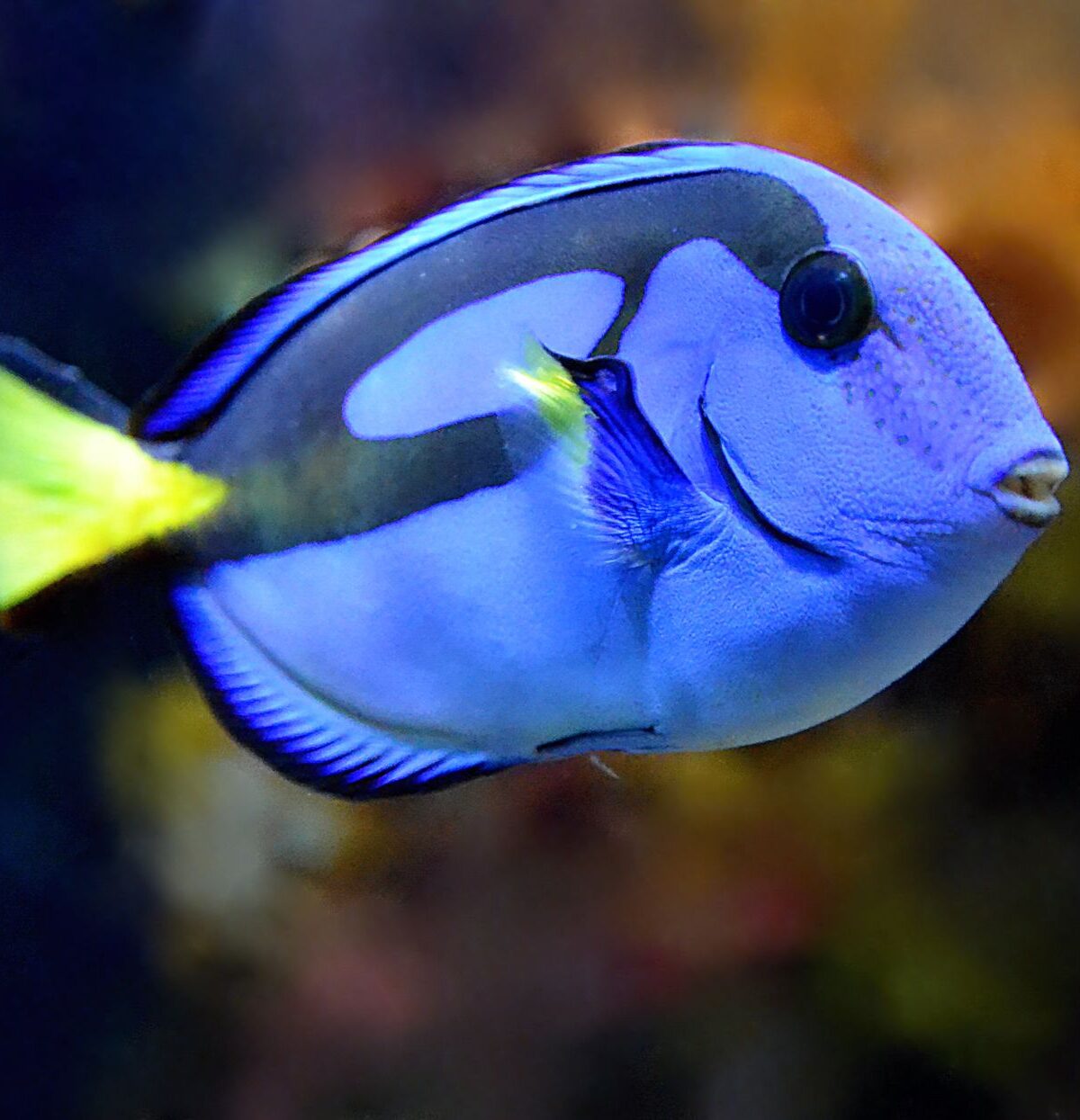
BLUE TANG
DESCRIPTION
Also called Palette Surgeonfish and Blue Surgeonfish, Blue Tang is a vibrant marine fish known for its striking blue coloration and yellow tail. They possess a distinctive oval body shape and a sharp spine on their tail, which they can use defensively. Blue Tangs are often found in coral reefs, where they play a crucial role in maintaining the health of the ecosystem by grazing on algae.
FUN FACTS
- Blue Tangs are popular in the aquarium trade due to their stunning appearance and relatively hardy nature
- They are also featured in popular media, such as the animated film 'Finding Nemo,' where one of the main characters, Dory, is a Blue Tang
- | Blue Tangs have a unique ability to change their color intensity based on their mood and environment, which can help them communicate with other fish and blend into their surroundings
QUICK INFO
Lifespan10-15 years in the wild, up to 20 years in captivi
Average Weight0.5-1 kg
Average Length25-30 cm
Diet TypeHerbivore
Social Structuregroup — they often form small schools for social interaction and protection.
Activity PatternDiurnal
Breeding SeasonYear-round in tropical regions
- Habitat
- Blue Tangs inhabit shallow coral reefs and lagoons, often found in areas with abundant algae growth. They prefer warm, tropical waters where they can easily find food and shelter.
- Biomes
- Coral Reef, Marine
- Native Range
- Blue Tangs are native to the Indo-Pacific region, including areas around the Great Barrier Reef and the Hawaiian Islands.
- Continent
- Oceania, Asia
- Countries
- Australia, Indonesia, Philippines, Hawaii
- Diet
- Blue Tangs primarily feed on algae and plant matter, scraping it off rocks and coral surfaces. They are known to consume a variety of algae types, which helps control algal growth in their habitats.
- Diet Type
- Herbivore
- Favorite Food
- algae
- Social Structure
- group — they often form small schools for social interaction and protection.
- Activity Pattern
- Diurnal
- Group Size
- 5-15
- Territorial
- 1
 LC
LC
0.5-1 kg
Weight
25-30 cm
Length
- Coloration
- vibrant blue body with a yellow tail and a black 'palette' shape on the side
- Lifespan
- 10-15 years in the wild, up to 20 years in captivi
- Offspring per Birth
- 100-300 eggs
- Sexual Maturity
- 1-2 years
- Breeding Season
- Year-round in tropical regions
LC
Least Concern
IUCN Red List Status
- Population Status
- The population of Blue Tangs is currently stable, but they are affected by habitat loss and overfishing.
- Wild Population Estimate
- Unknown
- Population Trend
- Stable
- Endangered
- 0
- Threats
- Main threats include habitat destruction due to coral reef degradation and overfishing for the aquarium trade. Climate change also poses a significant risk to their coral reef habitats.
- Predators
- Larger fish species, sharks, and some marine mammals are known to prey on Blue Tangs.
- Defense Mechanisms
- They can use their sharp tail spine to defend against predators and often hide among coral to avoid detection.
- Compatible Animals
- Clownfish, Damselfish, other small reef fish
- Found in Zoos
- Common