


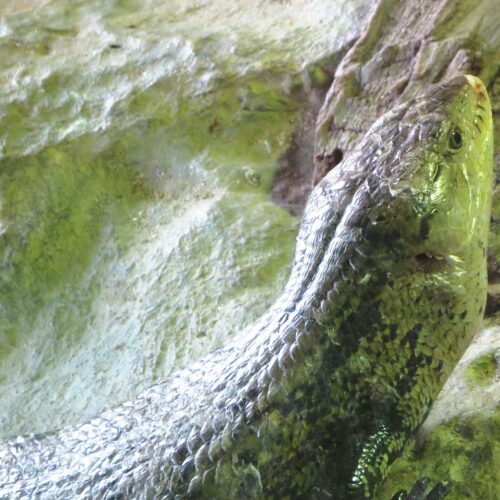
BLUE-TONGUED SKINK
Tiliqua scincoides
DESCRIPTION
The Blue-tongued Skink (Tiliqua scincoides) is a large, robust lizard known for its distinctive blue tongue, which it displays as a defense mechanism. This species is characterized by its smooth, shiny scales and a relatively short, stout body.
FUN FACTS
- Blue-tongued skinks can lose their tails as a defense mechanism and regrow them over time | They are known for their docile nature, making them popular pets | Their blue tongue is a warning signal to predators, indicating they are not palatable
QUICK INFO
Lifespan15-20 years in the wild, up to 30 in captivity
Average Weight500-800 g
Average Length40-60 cm
Diet TypeOmnivore
Social StructureSolitary, though they may be seen in pairs during the breeding season.
Activity PatternDiurnal
Breeding SeasonSpring (September-November)
- Habitat
- These skinks inhabit a range of environments, including woodlands, grasslands, and scrublands. They prefer areas with plenty of cover and basking spots.
- Biomes
- Temperate Forest, Grassland, Scrubland
- Native Range
- Native to Australia and New Guinea, with various subspecies found across these regions.
- Continent
- Australia, Oceania
- Countries
- Australia, New Guinea
- Diet
- Blue-tongued skinks are omnivorous, feeding on a variety of plant matter, insects, and small animals. They enjoy fruits, vegetables, and protein sources like insects and snails.
- Diet Type
- Omnivore
- Favorite Food
- Fruits, vegetables, insects
- Social Structure
- Solitary, though they may be seen in pairs during the breeding season.
- Activity Pattern
- Diurnal
- Group Size
- 1-2
- Territorial
- 0
 VU
VU
 LC
LC

500-800 g
Weight
40-60 cm
Length
- Coloration
- Typically brown or tan with darker bands and a bright blue tongue.
- Sexual Dimorphism
- Males tend to be larger and have broader heads than females.
- Lifespan
- 15-20 years in the wild, up to 30 in captivity
- Offspring per Birth
- 1-3
- Sexual Maturity
- 2-3 years
- Breeding Season
- Spring (September-November)
LC
Least Concern
IUCN Red List Status
- Population Status
- The population is currently stable, with no major declines reported.
- Wild Population Estimate
- Unknown
- Population Trend
- Stable
- Endangered
- 0
- Threats
- Habitat loss and fragmentation are the main threats to their populations. They are also vulnerable to predation by introduced species.
- Predators
- Birds of prey, snakes, and introduced mammals like cats and foxes.
- Defense Mechanisms
- They display their bright blue tongue as a warning to potential predators and can also hiss loudly.
- Found in Zoos
- Common