


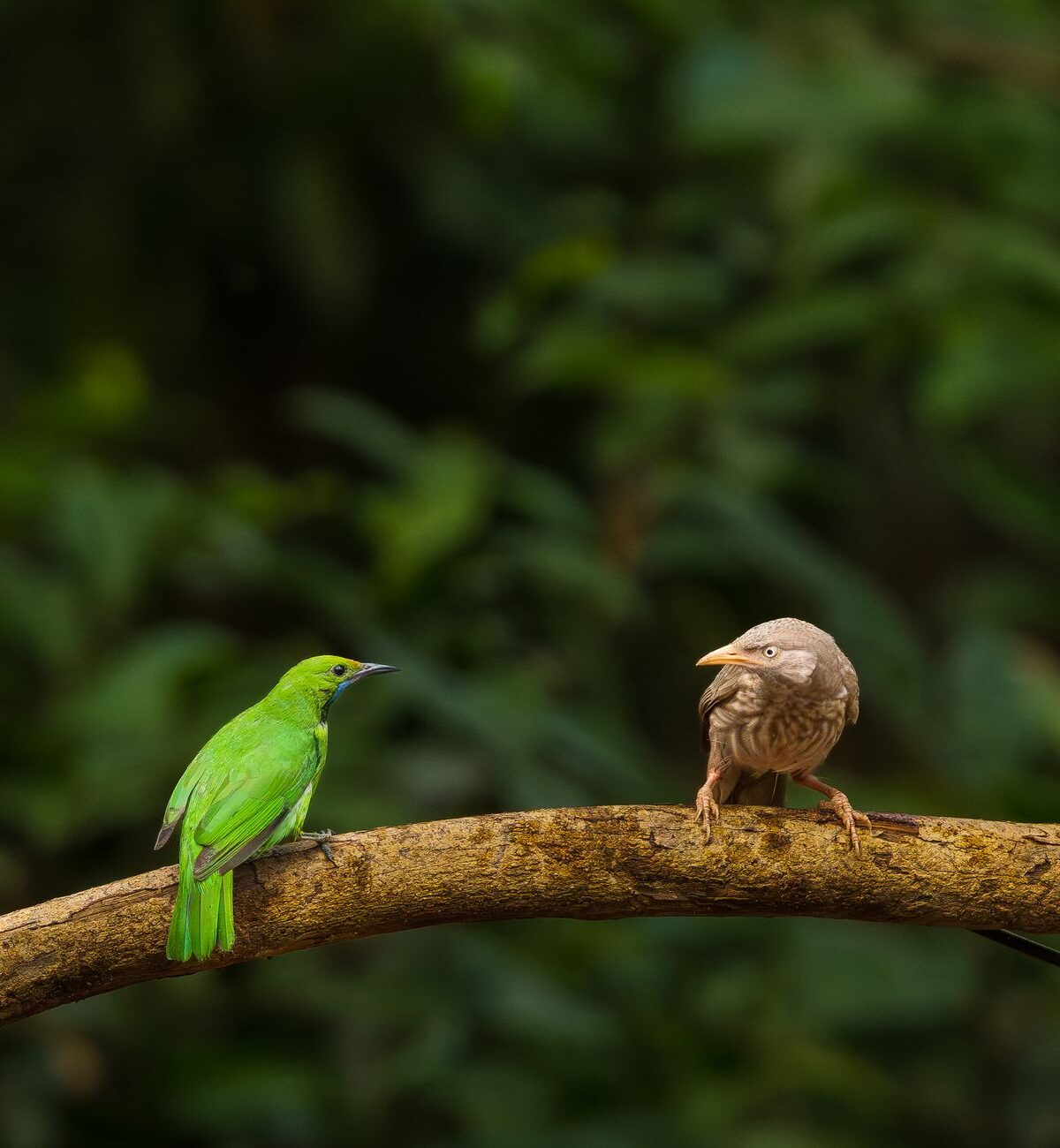
BLUE-WINGED LEAFBIRD
Chloropsis cochinchinensis
DESCRIPTION
Blue-winged leafbird (Chloropsis cochinchinensis) is also known as the Green Leafbird, a vibrant and colorful species found in Southeast Asia. This bird is characterized by its striking blue wings and bright green body, which allows it to blend seamlessly into the lush foliage of its habitat. Known for its melodious calls, the Blue-winged leafbird is often seen foraging in trees and shrubs, where it plays a vital role in seed dispersal and pollination.
FUN FACTS
- The Blue-winged leafbird is known for its unique feeding technique, where it can hover in front of flowers to extract nectar, similar to hummingbirds
- Additionally, these birds have a fascinating courtship display, where males perform elaborate songs and dances to attract females, showcasing their vibrant plumage and agility.| Blue-winged leafbirds are also important for their role in the ecosystem, as they help in pollinating flowers and dispersing seeds, contributing to the health of their forest habitats
QUICK INFO
Lifespan5-10 years in the wild
Average Weight20-30 g
Average Length18-20 cm
Diet TypeOmnivore
Social StructureThey are often found in pairs or small groups, displaying a social structure that allows for cooperative foraging.
Activity PatternDiurnal
Breeding SeasonSpring to early summer
- Habitat
- This species inhabits tropical and subtropical forests, often favoring areas with dense vegetation. It is commonly found in both primary and secondary forests, as well as in gardens and plantations.
- Biomes
- Tropical Rainforest, Subtropical Forest
- Native Range
- The Blue-winged leafbird is native to Southeast Asia, including regions of Thailand, Malaysia, Indonesia, and the Philippines.
- Continent
- Asia
- Countries
- Thailand, Malaysia, Indonesia, Philippines
- Diet
- The Blue-winged leafbird primarily feeds on fruits, nectar, and insects. Its diet varies seasonally, depending on the availability of food sources.
- Diet Type
- Omnivore
- Favorite Food
- Fruits and nectar
- Social Structure
- They are often found in pairs or small groups, displaying a social structure that allows for cooperative foraging.
- Activity Pattern
- Diurnal
- Group Size
- 2-10
- Territorial
- 0
 LC
LC
20-30 g
Weight
18-20 cm
Length
- Coloration
- Bright green body with striking blue wings and a yellow throat.
- Sexual Dimorphism
- Males and females are similar in appearance, but males tend to have slightly brighter coloration.
- Lifespan
- 5-10 years in the wild
- Offspring per Birth
- 2-3
- Sexual Maturity
- 1 year
- Breeding Season
- Spring to early summer
LC
Least Concern
IUCN Red List Status
- Population Status
- The population of Blue-winged leafbirds is currently stable, but habitat loss poses a potential threat.
- Wild Population Estimate
- Unknown
- Population Trend
- Stable
- Endangered
- 0
- Threats
- Habitat destruction due to deforestation and urbanization is the main threat to the Blue-winged leafbird. Additionally, climate change may impact its food sources and habitat availability.
- Predators
- Snakes, larger birds of prey, and domestic cats are known predators of the Blue-winged leafbird.
- Defense Mechanisms
- They rely on their camouflage and agility to evade predators, often hiding among the leaves.
- Found in Zoos
- Uncommon