


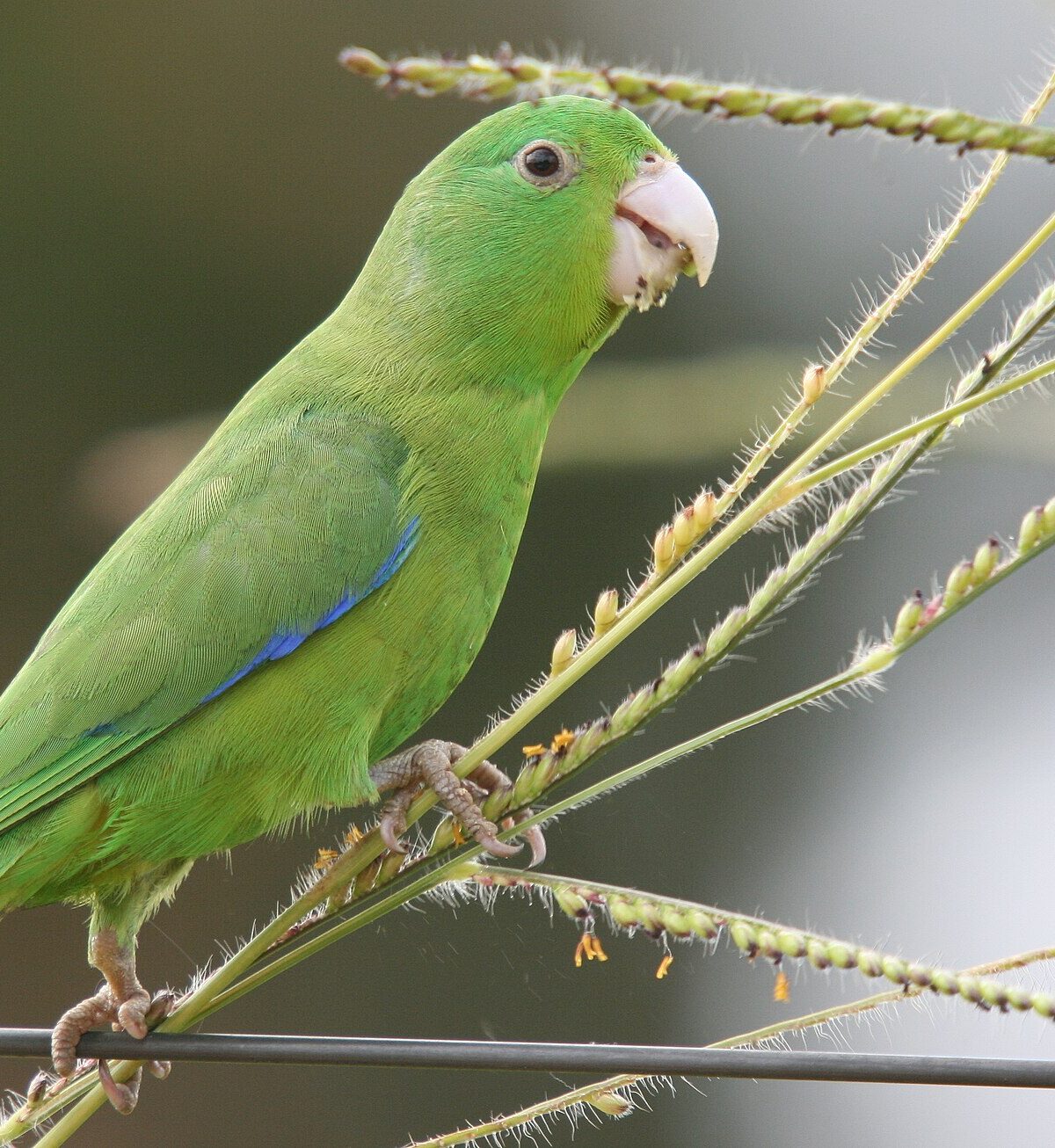
BLUE-WINGED PARROTLET
Forpus xanthopterygius
DESCRIPTION
Also called Xanthopteryx Parrotlet, the Blue-winged Parrotlet (Forpus xanthopterygius) is a small, vibrant parrot known for its striking blue wing feathers and green body. These birds exhibit playful and social behavior, often seen in pairs or small groups, engaging in acrobatic displays and vocalizations. In the wild, they inhabit a variety of environments, showcasing their adaptability to different ecological niches.
FUN FACTS
- Blue-winged Parrotlets are known for their playful and curious nature, often engaging in activities that showcase their intelligence, such as solving puzzles and manipulating toys
- They are also popular pets due to their small size and vibrant colors, making them a favorite among bird enthusiasts.|These parrots have a unique vocalization that can mimic sounds from their environment, including human speech, which adds to their charm as companion animals
- Their social nature means they thrive on interaction, making them delightful pets for those who can provide companionship
QUICK INFO
Lifespan5-10 years in the wild, up to 15 years in captivit
Average Weight30-50 g
Average Length12-14 cm
Diet TypeHerbivore
Social StructureThey are typically found in pairs or small groups, showcasing a social structure that promotes interaction and bonding.
Activity PatternDiurnal
Breeding SeasonSpring (September-November)
- Habitat
- This species typically inhabits subtropical or tropical dry forests, as well as moist lowland forests. They are often found in areas with abundant vegetation that provides food and nesting sites.
- Biomes
- Tropical Rainforest, Subtropical Forest
- Native Range
- The Blue-winged Parrotlet is native to parts of South America, particularly in regions of Brazil and Bolivia.
- Continent
- South America
- Countries
- Brazil, Bolivia
- Diet
- The Blue-winged Parrotlet primarily feeds on seeds, fruits, and flowers, reflecting its herbivorous diet. They are known to forage in trees and shrubs for their food.
- Diet Type
- Herbivore
- Favorite Food
- seeds, fruits, flowers
- Social Structure
- They are typically found in pairs or small groups, showcasing a social structure that promotes interaction and bonding.
- Activity Pattern
- Diurnal
- Group Size
- 2-10
- Territorial
- 0
 LC
LC
30-50 g
Weight
12-14 cm
Length
- Coloration
- The Blue-winged Parrotlet features a predominantly green body with striking blue wings and a yellowish underbelly.
- Sexual Dimorphism
- Males tend to have brighter coloration compared to females, particularly in the blue wing feathers.
- Lifespan
- 5-10 years in the wild, up to 15 years in captivit
- Offspring per Birth
- 3-6
- Sexual Maturity
- 6-12 months
- Breeding Season
- Spring (September-November)
LC
Least Concern
IUCN Red List Status
- Population Status
- The population of Blue-winged Parrotlets is currently stable, but habitat loss poses a potential threat.
- Wild Population Estimate
- Unknown
- Population Trend
- Stable
- Endangered
- 0
- Threats
- Main threats include habitat destruction due to deforestation and agricultural expansion. These factors can lead to localized declines in their populations.
- Predators
- Natural predators include birds of prey and snakes, which may target their nests or young.
- Defense Mechanisms
- They often rely on their agility and ability to hide among foliage to evade predators.
- Compatible Animals
- other small parrots, finches
- Found in Zoos
- Common