


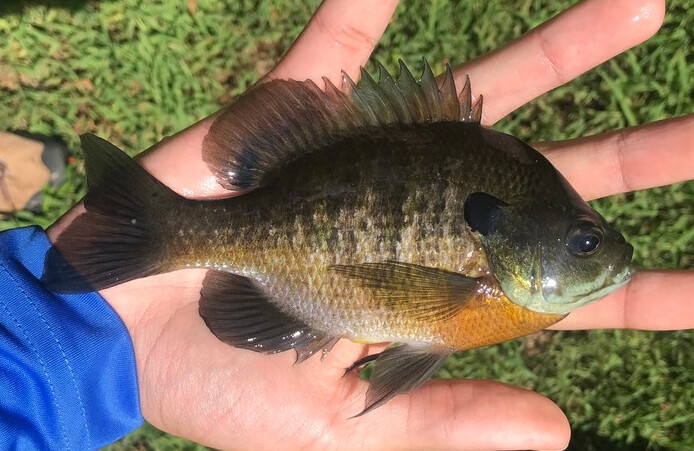
BLUEGILL
DESCRIPTION
Also called Sunfish and Bream, Bluegill is a freshwater fish known for its distinctive blue-black spot at the base of its dorsal fin and its flattened, pan-shaped body. They typically exhibit a vibrant coloration, with a blue or black spot on the operculum and a yellowish belly. Bluegills are social fish, often found in schools, and they inhabit a variety of freshwater environments, including lakes, ponds, and rivers.
FUN FACTS
- Bluegills are popular among anglers due to their abundance and willingness to bite on a variety of baits, making them a favorite for fishing enthusiasts
- They are also known for their unique breeding behavior, where males create nests in shallow water and aggressively defend them from intruders, showcasing their territorial nature.| Bluegills have a fascinating ability to adapt to various environments, which has allowed them to thrive in both natural and man-made bodies of water
- Their adaptability also extends to their diet, as they can switch between feeding on insects and plant material depending on what is available in their habitat
QUICK INFO
Lifespan6-10 years in the wild, up to 12 years in captivit
Average Weight0.5-1 kg
Average Length15-25 cm
Diet TypeOmnivore
Social StructureGroup, often found in schools, especially during feeding and breeding.
Activity PatternDiurnal
Breeding SeasonSpring to early summer (April-July)
- Habitat
- Bluegills thrive in warm, shallow waters with plenty of vegetation, which provides cover and breeding sites. They are often found in lakes, ponds, and slow-moving rivers.
- Biomes
- Freshwater, Temperate Forest
- Native Range
- Native to North America, primarily found in the eastern and central United States.
- Continent
- North America
- Countries
- United States, Canada, Mexico
- Diet
- Bluegills primarily feed on insects, small crustaceans, and zooplankton, but they also consume plant material. Their diet can vary based on their life stage and the availability of food sources.
- Diet Type
- Omnivore
- Favorite Food
- Insects, zooplankton
- Social Structure
- Group, often found in schools, especially during feeding and breeding.
- Activity Pattern
- Diurnal
- Group Size
- 5-50
- Territorial
- 1
 LC
LC

 LC
LC
0.5-1 kg
Weight
15-25 cm
Length
- Coloration
- Typically blue-green to olive on the back with a lighter belly and dark spot on the operculum.
- Sexual Dimorphism
- Males are generally more colorful than females, especially during the breeding season.
- Lifespan
- 6-10 years in the wild, up to 12 years in captivit
- Offspring per Birth
- 1000-5000
- Sexual Maturity
- 1-2 years
- Breeding Season
- Spring to early summer (April-July)
LC
Least Concern
IUCN Red List Status
- Population Status
- Bluegill populations are generally stable and widespread across their native range.
- Wild Population Estimate
- Not specifically estimated, but considered abundant.
- Population Trend
- Stable
- Endangered
- 0
- Threats
- Main threats include habitat destruction and pollution, which can impact water quality and food availability. Overfishing can also pose a risk in some areas.
- Predators
- Largemouth bass, northern pike, birds such as herons and kingfishers, and larger fish species.
- Defense Mechanisms
- Bluegills often use their schooling behavior to evade predators, and they can quickly dart into vegetation for cover.
- Compatible Animals
- Largemouth bass, catfish, other sunfish species
- Found in Zoos
- Common