


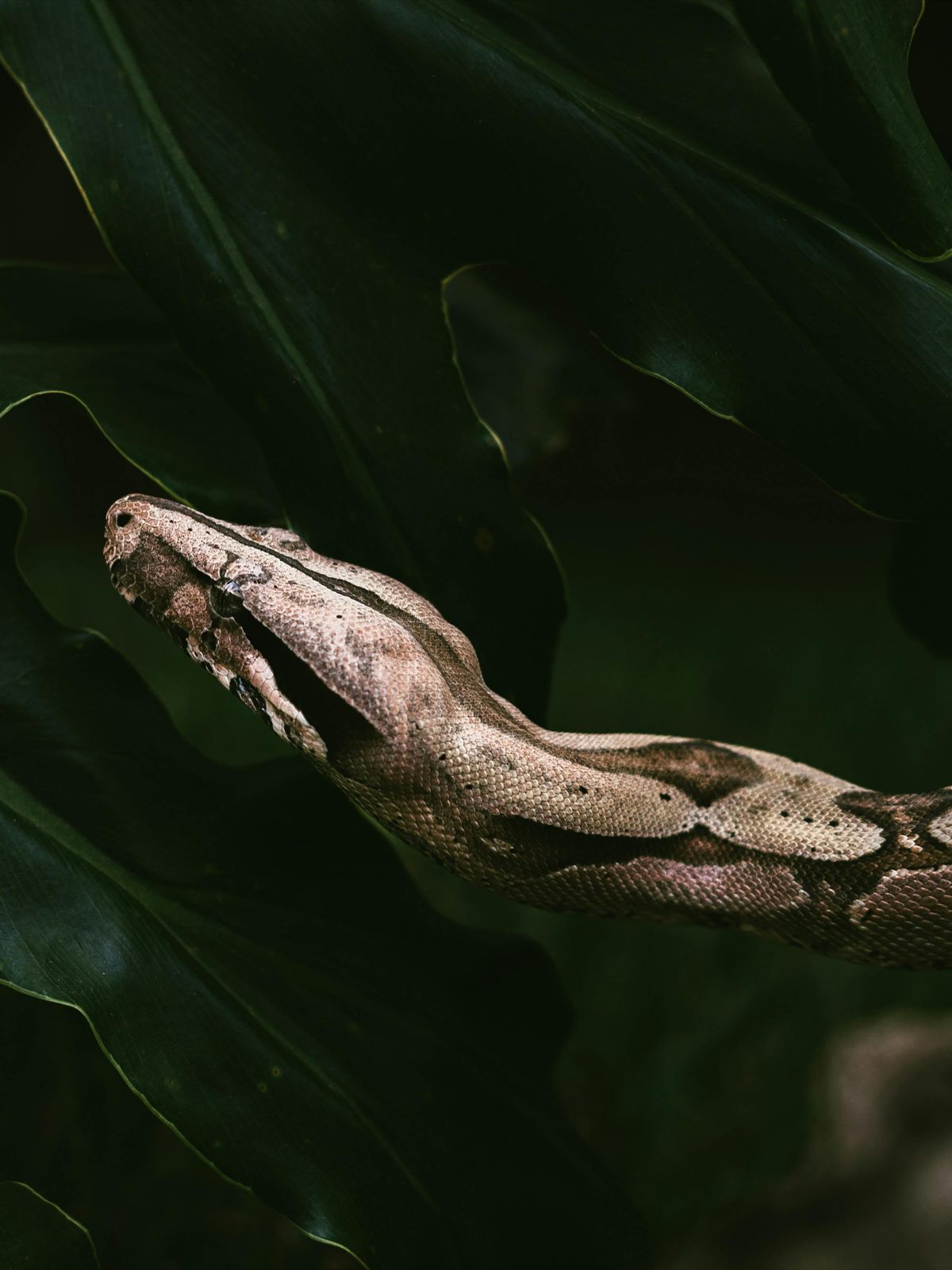
BOA CONSTRICTOR
Boa constrictor
DESCRIPTION
The Boa Constrictor is a large, non-venomous snake known for its distinctive pattern of brown, tan, and cream colors that provide excellent camouflage in its natural habitat. It can grow to impressive lengths, often reaching between 2 to 4 meters, and has a robust body that allows it to constrict its prey effectively. This species is primarily nocturnal and is known for its ambush hunting strategy, often lying in wait for unsuspecting animals to pass by.
FUN FACTS
- Boa Constrictors are known for their ability to sense heat, which helps them locate warm-blooded prey even in complete darkness
- Additionally, they can go for weeks without eating after a large meal, thanks to their slow metabolism, which allows them to survive in environments where food may not always be readily available
QUICK INFO
Lifespan20-30 years in captivity, 10-20 years in the wild
Average Weight27-45 kg
Average Length2-4 m
Diet TypeCarnivore
Social Structuresolitary
Activity PatternNocturnal
Breeding SeasonSpring (March-May)
- Habitat
- Boa Constrictors inhabit a variety of environments, including tropical rainforests, savannas, and semi-arid regions. They are often found near water sources, as they are good swimmers and can hunt both on land and in water.
- Biomes
- Tropical Rainforest, Savanna, Wetlands
- Native Range
- They are native to Central and South America, ranging from northern Mexico to Argentina.
- Continent
- North America, South America
- Countries
- Mexico, Belize, Guatemala, Honduras, Nicaragua, Costa Rica, Panama, Colombia, Venezuela, Ecuador, Peru, Brazil, Bolivia, Paraguay, Argentina
- Diet
- Boa Constrictors primarily eat small to medium-sized mammals and birds. They are constrictors, meaning they suffocate their prey before consumption.
- Diet Type
- Carnivore
- Favorite Food
- Rodents, birds
- Social Structure
- solitary
- Activity Pattern
- Nocturnal
- Group Size
- 1
- Territorial
- 0
 VU
VU

27-45 kg
Weight
2-4 m
Length
- Coloration
- Typically brown or tan with darker saddle-like patterns, providing excellent camouflage.
- Sexual Dimorphism
- Females are generally larger than males.
- Lifespan
- 20-30 years in captivity, 10-20 years in the wild
- Gestation Period
- 7-8 months
- Offspring per Birth
- 20-60
- Sexual Maturity
- 3-4 years
- Breeding Season
- Spring (March-May)
LC
Least Concern
IUCN Red List Status
- Population Status
- The population is currently stable, but habitat destruction poses a potential threat.
- Wild Population Estimate
- Unknown
- Population Trend
- Stable
- Endangered
- 0
- Threats
- Main threats include habitat loss due to deforestation and illegal pet trade. While not currently endangered, these factors could impact future populations.
- Predators
- Birds of prey, large mammals, and humans can pose threats to Boa Constrictors, especially to juveniles.
- Defense Mechanisms
- They rely on camouflage to avoid detection and can also hiss loudly to deter potential threats.
- Found in Zoos
- Common