


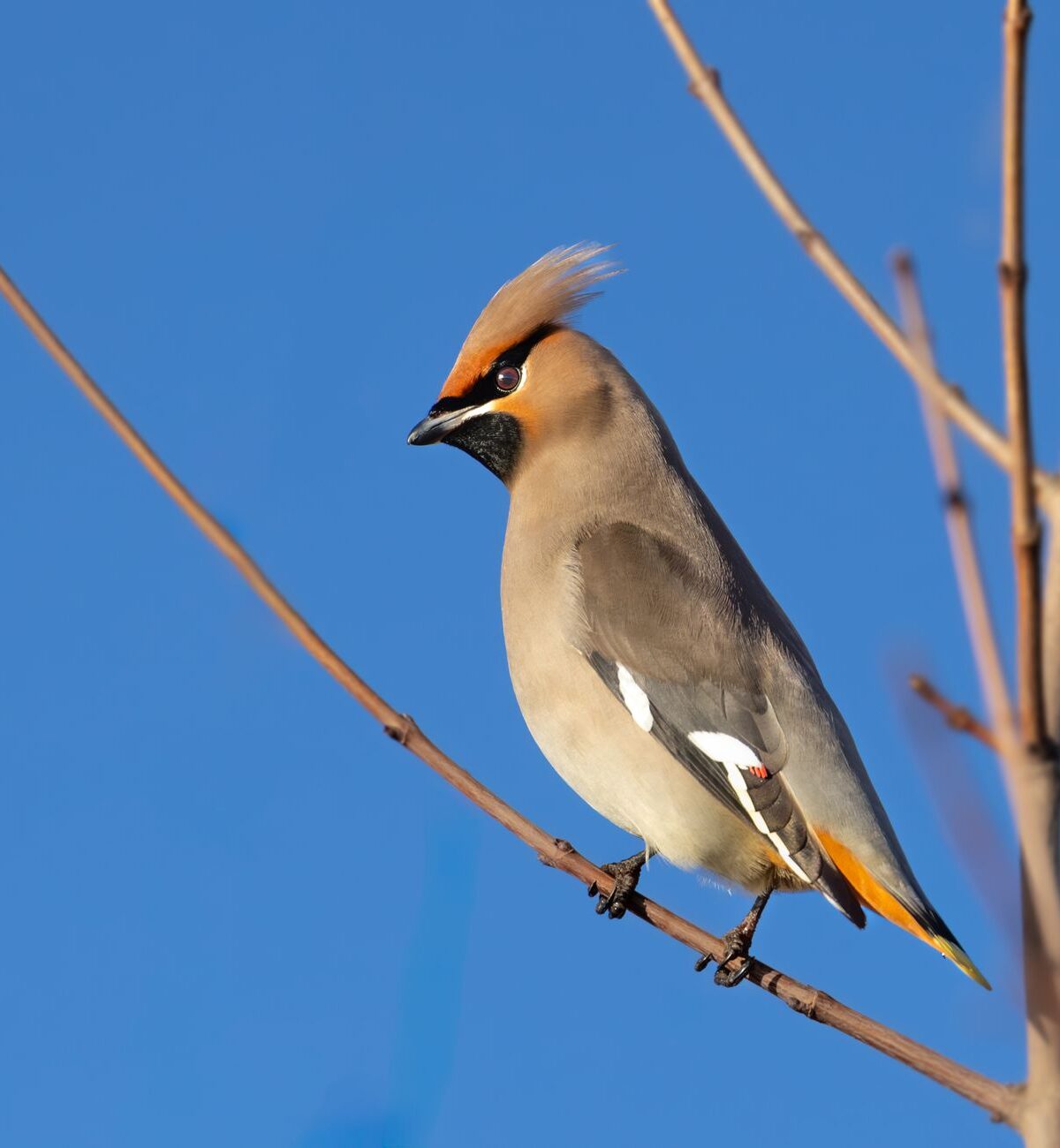
BOHEMIAN WAXWING
Bombycilla garrulus
DESCRIPTION
Bohemian Waxwing (Bombycilla garrulus) is commonly known as the Waxwing due to its distinctive waxy wing tips. This medium-sized bird features a sleek, elegant body with a crest, and its plumage is primarily a soft gray with hints of yellow and red. Known for their sociable behavior, these birds often gather in flocks, feeding on berries and fruits, and are recognized for their beautiful, melodic calls.
FUN FACTS
- Bohemian Waxwings are known for their unique feeding behavior, where they can become intoxicated from eating fermented berries, leading to erratic flight patterns
- | These birds have a striking appearance, with their waxy wing tips resembling small drops of wax, which is how they got their name
- They are also known for their beautiful, soft calls that can be heard during their social interactions
QUICK INFO
Lifespan2-5 years in the wild
Average Weight50-70 g
Average Length18-23 cm
Diet TypeOmnivore
Social Structuregroup — they are typically found in flocks, especially during feeding.
Activity PatternDiurnal
Breeding SeasonSpring (April-June)
- Habitat
- These birds inhabit a variety of forested areas, including boreal forests and mixed woodlands. They are often found near fruit-bearing trees and shrubs, which provide their primary food sources.
- Biomes
- Boreal Forest, Temperate Forest
- Native Range
- Bohemian Waxwings are native to the northern regions of Europe, Asia, and North America, migrating southward during winter months in search of food.
- Continent
- Europe, Asia, North America
- Countries
- Canada, United States, Norway, Sweden, Finland, Russia
- Diet
- Bohemian Waxwings primarily feed on fruits and berries, particularly those from trees and shrubs. They are known to consume large quantities of food when available, often gorging themselves during berry seasons.
- Diet Type
- Omnivore
- Favorite Food
- berries, fruits
- Social Structure
- group — they are typically found in flocks, especially during feeding.
- Activity Pattern
- Diurnal
- Group Size
- 5-50
- Territorial
- 0
 CR
CR
 LC
LC
50-70 g
Weight
18-23 cm
Length
- Coloration
- soft gray body with yellow and red accents, particularly on the wings and tail
- Lifespan
- 2-5 years in the wild
- Offspring per Birth
- 3-6
- Sexual Maturity
- 1 year
- Breeding Season
- Spring (April-June)
LC
Least Concern
IUCN Red List Status
- Population Status
- The population of Bohemian Waxwings is generally stable, but they can experience fluctuations based on food availability.
- Wild Population Estimate
- unknown
- Population Trend
- Stable
- Endangered
- 0
- Threats
- Main threats include habitat loss and changes in food availability due to climate change. They are also susceptible to collisions with buildings and vehicles.
- Predators
- hawks, owls, domestic cats
- Defense Mechanisms
- They often rely on their flocking behavior to confuse predators and may also use their agility in flight to evade capture.
- Found in Zoos
- Uncommon