


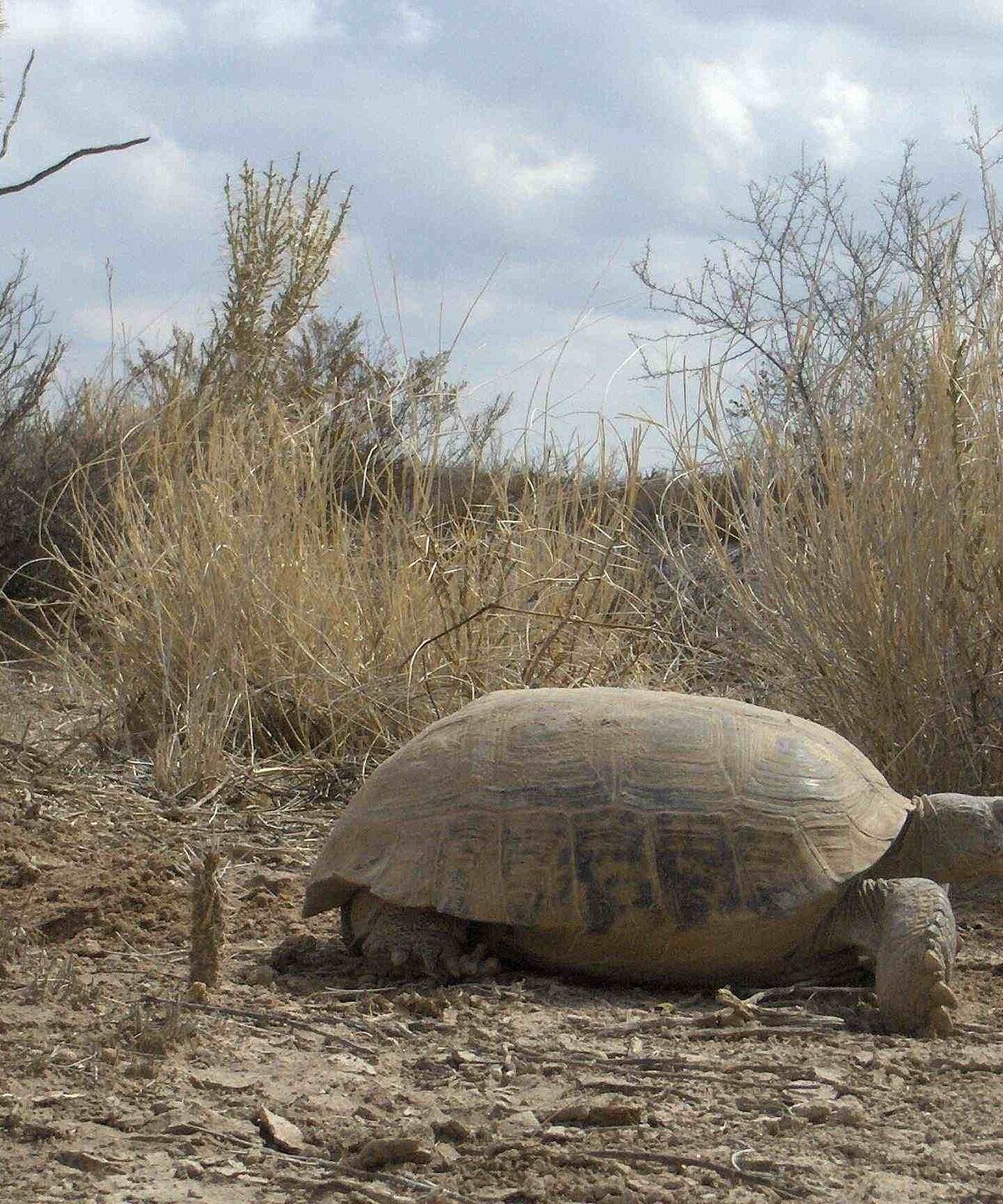
BOLSON TORTOISE
Gopherus flavomarginatus
DESCRIPTION
Bolson Tortoise (Gopherus flavomarginatus) is a large tortoise species native to the Chihuahuan Desert in Mexico. It has a distinctive yellowish margin on its shell, which is typically dark brown or black, and can grow to a considerable size. This tortoise is primarily terrestrial and is known for its burrowing behavior, creating extensive underground burrows that provide shelter from extreme temperatures.
FUN FACTS
- Bolson Tortoises are one of the largest tortoise species in North America, and they can live for several decades, often outliving many other reptiles
- Their burrowing behavior not only provides them with shelter but also helps aerate the soil and create habitats for other species in their ecosystem.| These tortoises have a unique social behavior where they may engage in head-bobbing displays during mating rituals, showcasing their courtship behaviors
- Despite their size, they are quite agile and can move quickly when necessary, especially when threatened
QUICK INFO
Lifespan50-80 years in the wild
Average Weight50-100 kg
Average Length0.6-1.0 m
Diet TypeHerbivore
Social Structuresolitary
Activity PatternDiurnal
Breeding SeasonSpring (April-June)
- Habitat
- These tortoises inhabit arid and semi-arid regions, often favoring areas with sparse vegetation and sandy soils for burrowing. They are typically found in grasslands and scrublands.
- Biomes
- Desert, Grassland
- Native Range
- The Bolson Tortoise is endemic to the Chihuahuan Desert, primarily found in the state of Durango, Mexico.
- Continent
- North America
- Countries
- Mexico
- Diet
- Bolson Tortoises are herbivores, primarily feeding on a variety of grasses, herbs, and succulent plants. They play a crucial role in their ecosystem by helping to maintain plant diversity.
- Diet Type
- Herbivore
- Favorite Food
- grasses, herbs, succulent plants
- Social Structure
- solitary
- Activity Pattern
- Diurnal
- Group Size
- 1
- Territorial
- 0

50-100 kg
Weight
0.6-1.0 m
Length
- Coloration
- dark brown or black shell with yellowish margins
- Sexual Dimorphism
- males tend to have slightly larger shells and longer tails than females
- Lifespan
- 50-80 years in the wild
- Gestation Period
- 90-120 days
- Offspring per Birth
- 1-15
- Sexual Maturity
- 5-10 years
- Breeding Season
- Spring (April-June)
EN
Endangered
IUCN Red List Status
- Population Status
- The population of Bolson Tortoises is currently declining due to habitat loss and other factors.
- Wild Population Estimate
- 1,000-3,000
- Population Trend
- Decreasing
- Endangered
- 1
- Threats
- Main threats to the Bolson Tortoise include habitat destruction due to agriculture and urban development, as well as poaching. Additionally, climate change poses a significant risk to their arid habitat.
- Conservation Program
- Conservation efforts are underway, including habitat protection and breeding programs in captivity.
- Predators
- Coyotes, foxes, and birds of prey are known to prey on Bolson Tortoises, particularly on their eggs and young.
- Defense Mechanisms
- Bolson Tortoises can withdraw into their shells for protection against predators.
- Found in Zoos
- Uncommon