


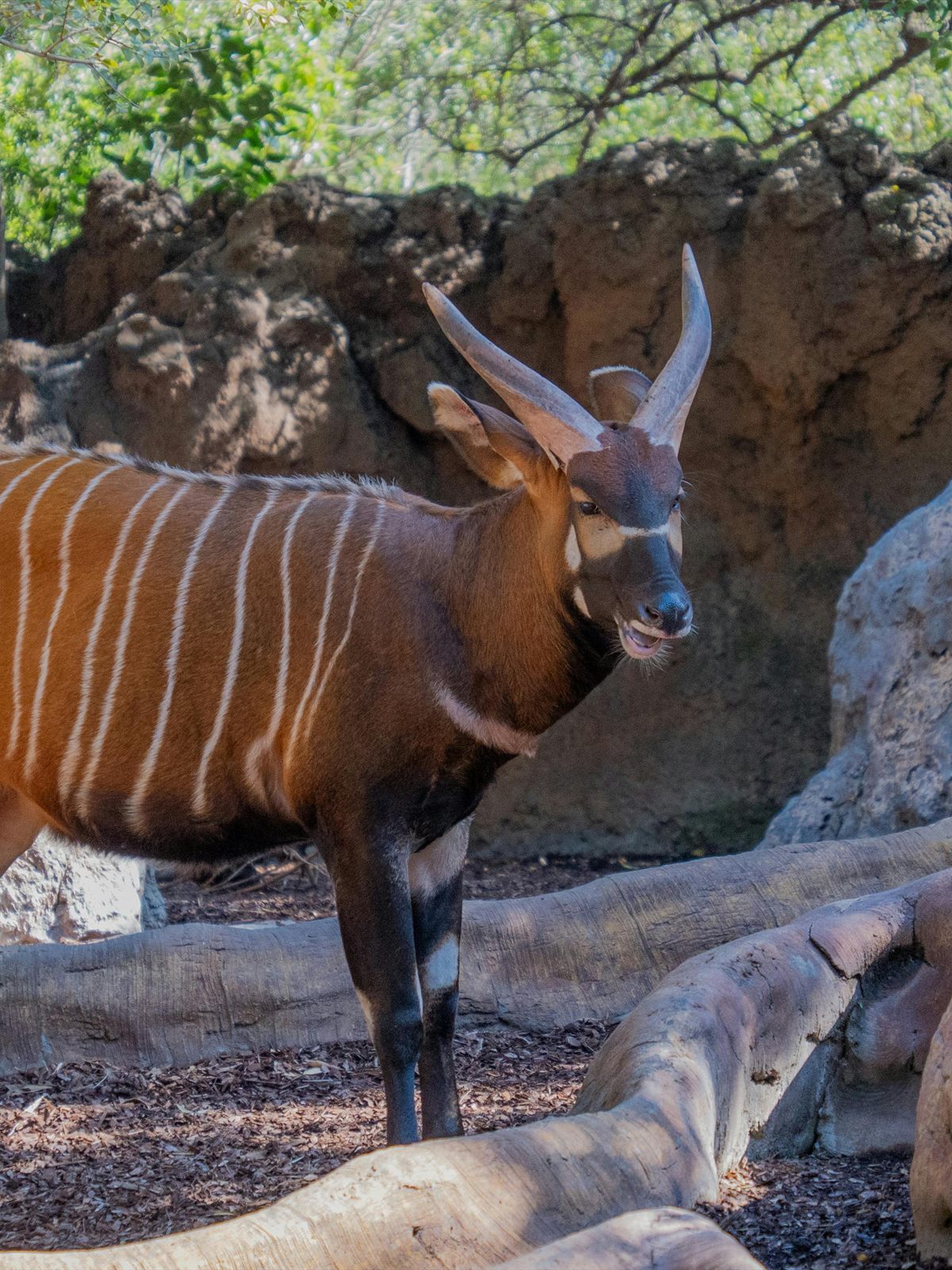
BONGO
Tragelaphus eurycerus
DESCRIPTION
Bongo is a large, striking antelope known for its distinctive reddish-brown coat and white stripes. These animals are primarily found in the dense forests of Central and West Africa, where they are well-adapted to their environment. Bongo are known for their elusive nature, often being more active during the early morning and late afternoon, which helps them avoid predators.
FUN FACTS
- Bongo are known for their unique vocalizations, which include a variety of grunts and bellows that help them communicate with each other in the dense forest
- Additionally, Bongo have a remarkable ability to navigate through thick underbrush, using their long legs and strong bodies to push through obstacles while foraging for food.|Bongo are one of the few antelope species that are known to be able to climb steep, rocky terrain, which helps them escape from predators and find food sources that are less accessible to other animals
QUICK INFO
Lifespan15-20 years in the wild, up to 25 in captivity
Average Weight180-300 kg
Average Length1.8-2.1 m
Diet TypeHerbivore
Social StructureBongo are typically solitary or found in small groups, often consisting of females and their young. Males are more solitary and may only join groups during the breeding season.
Activity PatternCrepuscular
Breeding SeasonYear-round, with peaks depending on the region
- Habitat
- Bongo inhabit dense tropical rainforests and are often found near water sources. They prefer areas with thick underbrush that provides cover from predators.
- Biomes
- Tropical Rainforest
- Native Range
- Bongo are native to the rainforests of Central and West Africa, including countries like Cameroon, Gabon, and the Democratic Republic of the Congo.
- Continent
- Africa
- Countries
- Cameroon, Gabon, Democratic Republic of the Congo, Republic of the Congo, Uganda
- Diet
- Bongo are herbivores that primarily feed on leaves, fruits, and shrubs. They are known to browse on a variety of vegetation, which helps them thrive in their forest habitat.
- Diet Type
- Herbivore
- Favorite Food
- leaves, fruits, shrubs
- Social Structure
- Bongo are typically solitary or found in small groups, often consisting of females and their young. Males are more solitary and may only join groups during the breeding season.
- Activity Pattern
- Crepuscular
- Group Size
- 1-10
- Territorial
- 0
 LC
LC
 VU
VU
180-300 kg
Weight
1.8-2.1 m
Length
1.0-1.2 m at shoulder
Height (Shoulder)
- Coloration
- reddish-brown coat with white stripes and spots
- Sexual Dimorphism
- Males are larger and have long, spiral horns, while females are smaller and hornless.
- Lifespan
- 15-20 years in the wild, up to 25 in captivity
- Gestation Period
- 285 days
- Offspring per Birth
- 1
- Sexual Maturity
- 2-3 years
- Breeding Season
- Year-round, with peaks depending on the region
EN
Endangered
IUCN Red List Status
- Population Status
- Bongo populations are currently declining due to habitat loss and hunting.
- Wild Population Estimate
- 10,000-20,000
- Population Trend
- Decreasing
- Endangered
- 1
- Threats
- The main threats to Bongo include habitat destruction due to logging and agriculture, as well as poaching for bushmeat. These factors have significantly impacted their populations in the wild.
- Conservation Program
- Various conservation programs are in place, including habitat protection and anti-poaching initiatives.
- Predators
- Lions, leopards, and crocodiles are known predators of Bongo, particularly when they venture near water sources.
- Defense Mechanisms
- Bongo rely on their camouflage and agility to evade predators, often using dense vegetation for cover.
- Found in Zoos
- Uncommon