


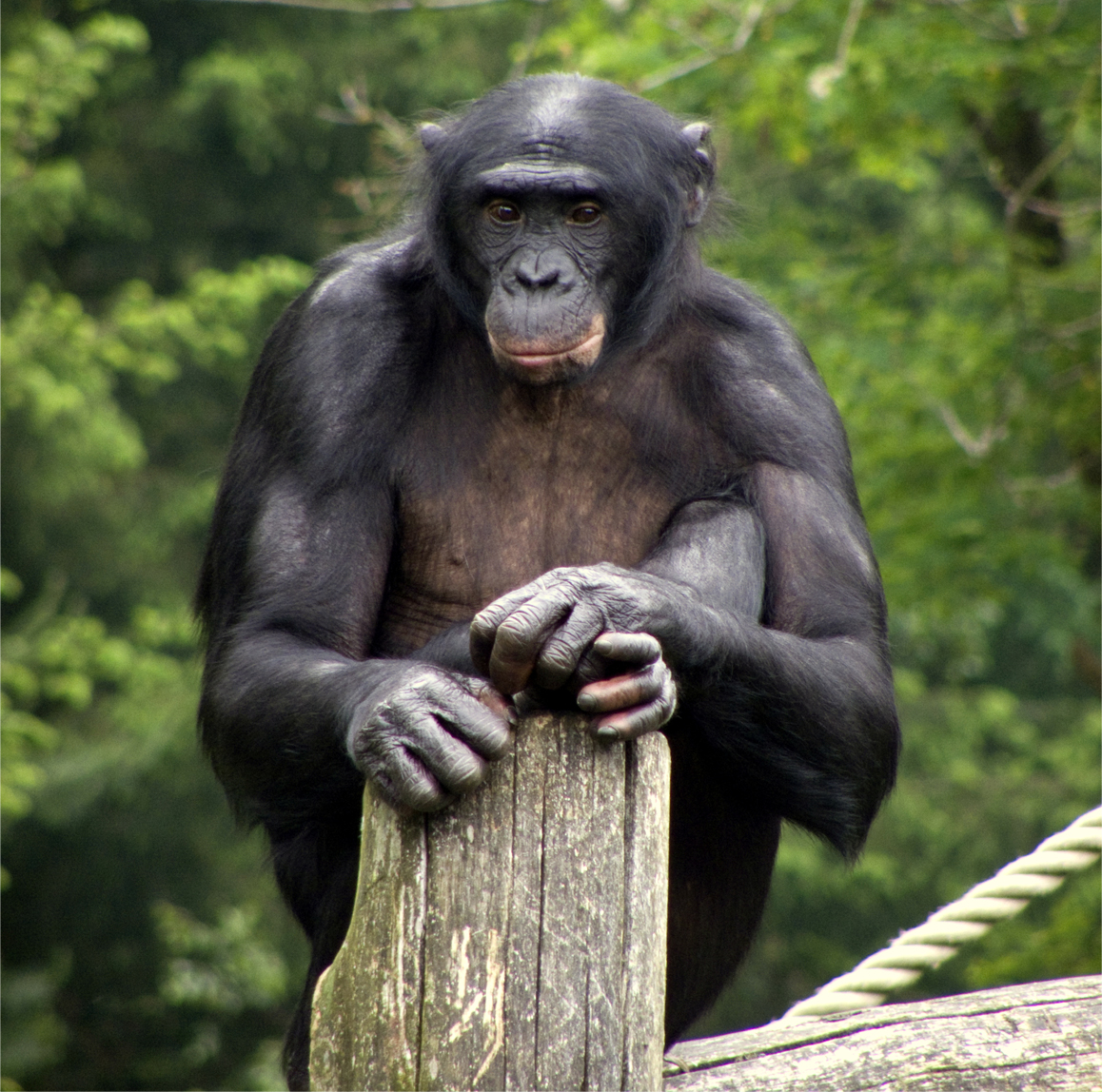
BONOBO
Pan paniscus
DESCRIPTION
The bonobo (Pan paniscus) is a great ape closely related to the chimpanzee, known for its peaceful and matriarchal social structure. They are often recognized for their playful behavior and high levels of sexual activity, which play a role in social bonding.
FUN FACTS
- Bonobos are often referred to as 'pygmy chimpanzees' due to their smaller size compared to common chimpanzees | They are known for their unique social behaviors, including using sexual interactions to maintain peace | Bonobos have a matriarchal society where females often hold the highest social status
QUICK INFO
Lifespan20-40 years in the wild, up to 50 in captivity
Average Weight30-40 kg
Average Length0.75-1.2 m
Diet TypeOmnivore
Social StructureGroup - Bonobos live in matriarchal societies, typically in groups of 30-100 individuals.
Activity PatternDiurnal
Breeding SeasonYear-round
- Habitat
- Bonobos inhabit the dense tropical rainforests of the Congo Basin. They prefer areas with abundant fruit trees and water sources.
- Biomes
- Tropical Rainforest
- Native Range
- Endemic to the Democratic Republic of the Congo
- Continent
- Africa
- Countries
- Democratic Republic of the Congo
- Diet
- Bonobos are omnivorous, primarily feeding on fruits, leaves, and occasionally small animals. They are known to use tools to access food, such as using sticks to extract termites.
- Diet Type
- Omnivore
- Favorite Food
- Fruits, especially figs
- Social Structure
- Group - Bonobos live in matriarchal societies, typically in groups of 30-100 individuals.
- Activity Pattern
- Diurnal
- Group Size
- 30-100
- Territorial
- 0
30-40 kg
Weight
0.75-1.2 m
Length
- Coloration
- Black to dark brown fur with lighter facial features
- Sexual Dimorphism
- Males are generally larger than females
- Lifespan
- 20-40 years in the wild, up to 50 in captivity
- Gestation Period
- 240 days
- Offspring per Birth
- 1
- Sexual Maturity
- 4-6 years
- Breeding Season
- Year-round
EN
Endangered
IUCN Red List Status
- Population Status
- The bonobo population is currently declining due to habitat loss and hunting.
- Wild Population Estimate
- 10,000-50,000
- Population Trend
- Decreasing
- Endangered
- 1
- Threats
- Main threats include habitat destruction due to logging and agriculture, as well as poaching for bushmeat. The illegal pet trade also poses a significant risk.
- Predators
- Humans are the primary threat; natural predators are rare.
- Found in Zoos
- Uncommon