


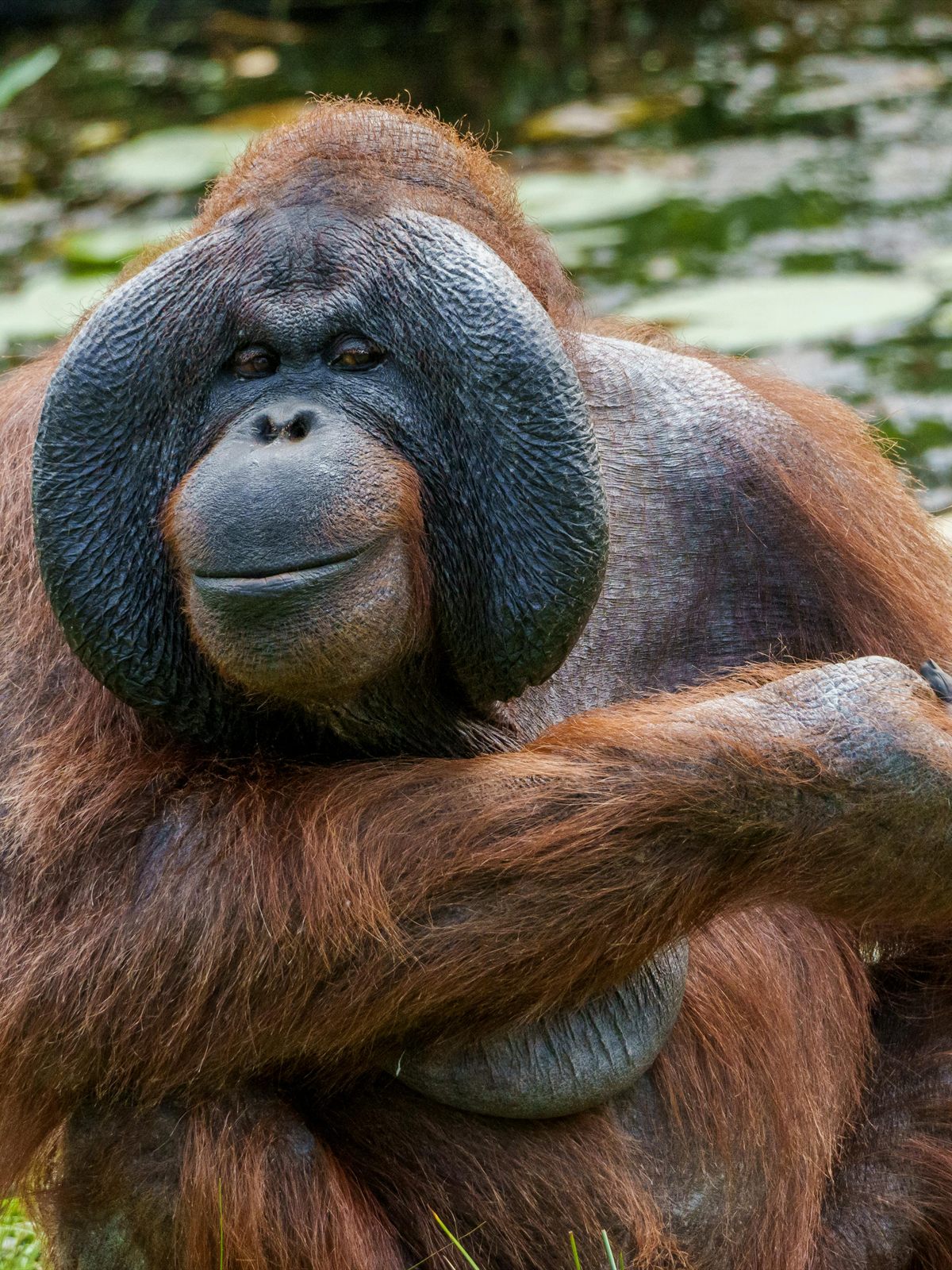
BORNEAN ORANGUTAN
Pongo pygmaeus
DESCRIPTION
The Bornean orangutan (Pongo pygmaeus) is a large arboreal primate native to the island of Borneo. It is known for its distinctive reddish-brown fur and long arms, which are adapted for a life spent mostly in trees.
FUN FACTS
- Bornean orangutans can use tools to extract insects from tree bark | They have a highly developed social structure despite being solitary | They share about 97% of their DNA with humans
QUICK INFO
Lifespan30-40 years in the wild, up to 50 in captivity
Average Weight50-100 kg
Average Length1.2-1.5 m
Diet TypeHerbivore
Social StructureSolitary, with occasional pairings during mating season.
Activity PatternDiurnal
Breeding SeasonYear-round
- Habitat
- They inhabit tropical rainforests, particularly in lowland areas and swamp forests. These environments provide the necessary food sources and nesting sites for their arboreal lifestyle.
- Biomes
- Tropical Rainforest
- Native Range
- Borneo, specifically in the Malaysian states of Sabah and Sarawak, as well as in Brunei and Indonesia.
- Continent
- Asia
- Countries
- Malaysia, Indonesia, Brunei
- Diet
- Bornean orangutans primarily eat fruit, but they also consume leaves, bark, and insects. Their diet varies seasonally based on food availability.
- Diet Type
- Herbivore
- Favorite Food
- Fruits, especially durian and figs
- Social Structure
- Solitary, with occasional pairings during mating season.
- Activity Pattern
- Diurnal
- Group Size
- 1-2
- Territorial
- 1
50-100 kg
Weight
1.2-1.5 m
Length
- Coloration
- Reddish-brown fur with lighter facial features.
- Sexual Dimorphism
- Males are larger and have more pronounced cheek pads than females.
- Lifespan
- 30-40 years in the wild, up to 50 in captivity
- Gestation Period
- 230 days
- Offspring per Birth
- 1
- Sexual Maturity
- 6-8 years
- Breeding Season
- Year-round
EN
Endangered
IUCN Red List Status
- Population Status
- The population is declining due to habitat loss and poaching.
- Wild Population Estimate
- 55,000-65,000
- Population Trend
- Decreasing
- Endangered
- 1
- Threats
- Main threats include deforestation for palm oil plantations and illegal hunting. Habitat destruction significantly impacts their survival.
- Conservation Program
- The Orangutan Foundation International and various local conservation efforts.
- Defense Mechanisms
- They use their size and strength to deter threats, and they can also use tools to defend themselves.
- Found in Zoos
- Common