


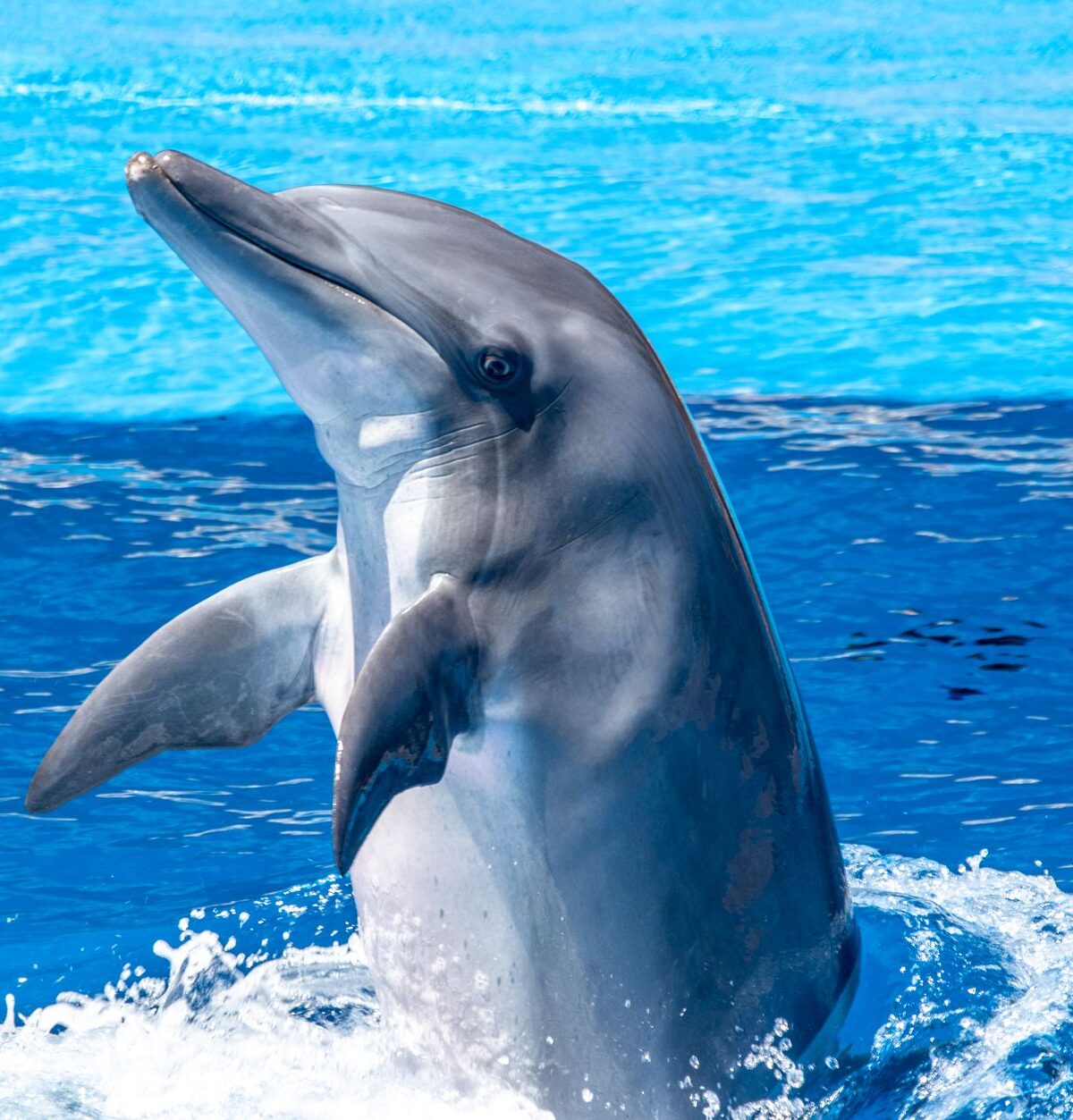
BOTTLENOSE DOLPHIN
Tursiops truncatus
DESCRIPTION
Bottlenose Dolphin (Tursiops truncatus) is a highly intelligent marine mammal known for its playful behavior and acrobatic displays. They have a robust body with a pronounced beak and a curved dorsal fin, typically exhibiting a gray coloration with lighter underbellies. These dolphins are social animals, often found in groups, and are known for their complex communication skills and strong social bonds.
FUN FACTS
- Bottlenose Dolphins are known for their advanced communication skills, using a variety of clicks, whistles, and body language to convey messages
- They have been observed using tools, such as marine sponges, to protect their snouts while foraging on the seafloor
- | These dolphins have a unique social structure, often forming lifelong bonds with family members and other pod members
- They are also known for their playful behavior, frequently engaging in acrobatics and surfing on waves, which showcases their intelligence and social nature
QUICK INFO
Lifespan40-60 years in the wild, up to 50 years in captivi
Average Weight150-650 kg
Average Length2.5-4 m
Diet TypeCarnivore
Social StructureBottlenose Dolphins are typically found in groups called pods, which can range from a few individuals to over a hundred. They exhibit strong social bonds and often engage in cooperative behaviors.
Activity PatternDiurnal
Breeding SeasonYear-round, with peaks in warmer months
- Habitat
- Bottlenose Dolphins inhabit a variety of marine environments, including coastal waters, estuaries, and sometimes even rivers. They are adaptable and can thrive in both shallow and deep waters.
- Biomes
- Marine, Coastal
- Native Range
- Bottlenose Dolphins are found in warm and temperate seas worldwide, from tropical to temperate regions.
- Continent
- North America, South America, Europe, Africa, Asia, Australia
- Countries
- United States, Australia, Brazil, South Africa, Japan, Spain
- Diet
- Bottlenose Dolphins primarily feed on fish and squid, using echolocation to hunt their prey. They are known to employ cooperative hunting techniques, sometimes working together to herd fish into tight groups.
- Diet Type
- Carnivore
- Favorite Food
- fish, squid
- Social Structure
- Bottlenose Dolphins are typically found in groups called pods, which can range from a few individuals to over a hundred. They exhibit strong social bonds and often engage in cooperative behaviors.
- Activity Pattern
- Diurnal
- Group Size
- 2-15
- Territorial
- 0
 LC
LC
 VU
VU
150-650 kg
Weight
2.5-4 m
Length
- Coloration
- Gray with lighter underbelly, often with a darker dorsal fin
- Sexual Dimorphism
- Males are generally larger than females.
- Lifespan
- 40-60 years in the wild, up to 50 years in captivi
- Gestation Period
- 12 months
- Offspring per Birth
- 1
- Sexual Maturity
- 5-12 years
- Breeding Season
- Year-round, with peaks in warmer months
LC
Least Concern
IUCN Red List Status
- Population Status
- The population of Bottlenose Dolphins is generally stable, but some local populations are threatened due to habitat loss and human activities.
- Wild Population Estimate
- 150,000-200,000
- Population Trend
- Stable
- Endangered
- 0
- Threats
- Main threats include habitat degradation, pollution, and entanglement in fishing gear. Additionally, boat traffic and noise pollution can disrupt their communication and behavior.
- Predators
- Sharks, orcas, and large predatory fish can pose threats to Bottlenose Dolphins, particularly to calves.
- Defense Mechanisms
- Bottlenose Dolphins use speed and agility to evade predators, and they may also form tight groups to protect vulnerable individuals.
- Compatible Animals
- none
- Found in Zoos
- Common