


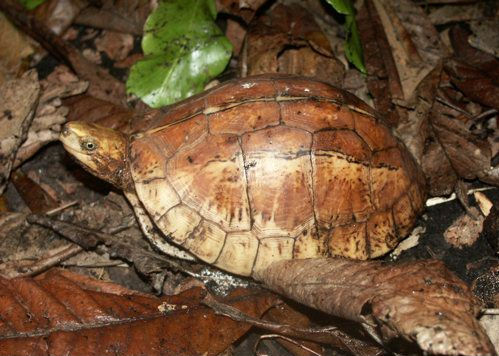
BOURRET'S BOX TURTLE
Cuora bourreti
DESCRIPTION
Bourret's Box Turtle (Cuora bourreti) is a medium-sized turtle characterized by its high-domed shell and distinctive coloration, which typically features a dark brown or black background with yellow or orange markings. This species is primarily found in freshwater habitats, where it exhibits a semi-aquatic lifestyle, often seen basking on logs or rocks. Bourret's Box Turtle is known for its shy behavior, retreating into its shell when threatened, and it plays a crucial role in its ecosystem by helping to control insect populations and contributing to nutrient cycling in its habitat.
FUN FACTS
- Bourret's Box Turtle is named after the French herpetologist who first described the species, making it a significant part of herpetological history
- Additionally, these turtles are known for their long lifespans, often living for several decades in captivity, which makes them a long-term commitment for pet owners.| Unlike many other turtle species, Bourret's Box Turtle has a unique ability to close its shell completely, providing excellent protection from predators
- This adaptation is particularly beneficial in their natural habitats, where they face various threats from both terrestrial and aerial predators
QUICK INFO
Lifespan20-30 years in captivity
Average Weight1-2 kg
Average Length15-25 cm
Diet TypeOmnivore
Social Structuresolitary
Activity PatternDiurnal
Breeding SeasonSpring (April-June)
- Habitat
- This species inhabits freshwater environments such as streams, ponds, and marshes, often favoring areas with abundant vegetation. They require both aquatic and terrestrial habitats for foraging and nesting.
- Biomes
- Freshwater, Temperate Forest
- Native Range
- Bourret's Box Turtle is native to Southeast Asia, specifically found in parts of Vietnam and Cambodia.
- Continent
- Asia
- Countries
- Vietnam, Cambodia
- Diet
- Bourret's Box Turtle is an omnivore, feeding on a variety of plant matter, insects, and small invertebrates. Its diet can vary based on seasonal availability and habitat.
- Diet Type
- Omnivore
- Favorite Food
- leafy greens, insects
- Social Structure
- solitary
- Activity Pattern
- Diurnal
- Group Size
- 1-2
- Territorial
- 0
 VU
VU

1-2 kg
Weight
15-25 cm
Length
- Coloration
- dark brown or black shell with yellow or orange markings
- Lifespan
- 20-30 years in captivity
- Offspring per Birth
- 3-5
- Sexual Maturity
- 5-7 years
- Breeding Season
- Spring (April-June)
EN
Endangered
IUCN Red List Status
- Population Status
- The population of Bourret's Box Turtle is currently declining due to habitat loss and illegal trade.
- Wild Population Estimate
- unknown
- Population Trend
- Decreasing
- Endangered
- 1
- Threats
- Main threats include habitat destruction due to deforestation and urbanization, as well as poaching for the pet trade. These factors have significantly impacted their populations in the wild.
- Predators
- Birds of prey, large mammals, and other carnivorous reptiles may prey on Bourret's Box Turtle, especially when they are young or vulnerable.
- Defense Mechanisms
- Bourret's Box Turtle can retract into its shell to protect itself from predators, providing a hard barrier against attacks.
- Found in Zoos
- Uncommon