


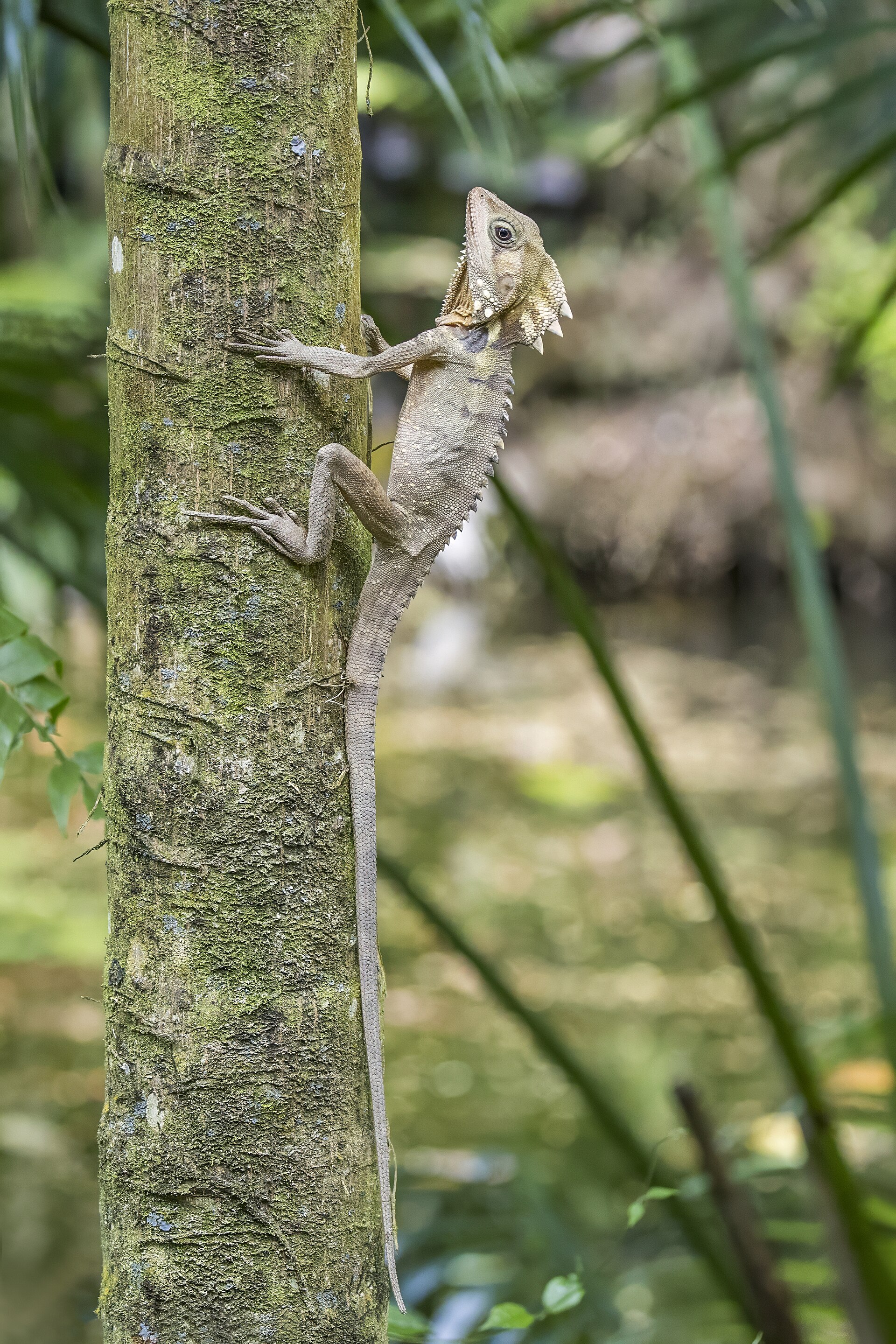
BOYD’S FOREST DRAGON
Lophosaurus boydii
DESCRIPTION
Boyd’s Forest Dragon (Lophosaurus boydii), also known as Boyd's Dragon, is a striking lizard native to the rainforests of Australia. This species is characterized by its vibrant green coloration, which helps it blend into the lush foliage of its habitat. Boyd’s Forest Dragon is arboreal, spending much of its time in trees, where it exhibits a calm demeanor and a unique ability to camouflage against predators.
FUN FACTS
- Boyd’s Forest Dragon is known for its remarkable ability to change color slightly to match its surroundings, enhancing its camouflage
- Additionally, this species has a unique display behavior where it flattens its body and raises its crest to appear larger when threatened
QUICK INFO
Lifespan10-15 years in the wild
Average Weight50-100 g
Average Length30-40 cm
Diet TypeInsectivore
Social Structuresolitary
Activity PatternDiurnal
Breeding SeasonSpring (September-November)
- Habitat
- This species inhabits tropical and subtropical rainforests, often found in the canopy where it can easily access its prey. Boyd’s Forest Dragon prefers humid environments with plenty of vegetation for cover.
- Biomes
- Tropical Rainforest
- Native Range
- Boyd’s Forest Dragon is native to the eastern coast of Australia, particularly in Queensland.
- Continent
- Australia
- Countries
- Australia
- Diet
- Boyd’s Forest Dragon primarily feeds on insects and other small invertebrates. Its diet consists mainly of ants, beetles, and caterpillars.
- Diet Type
- Insectivore
- Favorite Food
- insects
- Social Structure
- solitary
- Activity Pattern
- Diurnal
- Group Size
- 1-2
- Territorial
- 0
 VU
VU
 LC
LC
50-100 g
Weight
30-40 cm
Length
- Coloration
- vibrant green with darker markings
- Sexual Dimorphism
- males are typically larger and more colorful than females
- Lifespan
- 10-15 years in the wild
- Offspring per Birth
- 5-10
- Sexual Maturity
- 2-3 years
- Breeding Season
- Spring (September-November)
LC
Least Concern
IUCN Red List Status
- Population Status
- The population of Boyd’s Forest Dragon is currently stable, with no significant threats identified.
- Wild Population Estimate
- unknown
- Population Trend
- Stable
- Endangered
- 0
- Threats
- The main threats to Boyd’s Forest Dragon include habitat loss due to deforestation and climate change. However, it is not currently considered endangered.
- Predators
- Birds of prey, snakes, and larger reptiles are known predators of Boyd’s Forest Dragon.
- Defense Mechanisms
- Boyd’s Forest Dragon uses its excellent camouflage to avoid detection by predators, and it can also drop from branches to escape threats.
- Found in Zoos
- Uncommon