


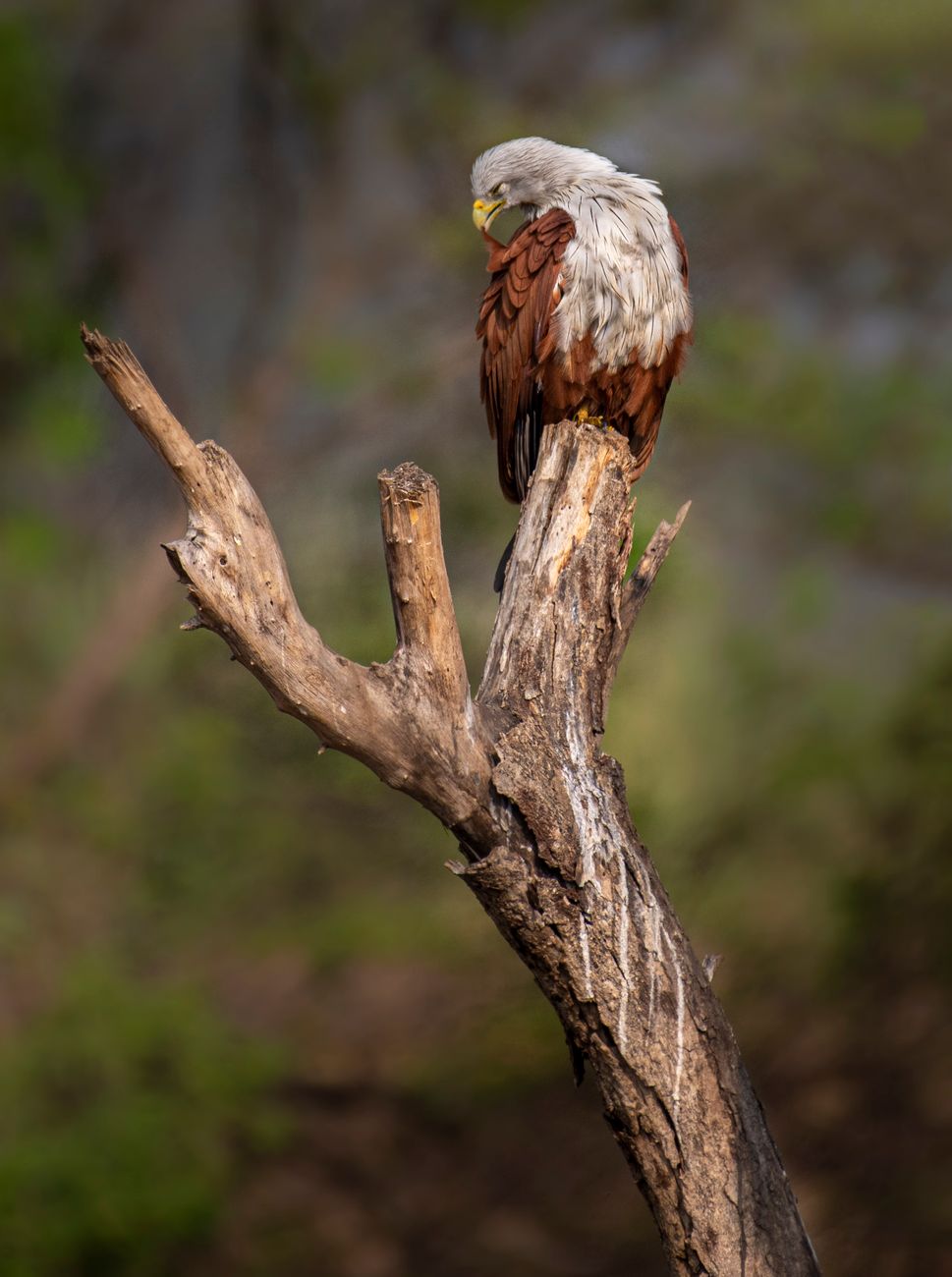
BRAHMINY KITE
Haliastur indus
DESCRIPTION
Brahminy Kite (Haliastur indus) is commonly known as the Red-backed Sea Eagle and Indian Fish Eagle. This bird of prey is easily recognizable by its striking chestnut-brown plumage, white head, and tail, which contrast sharply with its dark wings. It is often seen soaring over coastal areas and wetlands, where it displays graceful flight patterns while searching for food.
FUN FACTS
- Brahminy Kites are known for their unique hunting technique, where they often hover above the water before diving to catch fish
- They are also highly adaptable birds, capable of thriving in both natural and urban environments, which has contributed to their stable population
QUICK INFO
Lifespan10-15 years in the wild
Average Weight0.8-1.5 kg
Average Length0.6-0.7 m
Diet TypeCarnivore
Social Structurepair, typically monogamous during breeding season
Activity PatternDiurnal
Breeding SeasonVaries by region, generally during the dry season
- Habitat
- Brahminy Kites inhabit coastal regions, estuaries, and wetlands, often near large bodies of water. They prefer areas with abundant food sources and suitable nesting sites, such as tall trees or cliffs.
- Biomes
- Wetlands, Coastal
- Native Range
- The Brahminy Kite is found across South and Southeast Asia, from the Indian subcontinent to the coasts of Southeast Asia and northern Australia.
- Continent
- Asia, Australia
- Countries
- India, Bangladesh, Myanmar, Thailand, Malaysia, Indonesia, Australia
- Diet
- Brahminy Kites primarily feed on fish, but they also consume small mammals, birds, and carrion. They are known for their impressive hunting skills, often snatching prey from the water's surface.
- Diet Type
- Carnivore
- Favorite Food
- fish
- Social Structure
- pair, typically monogamous during breeding season
- Activity Pattern
- Diurnal
- Group Size
- 1-2
- Territorial
- 1
 VU
VU
 CR
CR
0.8-1.5 kg
Weight
0.6-0.7 m
Length
- Coloration
- chestnut-brown body with a white head and tail
- Sexual Dimorphism
- females are generally larger than males
- Lifespan
- 10-15 years in the wild
- Offspring per Birth
- 1-3
- Sexual Maturity
- 2-3 years
- Breeding Season
- Varies by region, generally during the dry season
LC
Least Concern
IUCN Red List Status
- Population Status
- The population of Brahminy Kites is currently stable, with no significant declines reported.
- Wild Population Estimate
- 50,000-100,000
- Population Trend
- Stable
- Endangered
- 0
- Threats
- Main threats include habitat loss due to coastal development and pollution. Additionally, they face risks from hunting and entanglement in fishing gear.
- Predators
- Large birds of prey, such as eagles and hawks, may pose a threat to young Brahminy Kites. Additionally, humans can be considered a predator through hunting and habitat destruction.
- Defense Mechanisms
- Brahminy Kites rely on their agility in flight and keen eyesight to evade predators.
- Found in Zoos
- Uncommon