


BRAZILIAN CANARY-WINGED PARAKEET
Brotogeris chiriri
DESCRIPTION
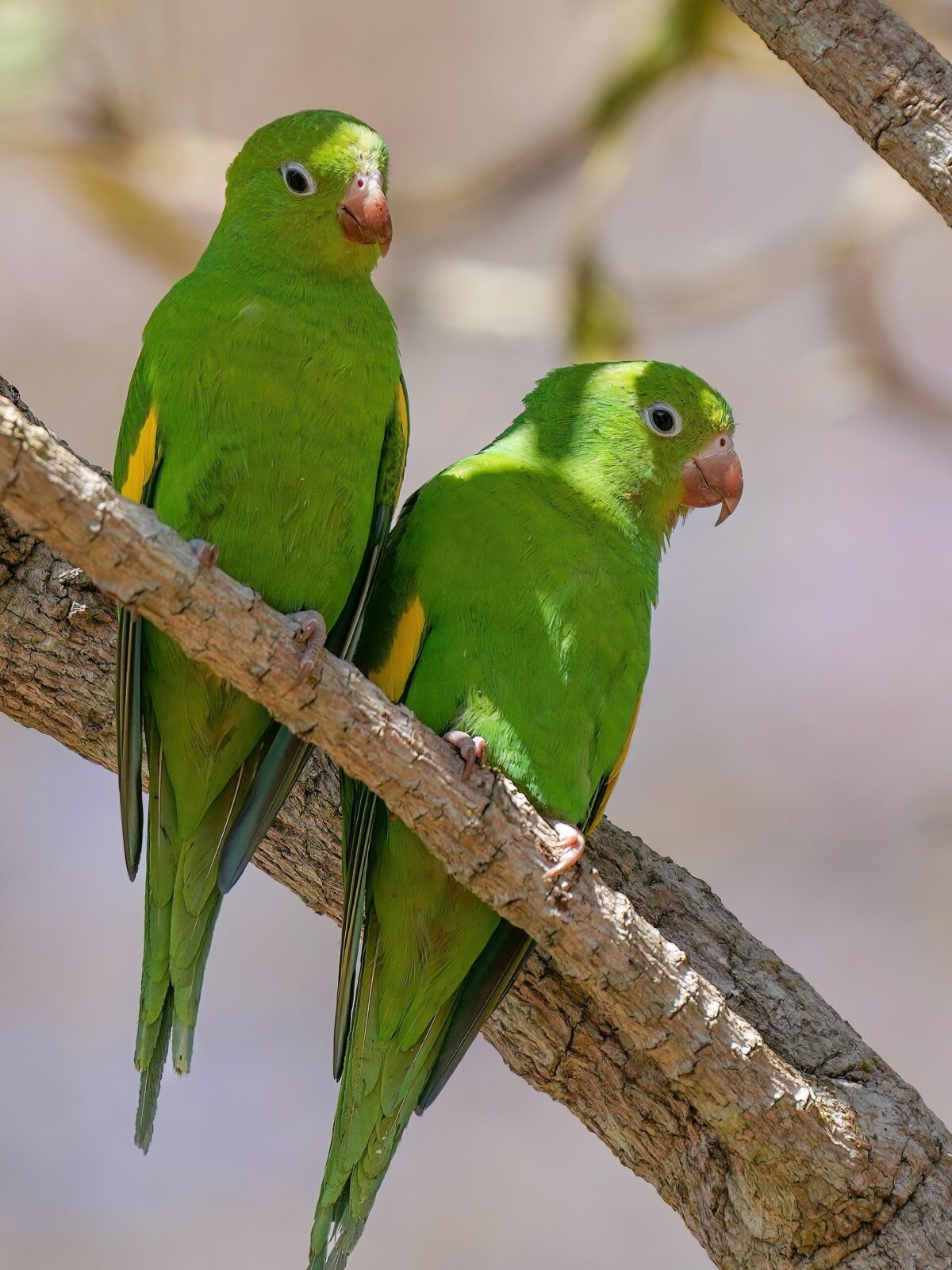
Brazilian Canary-winged Parakeet (Brotogeris chiriri) is a small, vibrant parakeet known for its striking green plumage and distinctive yellow wing markings. These birds are social and often found in flocks, displaying playful behavior as they interact with one another. They inhabit a variety of environments, primarily in the wilds of Brazil, where they contribute to the ecosystem by aiding in seed dispersal.
FUN FACTS
- Brazilian Canary-winged Parakeets are known for their playful antics and vocalizations, which can include a variety of chirps and whistles
- They are also quite intelligent, often engaging in problem-solving behaviors and can be trained to perform simple tricks
- | These parakeets are popular in aviculture due to their vibrant colors and social nature, making them delightful companions for bird enthusiasts
- They thrive in environments where they can interact with their owners and other birds, showcasing their lively personalities
QUICK INFO
Lifespan10-15 years in the wild, up to 20 years in captivi
Average Weight60-80 g
Average Length20-25 cm
Diet TypeHerbivore
Social StructureThey are typically found in groups, often forming flocks that can range from a few individuals to larger gatherings.
Activity PatternDiurnal
Breeding SeasonSpring to early summer
- Habitat
- Brazilian Canary-winged Parakeets thrive in tropical and subtropical forests, as well as in savannas and open woodlands. They are often found near water sources, which are crucial for their survival.
- Biomes
- Tropical Rainforest, Savanna
- Native Range
- This species is native to Brazil, particularly in the central and eastern regions.
- Continent
- South America
- Countries
- Brazil
- Diet
- They primarily feed on seeds, fruits, and flowers, showcasing a preference for soft fruits and seeds. Their foraging behavior often involves climbing and hanging upside down to reach food sources.
- Diet Type
- Herbivore
- Favorite Food
- seeds, fruits, flowers
- Social Structure
- They are typically found in groups, often forming flocks that can range from a few individuals to larger gatherings.
- Activity Pattern
- Diurnal
- Group Size
- 5-30
- Territorial
- 0
 LC
LC
60-80 g
Weight
20-25 cm
Length
- Coloration
- Predominantly green with bright yellow wing patches and a blue crown.
- Sexual Dimorphism
- Males and females are similar in appearance, making it difficult to distinguish between the sexes.
- Lifespan
- 10-15 years in the wild, up to 20 years in captivi
- Offspring per Birth
- 3-6
- Sexual Maturity
- 1-2 years
- Breeding Season
- Spring to early summer
LC
Least Concern
IUCN Red List Status
- Population Status
- The population is currently stable, but habitat loss poses a potential threat.
- Wild Population Estimate
- Unknown
- Population Trend
- Stable
- Endangered
- 0
- Threats
- Habitat destruction due to deforestation and agricultural expansion is the primary threat to their population. Additionally, they may be affected by the illegal pet trade.
- Predators
- Natural predators include birds of prey and snakes, which may target their nests or young.
- Defense Mechanisms
- They often rely on their social structure and flocking behavior to evade predators, using alarm calls to warn others of danger.
- Compatible Animals
- Other small parakeets, finches, canaries
- Found in Zoos
- Common