


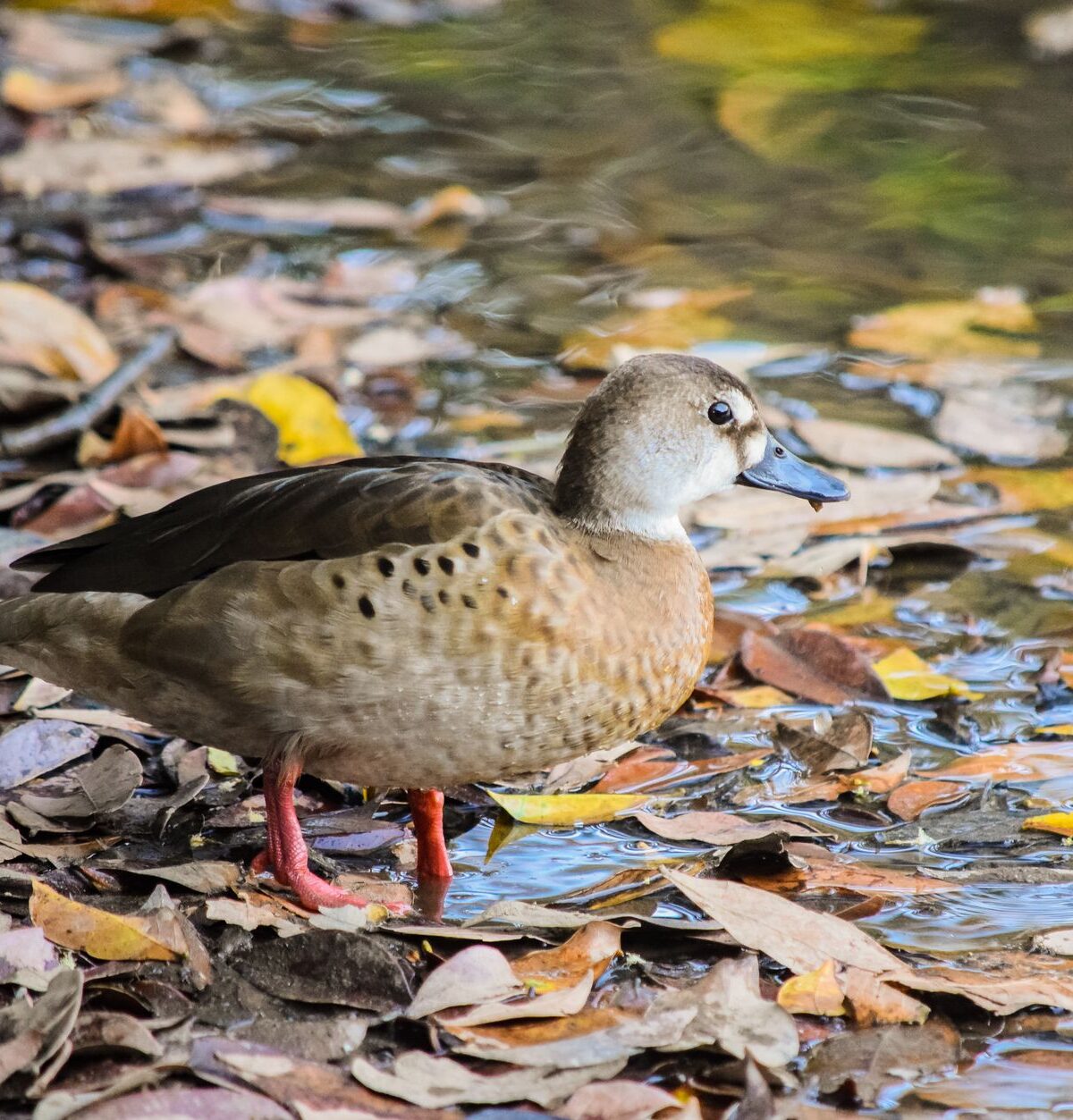
BRAZILIAN TEAL
Amazonetta brasiliensis brasiliensis
DESCRIPTION
Brazilian teal (Amazonetta brasiliensis brasiliensis) is commonly known as the Brazilian duck. This small dabbling duck features a distinctive green head with a white stripe running down the side, and its body is predominantly brown with a lighter underbelly. They are often found in pairs or small groups, exhibiting a calm demeanor as they forage in shallow waters and wetlands.
FUN FACTS
- Brazilian teal are known for their unique courtship displays, where males perform elaborate movements to attract females, including head bobbing and vocalizations
- Additionally, they are excellent swimmers and can often be seen gliding gracefully across the water's surface, making them a favorite among birdwatchers
QUICK INFO
Lifespan5-10 years in the wild
Average Weight0.5-1 kg
Average Length40-50 cm
Diet TypeOmnivore
Social Structurepair or small group, often seen in pairs or small flocks
Activity PatternDiurnal
Breeding SeasonSpring to early summer
- Habitat
- This species inhabits freshwater wetlands, marshes, and shallow lakes. They prefer areas with abundant vegetation for cover and foraging.
- Biomes
- Wetlands, Freshwater
- Native Range
- Brazilian teal is native to the tropical regions of South America, particularly in the Amazon Basin.
- Continent
- South America
- Countries
- Brazil, Bolivia, Paraguay, Argentina
- Diet
- Brazilian teal primarily feeds on aquatic plants, seeds, and small invertebrates. They forage by dabbling on the water's surface or tipping forward to reach submerged vegetation.
- Diet Type
- Omnivore
- Favorite Food
- aquatic plants, seeds, invertebrates
- Social Structure
- pair or small group, often seen in pairs or small flocks
- Activity Pattern
- Diurnal
- Group Size
- 2-10
- Territorial
- 0
 DD
DD
 LC
LC
0.5-1 kg
Weight
40-50 cm
Length
- Coloration
- The male has a striking green head, while the female is more mottled brown, providing camouflage.
- Sexual Dimorphism
- Males are more brightly colored than females, with distinct green and white markings.
- Lifespan
- 5-10 years in the wild
- Offspring per Birth
- 6-12
- Sexual Maturity
- 1 year
- Breeding Season
- Spring to early summer
LC
Least Concern
IUCN Red List Status
- Population Status
- The population of Brazilian teal is currently stable, but habitat loss poses a potential threat.
- Wild Population Estimate
- Unknown
- Population Trend
- Stable
- Endangered
- 0
- Threats
- Main threats include habitat destruction due to agriculture and urban development. Pollution and hunting also pose risks to their populations.
- Predators
- Raptors, large fish, and mammals such as foxes may prey on Brazilian teal, especially when they are nesting or foraging.
- Defense Mechanisms
- They rely on their camouflage and the ability to quickly take flight to evade predators.
- Compatible Animals
- Other small waterfowl, such as other dabbling ducks
- Found in Zoos
- Uncommon