


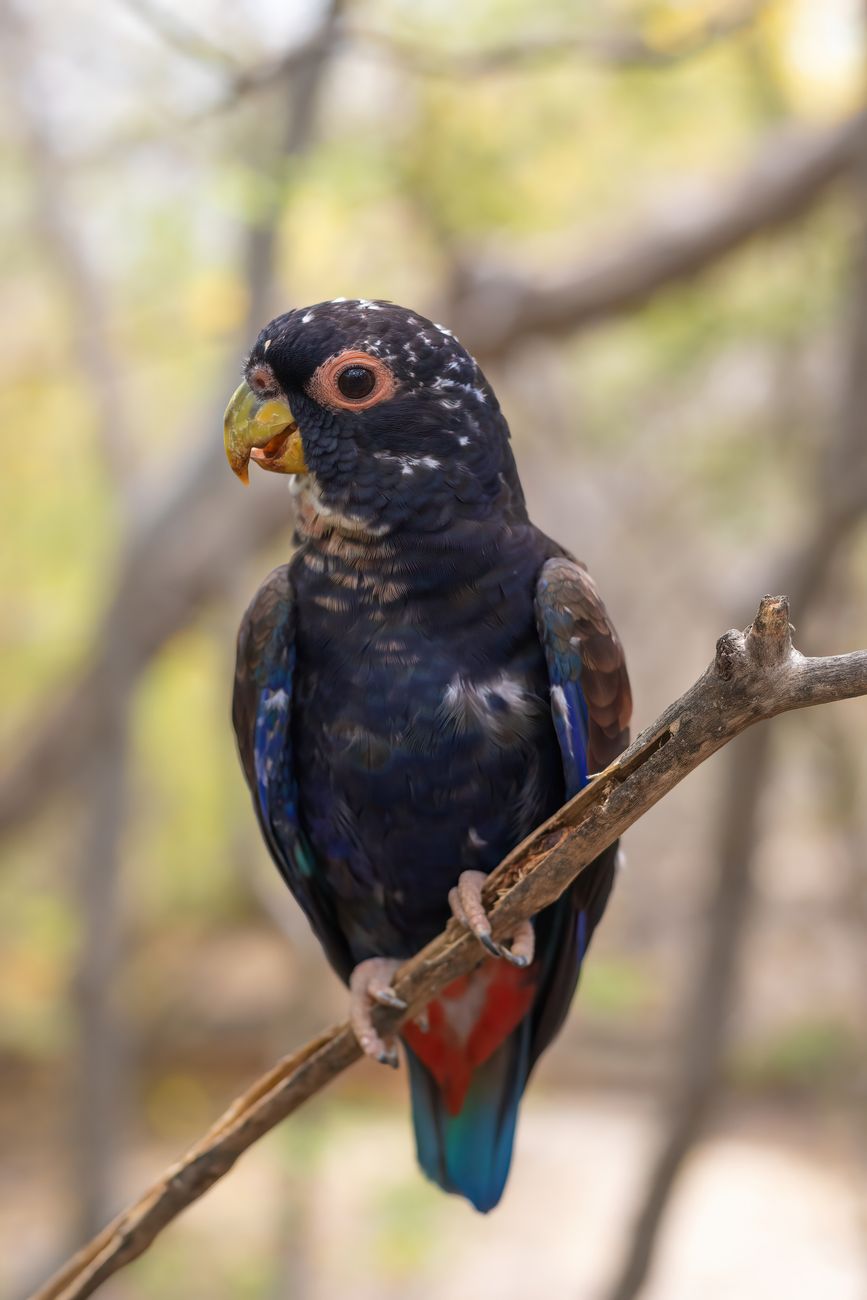
BRONZE-WINGED PARROT
Pionus chalcopterus
DESCRIPTION
Bronze-winged Parrot (Pionus chalcopterus) is also known as the Pionus Parrot. This medium-sized parrot is characterized by its distinctive bronze-colored wings and a green body, with a slightly rounded tail. They are known for their gentle and calm demeanor, often forming strong bonds with their owners in captivity, and they exhibit a variety of social behaviors in the wild, including flocking and foraging together.
FUN FACTS
- Bronze-winged Parrots are known for their playful and curious nature, often engaging in acrobatic displays and vocal mimicry
- They have a unique way of communicating with each other, using a variety of sounds to convey different messages, which makes them fascinating pets for bird enthusiasts.| These parrots are also known for their relatively quiet demeanor compared to other parrot species, making them suitable for indoor living
- Their gentle temperament allows them to adapt well to family environments, often becoming beloved companions
QUICK INFO
Lifespan20-30 years in captivity
Average Weight200-250 g
Average Length25-30 cm
Diet TypeHerbivore
Social StructureThey are typically found in pairs or small groups, often forming strong bonds with their mates.
Activity PatternDiurnal
Breeding SeasonSpring (March-May)
- Habitat
- These parrots inhabit tropical and subtropical forests, often found in areas with abundant fruiting trees. They prefer dense foliage that provides cover and nesting sites.
- Biomes
- Tropical Rainforest, Subtropical Forest
- Native Range
- Bronze-winged Parrots are native to the lowland forests of Central and South America, particularly in countries like Colombia and Ecuador.
- Continent
- South America
- Countries
- Colombia, Ecuador
- Diet
- Bronze-winged Parrots primarily feed on fruits, seeds, and nuts, which they forage for in their natural habitat. They are known to enjoy a variety of plant materials, making them important seed dispersers in their ecosystem.
- Diet Type
- Herbivore
- Favorite Food
- fruits, seeds, nuts
- Social Structure
- They are typically found in pairs or small groups, often forming strong bonds with their mates.
- Activity Pattern
- Diurnal
- Group Size
- 2-10
- Territorial
- 0
 LC
LC
200-250 g
Weight
25-30 cm
Length
- Coloration
- They have a predominantly green body with striking bronze-colored wing feathers and a red under-tail.
- Sexual Dimorphism
- Males and females are similar in appearance, making it difficult to distinguish between the sexes without genetic testing.
- Lifespan
- 20-30 years in captivity
- Offspring per Birth
- 2-4
- Sexual Maturity
- 2-3 years
- Breeding Season
- Spring (March-May)
LC
Least Concern
IUCN Red List Status
- Population Status
- The population of Bronze-winged Parrots is currently stable, but they face habitat loss due to deforestation.
- Wild Population Estimate
- Unknown
- Population Trend
- Stable
- Endangered
- 0
- Threats
- Main threats include habitat destruction and the illegal pet trade, which can impact local populations. Conservation efforts are needed to protect their natural habitats.
- Predators
- Natural predators include birds of prey and snakes, which may target their nests or young.
- Defense Mechanisms
- They rely on their ability to blend into their surroundings and their social behavior to warn each other of potential threats.
- Compatible Animals
- Other Pionus species, small to medium-sized parrots
- Found in Zoos
- Uncommon